
Chimney and Fireplace Service in Gainesville, TX
Some of the oldest chimneys in North Texas stand south of the Gainesville square. Here is what we find in them, and in the newer builds along I-35, with photos to prove it.
LOCALLY BASED IN DFW
We drive to you, no national call center
WRITTEN PHOTO REPORT
Every finding shown before it is quoted
SAME-WEEK SCHEDULING
Booked in days, not weeks
OWNER-ANSWERED PHONE
The person who answers is the person who comes
Gainesville is the last Texas town on I-35 before the Red River, and it holds some of the oldest housing stock in this part of the state. South of the courthouse square there are Victorians from the 1890s with their original fireplaces still in the walls. A chimney that age has stood through more than a century of North Texas freezes, and it shows, whether or not anyone has looked lately.
Local Chimney Experts is new to the trade in Gainesville, and we will not pretend otherwise. What we offer instead is careful work and photos of everything we find, before and after, so nothing rests on our word alone. If nothing is wrong, the photos of nothing wrong are the report you get.
This page is about Gainesville homes specifically: the old ones near the square, the newer ones spreading along the interstate, and what the ground and weather here do to both.
YOU SEE WHAT WE SEE
You cannot see your own chimney. That is the whole problem with this trade, and it is why people feel talked into things.
Every visit ends with photographs of what we found, walked through with you before anything is quoted. If the pictures show nothing wrong, that is the report you get.
- Camera up the flue, not a guess from the hearth
- Every finding photographed before it is quoted
- The same spots photographed again after the work
- Written report in your inbox the same day
The Oldest Chimneys We See Are in Gainesville
Gainesville got rich early. By the end of the 1800s it was one of the state’s major rail centers, and the money that came through town built houses that still stand south of downtown. Historic South Gainesville holds Victorians, Italianates, four-squares, and cottages from the late 1800s and early 1900s, and the neighborhood shows them off every December on its holiday home tour. The 1912 Cooke County courthouse, brick and limestone under a copper dome, anchors the square a few blocks north, and the brick Santa Fe passenger depot from about 1902 still stands near the tracks. Gainesville has been the county seat since 1850. Little here is new, and that is the point.
For chimney work, that history means three things. First, many of these houses were built when fireplaces were the heating system, so one house can have several flues rising through one chimney stack. Second, brick and mortar from that era are softer than modern materials, and aggressive cleaning or the wrong repair mortar does real damage. Third, flues from that period were often built without a clay tile liner, and some were never updated. An unlined flue can look fine from the hearth and still be unsafe to use. We photograph the inside of the flue so you are not taking anyone’s word for it, ours included.
Old Masonry and New Chases Fail Differently
Drive from the square out toward the newer subdivisions and the chimneys change. Houses from recent decades mostly use a factory-built fireplace: a metal firebox and a metal flue pipe inside a wood-framed chase, dressed in brick veneer or siding, with a sheet metal cover on top.
Old masonry fails slowly and from the outside in. Mortar joints soften, crowns crack, water works into the brick a little deeper each winter. Factory-built systems usually fail at the top, where the chase cover rusts through and rain drips into the framing for months before anyone notices a stain on the ceiling. The first step of any visit is identifying which system you own, because the checklist for each one is different. In Gainesville, unlike most DFW suburbs, the split runs roughly along the town’s age: original masonry near the center, chases farther out.
We Cover Gainesville.
Tell us what you are seeing and we will tell you which visit it needs.
Cooke County Soil Is a Mixed Bag, and That Matters
Dallas sits on blackland clay that swells and shrinks with the weather, and most foundation advice you read online quietly assumes that soil. Cooke County is more complicated. The center of the county is Grand Prairie ground, with Cross Timbers belts on the east and west sides, so soils here run from sandy loam to heavy clay, sometimes within a short drive.
That mix shows up in chimneys. A tall masonry chimney is the heaviest, most rigid part of the house. On a clay lot it can lean or pull away from the wall as the ground swells after rain and shrinks in the August heat. On a sandy lot, water moving through the soil can cause settling instead. Either way the symptoms look similar, and either way a bead of caulk is not the fix.
- A gap between the chimney and the house wall that widens over the seasons
- Stair-step cracks following the mortar joints
- White staining on the brick, a sign water is moving through it
- Chunks of mortar or crown showing up on the roof or in the gutters
Winter at the Top of Texas
Gainesville sits at the crossing of I-35 and US 82, about seven miles south of the Red River. It is the last stop in Texas, and winter here works the way it does across North Texas: a few hard freezes most seasons, and occasionally something worse, like the February 2021 storm.
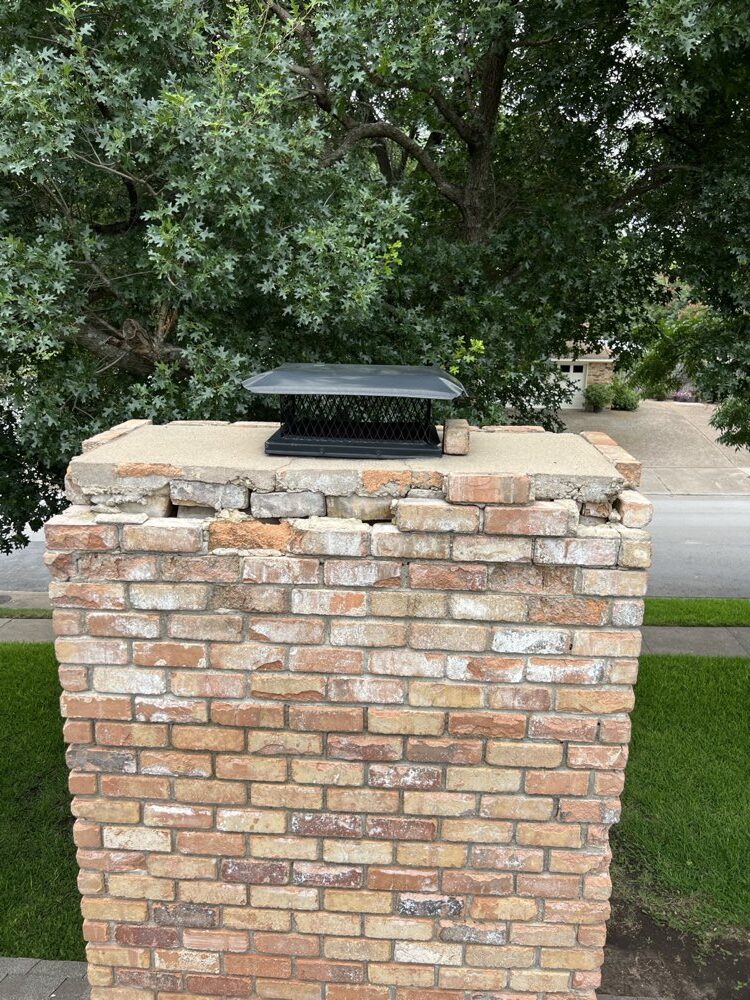
Freeze-thaw is what ages a chimney. Water soaks into brick, cracked crowns, and open mortar joints. When it freezes it expands and pries everything a little wider, then thaws and lets more water in. On a house from the 1890s that cycle has been running for well over a century, and soft old brick takes it harder than new brick does. Spring storms add hail, and the top of the chimney takes the first hit: dented caps, punctured chase covers, cracked crowns. After a storm the roof gets inspected and the chimney usually gets skipped. It is worth asking whether anyone actually looked.
Chattering in the Chimney Means Swifts
Old towns have old flues, and open, uncapped flues are exactly where chimney swifts nest. If you hear a rattling, chattering sound from the fireplace in early summer, that is the likely cause. Swifts are protected under federal migratory bird law, so no company can legally remove an active nest, whatever gets promised on the phone. The honest path is to wait until the birds leave, usually by late summer or early fall, then have the flue swept and a cap installed so it does not repeat next June. A cap also keeps out rain, squirrels, and raccoons, which matters on a flue that may have stood open since the 1890s.
New Company, Documented Work
We do not have a long company history to point to, so we built the business around something you can check yourself: photos. The inside of your flue before we sweep it. The crack we found in your crown. The same spots after the work. We call it Photos Not Promises. You see what we found before anything is quoted, and you judge the work with your own eyes, not our adjectives. When you call, you talk to the technician, and the technician is who shows up.
One boundary worth stating plainly: we work on the masonry and venting side. Flues, liners, caps, crowns, fireboxes, brick. We do not run or repair gas lines, valves, or pilots. That is a gas fitter’s work, and if your problem sits on that side, we will say so instead of improvising.
If you are not sure where to start: a chimney inspection fits a house with an unknown history, a chimney sweep fits a fireplace you burn regularly, and chimney repair fits a problem you already know about.
Talk To Someone Who Works In Gainesville
Tell us what you are seeing or hearing and we will tell you whether it needs a sweep, an inspection, or a repair. If it is nothing, we will say that too.
WHAT HAPPENS WHEN YOU CALL
You call or send the form
We ask what you are seeing or hearing. A person, not a queue.
We arrive and cover everything
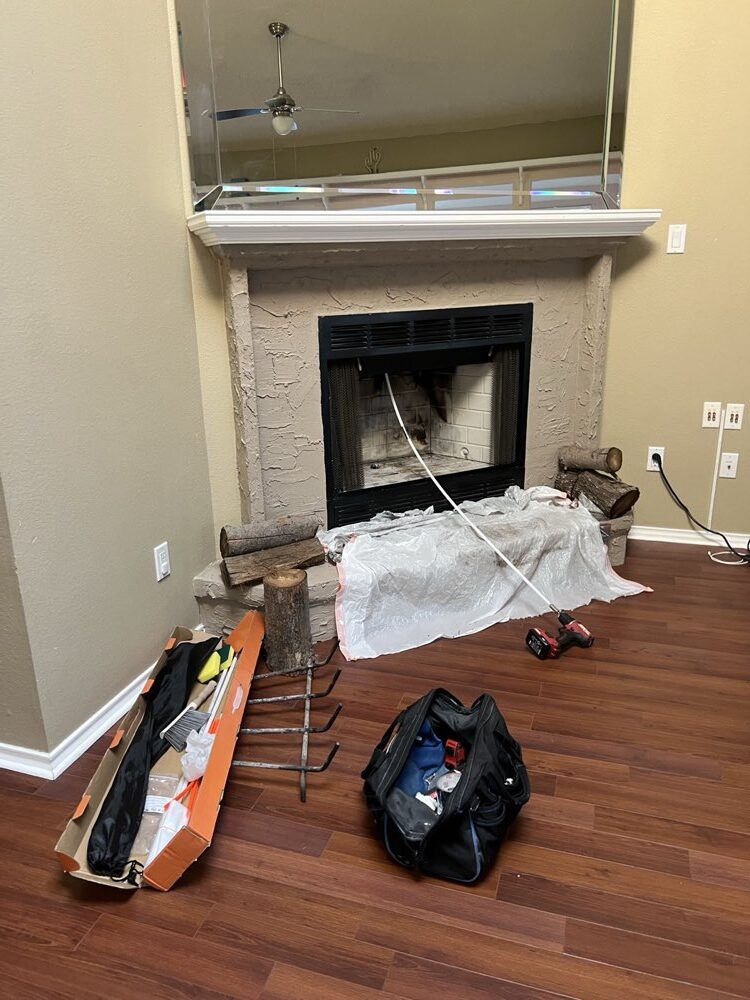
Tarps down and the vacuum ready before a tool comes out.
Camera, brushes, eyes on all of it
Firebox, damper, flue and the top of the chimney, photographed.
Photo report the same day
You see what we saw and decide what happens next.
COMMON QUESTIONS
Yes, and carefully. Houses from the late 1800s have softer brick, lime-based mortar, and flues that may never have been lined. Harsh cleaning or modern hard mortar can hurt them. We photograph the flue and the masonry first, then talk about what, if anything, should be done.
They do. Unused flues in old houses are usually open at the top, which means rain, animals, and cold air have had access for a long time. They often share the same chimney stack and crown as the flue you do use, so their problems become yours. An inspection covers every flue in the stack, with photos of each.
Often, yes. Cooke County ground runs from sandy Cross Timbers soil to heavy clay, and both can move a foundation, just in different ways. The chimney is the heaviest part of the house, so it shows movement first. A small, stable gap is worth photographing and watching. A gap that grows needs a structural look, not caulk.
We handle the venting and masonry around a gas fireplace: the flue, the cap, the chimney structure itself. We do not install or repair gas lines, valves, or pilot assemblies. That belongs to a gas fitter, and if your problem sits on that side, we will tell you rather than touch it.
If it is early or mid summer, those are almost certainly chimney swifts, and federal law protects active nests. Nobody can legally remove them, us included. Once the young have flown, usually by late summer or early fall, we sweep the flue and fit a cap so the chimney stops being available next season.
Gainesville and the rest of Cooke County, including Muenster, Lindsay, Valley View, Callisburg, and Lake Kiowa. We are a mobile company, so we come to you.
By use, not by the calendar. The North Texas burn season runs roughly November through February. If you burn most weeks of that stretch, a yearly check before the first fire makes sense. If you burn twice a winter, an inspection will tell you honestly whether a sweep is even needed.
RELATED
REQUEST A CALL BACK
A person calls you back about your chimney, not a dispatcher.
A Century of Freezes, One Phone Call
Whether your flue has stood south of the square since the 1890s or went up with the newer builds along I-35, one visit tells you where it stands now.