
Chimney Sweep and Chimney Cleaning in Dallas Fort Worth
Two words for the same job, and here is exactly what it involves, what comes out of your chimney, and what we photograph while we are in there.
CAMERA INSPECTION
We look before we quote, every time
PHOTOS OF EVERY FINDING
No photo, no claim
MASONRY AND VENTING ONLY
Gas lines go to a gas fitter and we say so
SAME-DAY REPORT
In your inbox before we finish the day
A chimney sweep is the removal of soot and creosote from the flue, smoke shelf and firebox. Local Chimney Experts starts with a light and camera up the flue, brushes it clear, photographs every finding, and sends the photo report the same day. The service covers Dallas-Fort Worth, and chimney cleaning is the same job.
You are probably here for one of a few reasons. The fireplace smells sour in the summer heat. Smoke rolled back into the living room last time you lit a fire. You opened the damper and black flakes dropped on the hearth. Or you just bought the house and have no idea when anyone last touched the chimney.
All of those get sorted the same way. Somebody opens the fireplace up, gets a light and a brush up the flue, takes out what is in there, and looks hard at what is left. That is a chimney sweep. It is also what people mean by chimney cleaning.
We are a new name in North Texas, so we would rather show the work than talk about it. Every visit gets photographed, top of the chimney down to the firebox floor, and the photos come to you either way. We cover both sides of the metro, from a chimney sweep in Dallas out to Tarrant County.
YOU SEE WHAT WE SEE
You cannot see your own chimney. That is the whole problem with this trade, and it is why people feel talked into things.
Every visit ends with photographs of what we found, walked through with you before anything is quoted. If the pictures show nothing wrong, that is the report you get.
- Camera up the flue, not a guess from the hearth
- Every finding photographed before it is quoted
- The same spots photographed again after the work
- Written report in your inbox the same day
Chimney sweep, chimney cleaning: same job, two words
Half the people who call ask for a chimney sweep. The other half ask for a chimney cleaning. There is no difference in what gets done. Sweep is the older word and the trade still uses it. Cleaning is what most people type into their phone.
Either way you want the same thing. Soot and creosote out of the flue, smoke shelf and firebox cleared, damper working, and an honest look at the parts you cannot see from the couch. So if one company quotes a cleaning and another quotes a sweep, you are not comparing two services. You are comparing two companies doing the same visit.
What a sweep actually takes out: creosote
Wood does not burn cleanly. What does not burn goes up the flue as smoke, cools on the way, and sticks to the walls. That leftover is creosote. It is fuel, sitting inside a pipe that gets hot. It comes in three forms, and which one you have changes what the visit is.
- Light and flaky. Dry black or brown powder, almost like ash. Brushes off easily. This is what a normal yearly sweep looks like.
- Crunchy and tarry. Hard dark flakes, like burnt cereal. Comes from fires that smolder, wood that has not dried out, or a damper choked down to make a fire last all evening.
- Glazed. A shiny black coating, as if somebody poured tar down the flue and let it set. A brush will not move it. That takes a different process, and it gets talked through with you before anybody starts.
Due For A Sweep?
One visit, the flue brushed clear, and the photo report in your inbox the same day.
Why anyone bothers: chimney fires and blocked flues
Two things go wrong when creosote is left alone.
The first is a chimney fire. The creosote catches and burns inside the flue instead of inside the firebox. Some are loud. Others are quiet and slow and nobody in the house knows it happened, and those are the ones that cause trouble later, because the heat cracks clay tiles and opens a path for heat and smoke to reach the wood framing behind the brick.
The second is a blocked flue. Creosote, a fallen chunk of tile, a nest or a pile of leaves chokes the opening. When smoke cannot get out the top it comes back in, and so does carbon monoxide. If smoke comes back into the room when you light a fire, chase it down instead of living with it.
NFPA 211, the published standard for chimneys and vents, calls for an inspection at least once a year. A chimney inspection and a sweep are not the same thing. The inspection tells you whether the sweep is needed.
How often does a chimney really need sweeping?
Once a year for the look. Not always once a year for the sweep.
The guideline the trade works from is thickness. Once buildup reaches about an eighth of an inch on the flue walls, it is time. A house burning a fire most winter nights gets there in one season. A house in Plano that lights three fires around Christmas can take years.
North Texas helps you here. The burning season is short, most fires get lit between late November and February, so buildup is slower than it is up north. What our weather does instead is leave the chimney unused for eight or nine months of heat, storms and rain, and that is when the water damage and the animals show up. Spring hail is harder on a chimney cap than a whole winter of fires.
If we open yours and it does not need a sweep, we will say so and show you the photo that proves it.
| How you burn | What it needs |
|---|---|
| Fires most winter nights | A sweep every year |
| A handful of fires a season | A look every year, a sweep when the buildup calls for it |
| Smelled smoke indoors, found flakes on the hearth, or just bought the house | Do not wait for the calendar |
What the visit looks like, start to finish
Plan on about an hour for a standard fireplace, longer with heavy buildup or something in the way. You do not need to do anything beforehand except clear the mantel and keep the dog in another room.
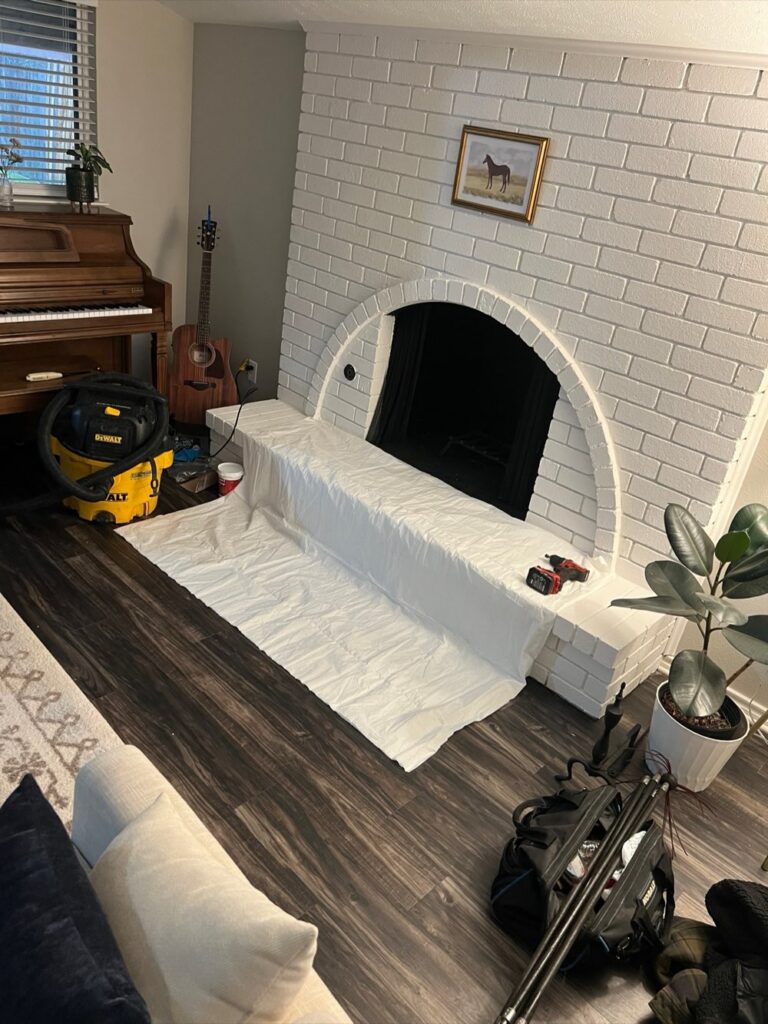
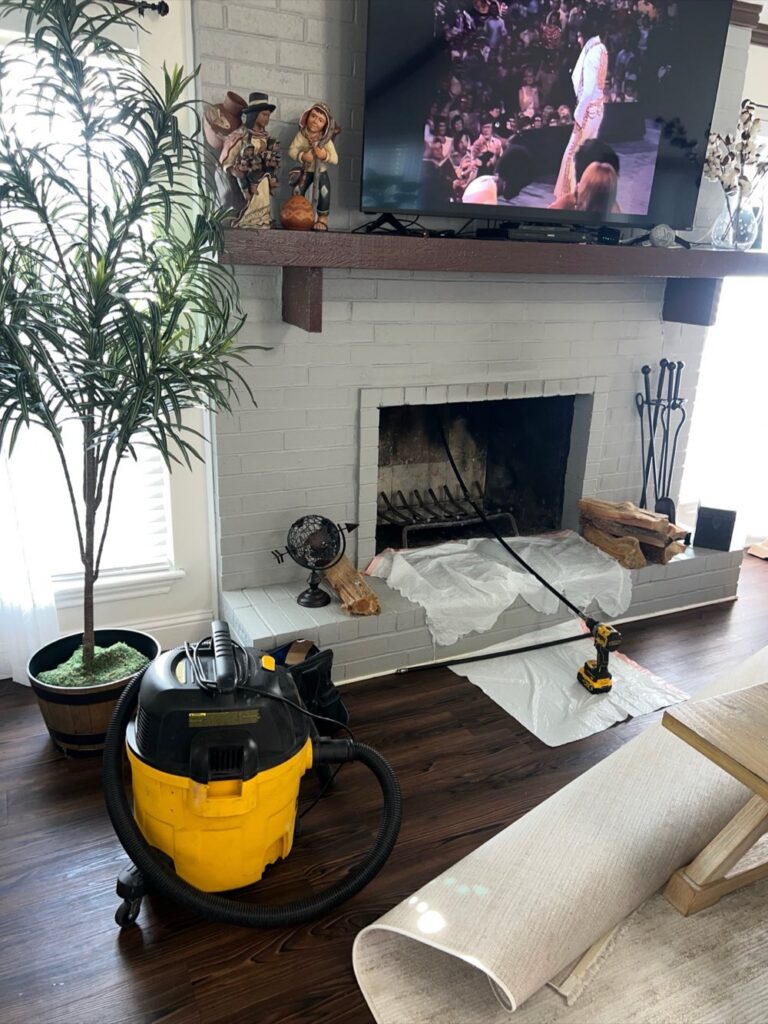
- Heavy drop cloths go down first, the fireplace opening gets sealed, and a vacuum with a fine filter runs the whole time, so the dust ends up in the machine and not on your furniture.
- We look before we brush. A light and a camera up the flue, so we work off what is in there rather than a guess.
- The flue gets brushed, down from the top or up from the firebox depending on your chimney, with a brush sized to your flue.
- We clear the parts people forget. The smoke shelf behind the damper holds the worst of it, and so does the smoke chamber above the firebox.
- The damper gets cleaned and worked until it seals when shut, the firebox gets emptied, and everything that came out leaves with us.
- We walk you through the photos before we go, on the screen, standing in your living room.
Talk To Someone About Your Chimney
The visit runs about an hour, and you see the photos on the screen before we leave. If that is what your fireplace needs, call now or ask for a call back.
What you should expect to see on the drop cloth
Nobody explains this part. When the drop cloth comes out, the pile on it is the story of your chimney. Ask to see it before it goes in the truck. There is no correct amount. What matters is what it is made of.
- Fine black powder. Soot. Normal. Every wood fire makes it.
- Dry brown or black flakes. First stage creosote, and exactly what a yearly sweep is for.
- Hard, crunchy dark chips. Second stage. Your fires have run cooler than they should, or the wood was damp.
- Shiny black chunks like set tar. Glazed creosote. A conversation, not a sweep.
- Orange or sandy grit. Not soot. That is mortar or clay tile coming apart inside the flue, which is a repair problem, not a dirt problem.
- Rust flakes and grey dust. Usually a factory built metal fireplace with water coming in from the top.
- Twigs, leaves, straw, feathers, acorn shells. Something has been living up there.
- White chalky powder on the brick. Often water sitting where it should not.
Photos, not promises
We are new here and we are not going to pretend otherwise, or hand you a badge and a number we cannot back up. What we can do is document the visit and give it to you.
- The top of the chimney, the cap and the crown, shot from the roof. That is the part of your house you have never seen.
- The flashing line where the chimney meets the roof.
- Inside the flue, before and after, so you see the difference instead of taking our word for it.
- The smoke chamber, the smoke shelf, and the damper open and closed.
- Anything that concerns us, close up, with a note in plain English saying what it is.
- All of it goes to you the same day and it is yours to keep, including if you take it to another company for a second opinion.
What happens if we find something
Most sweeps end with a clean chimney and a set of photos. Some do not. If we find a cracked tile, a rusted cap or a split crown, you get the photo and a straight answer, not a scare. A new chimney cap is one of the cheapest fixes on a house. If your chimney leaks when it rains, the answer is usually up top, not inside. Anything bigger gets quoted as chimney repair after you have seen the photos, never on the spot before you have.
Get it looked at before you light the first fire
Tell us what your fireplace has been doing and we will tell you what we think is going on. Call, or send a photo of the firebox and one of the top of the chimney, and you get a straight answer back instead of a sales pitch.
WHAT HAPPENS WHEN YOU CALL
You call or send the form
We ask what you are seeing or hearing. A person, not a queue.
We arrive and cover everything
Tarps down and the vacuum ready before a tool comes out.
Camera, brushes, eyes on all of it
Firebox, damper, flue and the top of the chimney, photographed.
Photo report the same day
You see what we saw and decide what happens next.
COMMON QUESTIONS
A chimney sweep is the removal of soot and creosote from the flue, smoke shelf and firebox. Local Chimney Experts starts with a light and camera up the flue, brushes it clear, photographs every finding, and sends the photo report the same day. The service covers Dallas-Fort Worth, and chimney cleaning is the same job.
Yes. Same visit, same work, two words for it. Sweep is the trade word and cleaning is what most people say. If you called asking for either one, you are asking for the same job.
Plan on about an hour for a standard fireplace. The mess is the whole reason the setup takes as long as it does. Drop cloths go down, the fireplace opening gets sealed, and a vacuum with a fine filter runs the entire time. Done properly, the only sign anyone was there is a clean firebox.
Looked at once a year, swept when the buildup calls for it. The guideline is about an eighth of an inch of buildup on the flue walls. Somebody burning most winter nights hits that yearly. Somebody who lights three fires a season does not. We will show you which one you are instead of just booking you in again.
Yes. Plenty of DFW homes built from the eighties on have a factory built metal fireplace sitting inside a framed chase with siding on the outside. They still burn wood, they still make creosote, and they need a softer brush and a lighter hand than a brick flue because the pipe and the interior panels can be damaged. They also age differently. The metal cover on top of the chase rusts, and once it does the water runs straight down inside.
The flue still needs looking at. A vented gas set sends its combustion up the same chimney, and that chimney can still be blocked by a nest, a fallen tile or debris. What we will not touch is the gas side of it. We do not work on gas lines, valves or burners, and anyone telling you that is part of a chimney sweep is selling you something else.
Sometimes, and sometimes the answer has to be not yet. Chimney swifts nest in Texas chimneys through the spring and summer, and they are protected under federal law while they are nesting, so an active nest does not come out. Not by us, not by anybody. Once they have left, the chimney gets cleared and a cap goes on so it does not happen again. If what you are hearing is scratching in the middle of winter, that is a different animal and we can usually deal with it.
For the start and the end, yes. We need access to the fireplace, and we want to walk you through the photos face to face before we leave rather than emailing you a report you have to decode on your own.
REQUEST A CALL BACK
A person calls you back about your chimney, not a dispatcher.
Not Sure Whether It Actually Needs Sweeping?
Tell us what you are seeing or hearing. We will tell you what it usually means and what looking at it involves.