
Chimney and Fireplace Service in North Richland Hills
From old Smithfield brick to 1980s chase-built fireplaces off Davis Boulevard, NRH chimneys have their own patterns. Here is what we see, with photos to prove it.
LOCALLY BASED IN DFW
We drive to you, no national call center
WRITTEN PHOTO REPORT
Every finding shown before it is quoted
SAME-WEEK SCHEDULING
Booked in days, not weeks
OWNER-ANSWERED PHONE
The person who answers is the person who comes
The fireplace worked last winter. Now there are rust streaks running down the chimney siding, a damp smell in the firebox, or a chattering sound somewhere up the flue. Or you just bought a house off Davis Boulevard and the inspection report said “have chimney evaluated” and left it at that.
Local Chimney Experts is new to the trade in North Richland Hills, and we will not pretend otherwise. What we offer instead is careful work and photos of everything we find, before and after, so nothing rests on our word alone. If nothing is wrong, that is the report you get.
This page is about North Richland Hills homes specifically: how the city was built, what that means for its chimneys, and what to watch for in yours.
YOU SEE WHAT WE SEE
You cannot see your own chimney. That is the whole problem with this trade, and it is why people feel talked into things.
Every visit ends with photographs of what we found, walked through with you before anything is quoted. If the pictures show nothing wrong, that is the report you get.
- Camera up the flue, not a guess from the hearth
- Every finding photographed before it is quoted
- The same spots photographed again after the work
- Written report in your inbox the same day
North Richland Hills Grew Fast, and Its Chimneys Show It
The oldest part of the city is not called North Richland Hills at all. Smithfield was a farm community from the mid-1800s, got its rail stop when the Cotton Belt line came through in 1887, and was annexed into the young city by 1960. North Richland Hills itself incorporated in 1953 on 268 acres of a former dairy farm, with about 500 residents.
Then came the boom. The city grew from 8,662 people in 1960 to 30,592 in 1980 and 45,895 by 1990. Most of the houses standing today went up in that stretch, which is why the typical NRH chimney is not old brick. It is a factory-built fireplace inside a wood-framed chase from the 1970s or 1980s.
That history draws a simple map. A small pocket of older masonry sits near the original Smithfield corridor. A broad middle of chase-built fireplaces covers the central city in the 76180 ZIP code. Newer construction fills in the north side toward 76182.
The Chase-Built Fireplace Is the NRH Default
Drive through Richland Oaks, Meadow Lakes, or Woodland Oaks and most of the chimneys you see are not solid masonry. They are wood-framed boxes wrapped in brick veneer or siding, with a metal firebox and flue pipe inside and a sheet metal cover on top. Woodland Oaks dates to 1989, and Meadow Lakes and Richland Oaks are from the same broad era. This construction was the standard across the Mid-Cities during the growth decades.
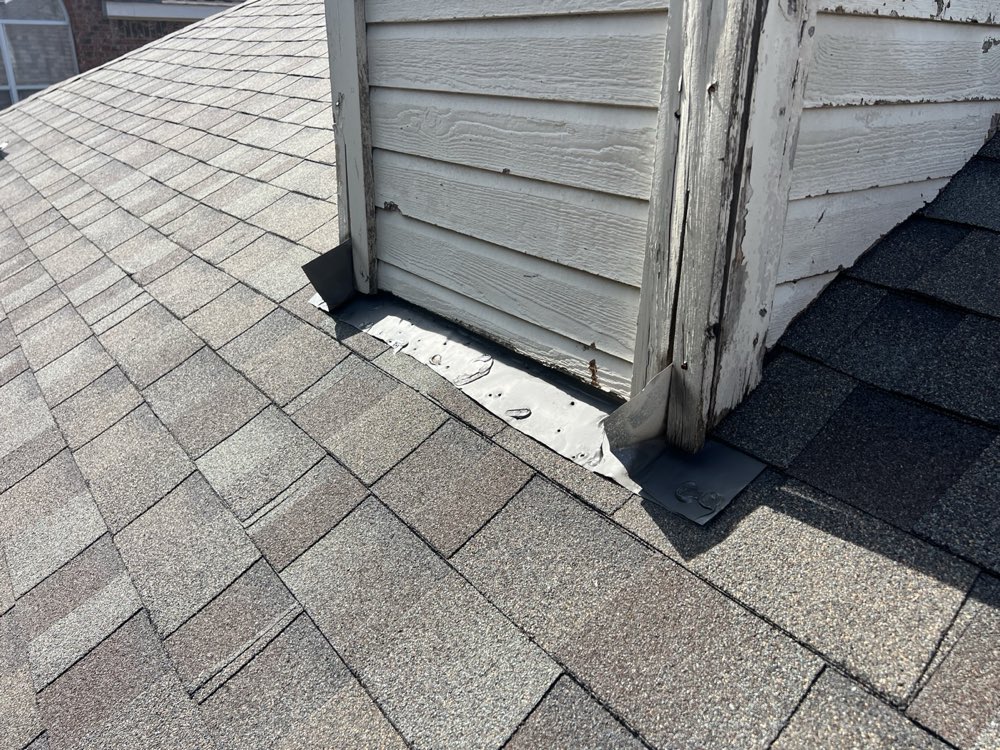
Chase-built fireplaces fail at the top. The flat metal chase cover collects water, rusts through at seams or screw holes, and starts letting rain into the wood framing below. By the time a stain shows on the ceiling near the fireplace, water has usually been getting in for a while.
Most of these systems are now thirty to forty-five years old, which is late in the life of an original chase cover and firebox. That is not a sales line. It is arithmetic on the build dates.
- Rust streaks running down the siding or brick below the cover
- A chase cover that pools water instead of shedding it
- Cracks in the firebox back panel wider than a hairline
- A ceiling stain near the fireplace after hard rain
We Cover North Richland Hills.
Tell us what you are seeing and we will tell you which visit it needs.
Older Brick Near Smithfield and Glenann
The pre-1980 pockets are different. Glenann was one of the original subdivisions, with homes listed from the city’s 1953 founding era, and the streets around old Smithfield hold the oldest stock in town. Houses here are more likely to have a true masonry chimney: brick, mortar, and a clay tile liner, or no liner at all if the flue was never updated.
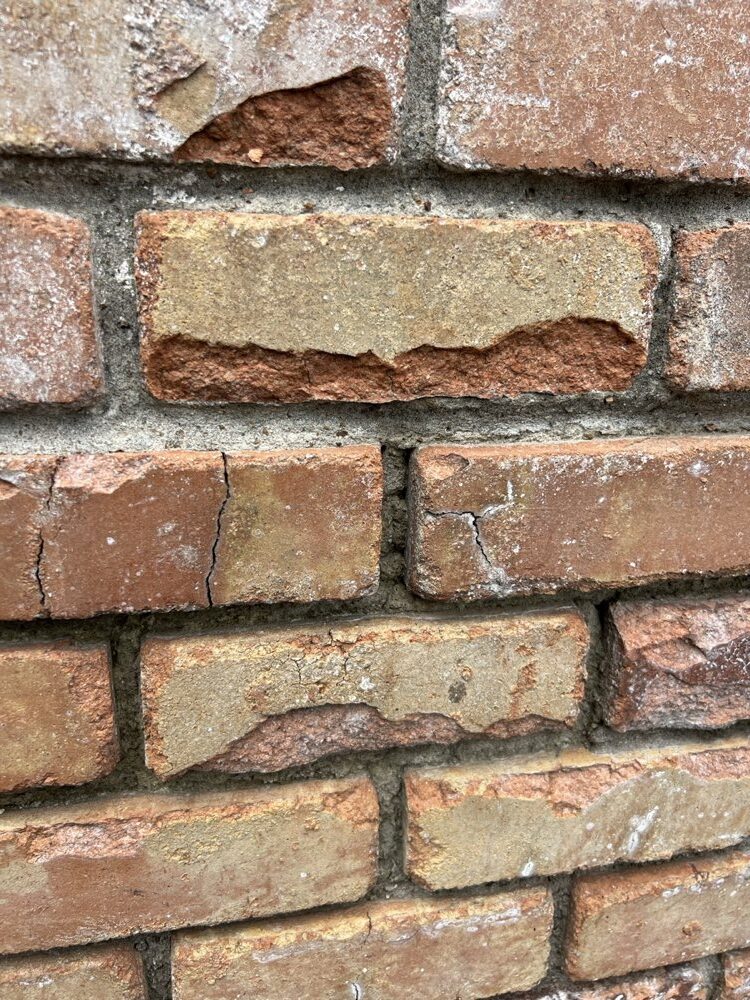
Old masonry fails slowly. Mortar joints soften and let water in. Crowns crack. Clay tile liners lose sections without any sign visible from the living room. None of that is an emergency on day one, but all of it gets worse the longer it soaks.
On these houses we photograph the flue and the masonry before recommending anything. Sometimes the honest finding is that a sixty-year-old chimney is in decent shape. When it is, that is what the report says.
Clay Soil, Hard Freezes, and Spring Hail
The ground under northeast Tarrant County is expansive clay. It swells after rain, shrinks in summer heat, and moves foundations as it goes. A masonry chimney is heavy and rigid, so when the house shifts, the chimney can lean or pull away from the wall. If a gap is opening between the chimney and the siding, that started in the soil, not the brick.
Winter adds freeze-thaw damage. Water soaks into brick, cracked crowns, and open mortar joints, then freezes and expands. Most years bring a few hard freezes, and the February 2021 storm showed what a long one can do.
Hail matters more in North Richland Hills than in cities with older housing stock, because so many chimneys here are topped with a flat sheet metal cover. Hail dents covers, cracks caps, and opens seams. After a storm, the roof gets an inspection and the chimney top usually gets forgotten.
- White staining on brick, a sign water is moving through it
- A gap between the chimney and the house wall
- Dents or standing water on a metal chase cover after hail
- Chunks of mortar or crown in the gutters
Thornbridge, Forest Glenn, and HomeTown: Newer Is Not Sealed
The north side kept building after the boom. Thornbridge started in 1992 off Davis Boulevard. Forest Glenn added roughly 600 homes between the mid-1990s and 2019. HomeTown, the walkable district near the library and NRH2O, broke ground around 1999 and finished its build-out only recently.
A fireplace from 2005 has the same weak points as one from 1985, just on a delay. Chase covers still rust. Caps still take hail. Crown sealant still dries out and splits. The difference is that owners of newer homes rarely think about the chimney at all, so small problems get more seasons to grow.
If you bought in one of these neighborhoods and the fireplace has never been looked at, one inspection with photos is the simplest way to find out where you stand.
New Company, Documented Work
We do not have decades of history to point to, so we built the business around something you can check yourself: photos. The inside of your flue before we sweep it. The rusted seam we found on your chase cover. The same spots after the work. We call it Photos Not Promises. You judge the work with your own eyes, not our adjectives. When you call, you talk to the technician, and the technician is who shows up.
One boundary worth stating plainly: we work on the masonry and venting side of a fireplace. Gas lines, valves, and pilot assemblies belong to a gas fitter, and if your problem lives there, we will say so instead of touching it.
If you are not sure where to start: a chimney inspection makes sense for a house with an unknown history, a chimney sweep if you burn regularly, and chimney repair if you already know something is broken.
Talk To Someone Who Works In North Richland Hills
Tell us what you are seeing or hearing and we will tell you whether it needs a sweep, an inspection, or a repair. If it is nothing, we will say that too.
WHAT HAPPENS WHEN YOU CALL
You call or send the form
We ask what you are seeing or hearing. A person, not a queue.
We arrive and cover everything
Tarps down and the vacuum ready before a tool comes out.
Camera, brushes, eyes on all of it
Firebox, damper, flue and the top of the chimney, photographed.
Photo report the same day
You see what we saw and decide what happens next.
COMMON QUESTIONS
Yes. Pre-1980 masonry needs a lighter touch. Softer brick, older mortar, and liners that may be original to the house. We photograph the flue and the masonry before recommending anything, so you see exactly what shape it is in.
On a chase-built fireplace, which most NRH homes from the 1970s through the 1990s have, rust streaks usually mean the sheet metal chase cover is corroding. Once it rusts through, rain gets into the wood framing under it. It is worth a look soon, and a chase cover replacement is a contained fix when caught early.
If it has never been inspected, yes. Newer systems fail in the same places as older ones, just later: covers, caps, crowns, and flashing. One inspection with photos tells you whether you can stop thinking about it for a while, and if everything is fine, that is the report you get.
Common across northeast Tarrant County. The clay soil moves foundations, and the chimney often moves with them. A small, stable gap is worth watching. A growing one needs a real look, not a bead of caulk. We document what we find so you can compare it over time.
Partly. We handle the chimney and venting side: the flue, the cap, the firebox, the damper. Gas lines, valves, and pilot assemblies are a gas fitter’s work, not ours, and if the problem is on the gas side we will tell you that plainly. If you smell gas itself, leave the house and call your gas provider before anyone else.
The burn season here runs roughly November through February. If you burn most weekends of that stretch, have the chimney checked once a year before the first fire. If you barely use it, an inspection will tell you whether a sweep is even needed. Buildup depends on your wood and your habits, not the calendar.
All of North Richland Hills, both the 76180 and 76182 ZIP codes, from the Smithfield corridor to the newest streets up north. We also work in nearby Tarrant County cities, including Fort Worth and Arlington. We are a mobile company, so we come to you.
REQUEST A CALL BACK
A person calls you back about your chimney, not a dispatcher.
Rust Streaks Below Your Chase Cover?
Most NRH chimneys are 1970s and 1980s chase builds that fail at the cover first; we photograph yours before anything is quoted.