
Chimney and Fireplace Service in Irving, TX
South of the old rail line, Irving is 1950s ranch homes with true masonry chimneys. Up in Las Colinas and Valley Ranch, the fireplaces are metal boxes inside framed chases. We work on both, and we photograph everything we find.
LOCALLY BASED IN DFW
We drive to you, no national call center
WRITTEN PHOTO REPORT
Every finding shown before it is quoted
SAME-WEEK SCHEDULING
Booked in days, not weeks
OWNER-ANSWERED PHONE
The person who answers is the person who comes
The fireplace in your Irving house has been quiet since February. Now there is a musty smell after rain, a white haze creeping up the brick, or a home inspector’s note that says “have chimney evaluated by a specialist” and nothing more.
Local Chimney Experts is a new company, and we say so up front. What we offer instead of a long track record is documentation: we photograph what we find and show you before anything is quoted. If nothing is wrong, that is the report you get.
This page is about Irving specifically: how the city grew in two distinct waves, why the chimneys from each wave fail differently, and what to watch for in yours.
YOU SEE WHAT WE SEE
You cannot see your own chimney. That is the whole problem with this trade, and it is why people feel talked into things.
Every visit ends with photographs of what we found, walked through with you before anything is quoted. If the pictures show nothing wrong, that is the report you get.
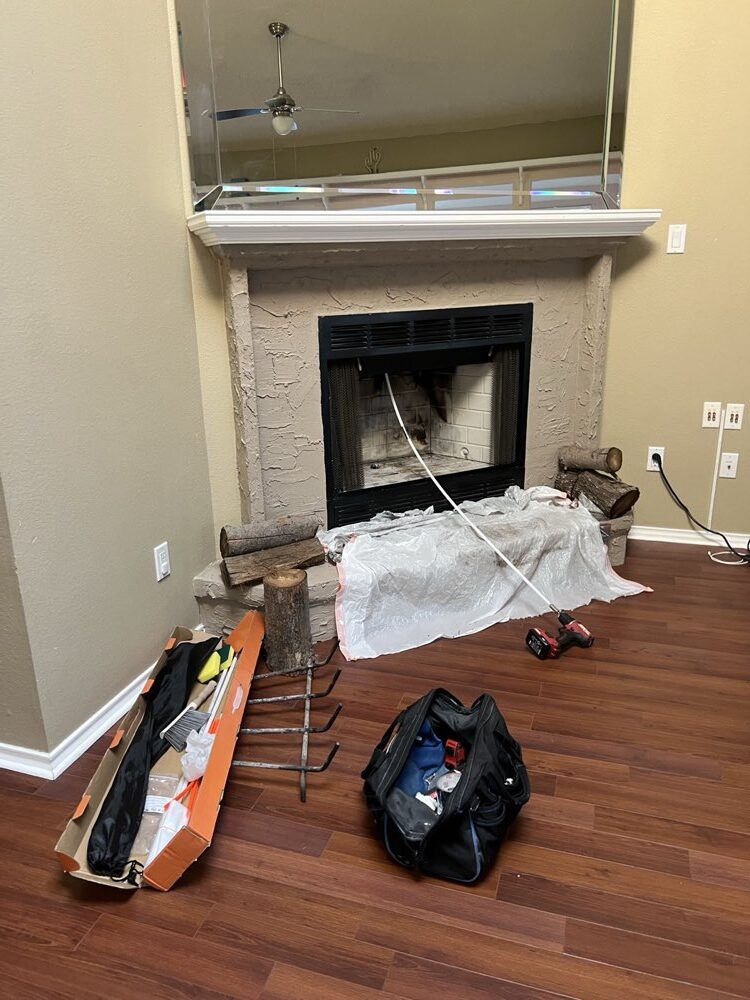
- Camera up the flue, not a guess from the hearth
- Every finding photographed before it is quoted
- The same spots photographed again after the work
- Written report in your inbox the same day
Irving Grew in Two Waves, and Its Chimneys Show It
Irving started in 1903 as a stop on the Rock Island rail line between Dallas and Fort Worth. The original townsite is today’s Heritage District in south Irving, where the commuter rail still stops in the old downtown. For its first fifty years the town stayed small, around 2,600 people in 1950.
Then the postwar boom hit. Farmland turned into subdivisions street by street, and by 1960 Irving held roughly 46,000 residents. Most of south and central Irving was built in that stretch and the two decades after it: single-story ranch homes, low rooflines, and brick chimneys built the traditional way, one course at a time, with a clay tile liner or sometimes no liner at all.
North Irving is practically a different city. Las Colinas was a family ranch until its master plan was unveiled in 1973, timed to the new DFW Airport rising along Irving’s western edge. Valley Ranch followed as development took off in the 1980s. Homes there mostly have factory-built fireplaces: a metal firebox and flue pipe inside a wood-framed chase, wrapped in brick veneer or siding, with a sheet metal cover on top.
South Irving: Masonry Past Its 60th Birthday
A chimney built in 1958 has stood through almost seventy North Texas summers and winters. Mortar joints soften and wash out. The crown, the concrete cap on top, cracks and lets water into the structure. Clay tile liners crack from age, and sometimes from a small chimney fire the owners never knew happened.
Many of these flues were built for wood and later had gas logs dropped in, which changes how much heat and moisture the flue sees. If your south Irving home still has its original chimney, the honest starting point is a camera inspection, not a guess from the curb. These are the signs worth acting on:
- White or gray staining on the brick, a sign water is moving through it
- Sand trickling from mortar joints onto the roof or the ground below
- Pieces of clay tile in the firebox after a storm or a hard freeze
- A damp, ashy smell indoors on humid summer days
We Cover Irving.
Tell us what you are seeing and we will tell you which visit it needs.
Las Colinas and Valley Ranch: The Problem Is at the Top
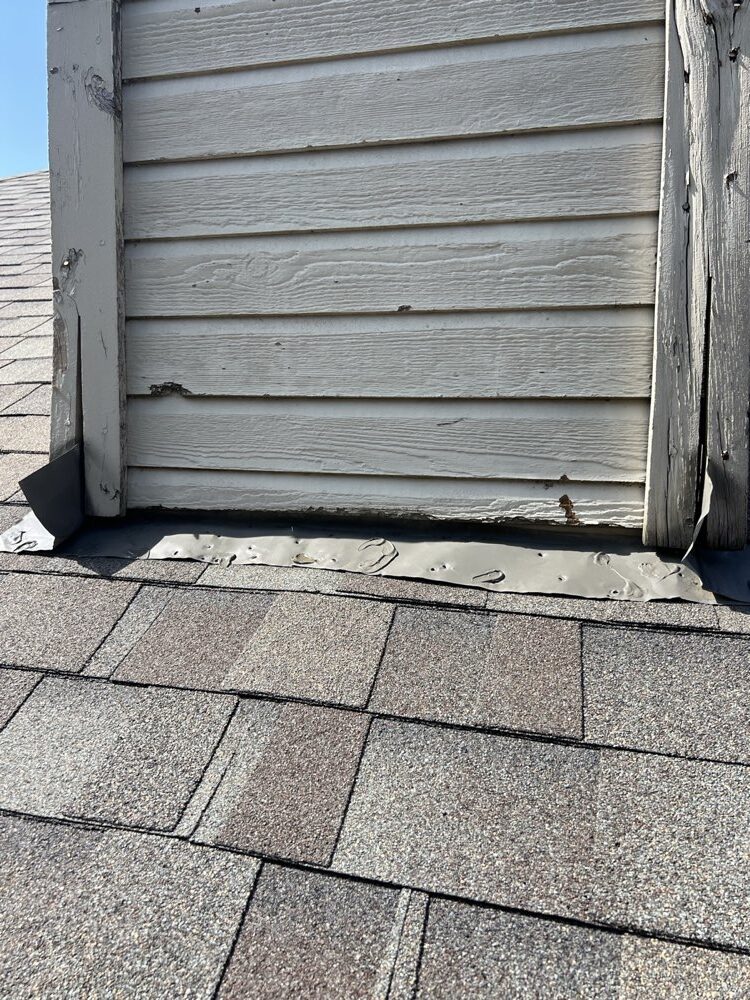
The brick on a typical Las Colinas chimney is a veneer around a wood frame, not a solid masonry stack. Inside sits a factory-built metal firebox and a metal flue. These systems work well until water gets in, and the way water gets in is the chase cover, the sheet metal lid on top of the chase.
Builders often installed plain galvanized covers. After twenty or thirty years of sun, rain, and hail, they rust through at the low spots and around the fasteners. Water then drips onto the framing and the firebox, and the first sign most owners notice is rust streaks on the siding or a stain on the ceiling near the fireplace.
Valley Ranch is a useful age marker: the neighborhood took off in the 1980s, the same era the Dallas Cowboys opened their old headquarters there before moving to Frisco in 2016. Fireplaces from those years are now reaching the age where covers and prefab panels give out. A properly fitted chase cover replacement usually ends the leak for good.
Clay Soil, Freeze-Thaw, and Hail in Irving
Irving sits on the same expansive clay as the rest of North Texas. The soil swells after rain, shrinks in the August heat, and drags foundations along for the ride. South Irving’s older homes have absorbed sixty-plus years of that movement, so a masonry chimney that leans slightly or shows a gap where it meets the wall is a common sight. The gap started in the soil, not in the brick, and a bead of caulk is not the fix.
Winter adds its own damage. Water soaks into porous brick and cracked crowns, freezes, expands, and opens the joints a little wider each cycle. Spring hail hits the highest point of the house first, which is the chimney: dented caps, punctured chase covers, cracked crowns. After a hailstorm the roofer checks the shingles, and the chimney usually gets forgotten.
Buying an Older Irving House
South Irving’s ranch homes draw first-time buyers, and plenty of them have been flipped: fresh paint, new floors, and a chimney nobody opened. General home inspectors routinely write “have the chimney evaluated” because the inside of the flue is outside their scope.
A camera inspection before closing tells you whether the liner is intact, whether the crown is doing its job, and whether the fireplace that staged so nicely is actually safe to light. You get the photos either way. If everything checks out, that is the report, and it costs you nothing extra to know it.
New Company, Documented Work
We do not have a wall of plaques, and we will not invent one. The business is built around photographs: the inside of your flue before we sweep it, the crack we found in your crown, the same spots after the work. We call it Photos Not Promises. You judge the work with your own eyes, not our adjectives. When you call, you talk to the technician, and the technician is who shows up.
One more honest boundary: we work on the masonry and venting side only. Gas lines, valves, and pilot assemblies belong to a gas fitter, and if your problem turns out to be on the gas side, we will say so and point you to the right trade instead of dabbling.
Talk To Someone Who Works In Irving
Tell us what you are seeing or hearing and we will tell you whether it needs a sweep, an inspection, or a repair. If it is nothing, we will say that too.
WHAT HAPPENS WHEN YOU CALL
You call or send the form
We ask what you are seeing or hearing. A person, not a queue.
We arrive and cover everything
Tarps down and the vacuum ready before a tool comes out.
Camera, brushes, eyes on all of it
Firebox, damper, flue and the top of the chimney, photographed.
Photo report the same day
You see what we saw and decide what happens next.
COMMON QUESTIONS
Not automatically. Some clay tile liners from that era are still sound, some are cracked, and some flues were built with no liner at all. A camera inspection settles it with pictures instead of assumptions. If the liner has failed, a liner replacement makes the flue usable again.
Usually not. In most homes built there after the 1973 master plan, the brick is a veneer around a wood-framed chase with a metal firebox inside. It is a fine system, but it fails at the top, at the chase cover, not in the brick. We check the cover, the cap, and the flue pipe, and photograph all of it.
It is a North Texas clay thing, and Irving’s older neighborhoods have had more decades of soil movement than most. A small, stable gap is worth watching. A growing one needs a real evaluation. Sealing it with caulk alone treats the symptom and hides the evidence.
Almost always a rusting chase cover, the metal lid on a framed chimney chase. Streaks mean it is already shedding rusty water. Replacing the cover before water reaches the framing is the small version of that repair; waiting turns it into carpentry.
The burn season here runs roughly November through February. If you burn wood most weekends of that stretch, have it checked once a year before the first fire. Gas logs build up far less, but liners and crowns fail with age, not use, so the flue still needs eyes on it. An inspection tells you whether a sweep is even needed.
No. We handle the chimney and venting side: flue, liner, crown, cap, firebox masonry, and chase. Gas lines, valves, and pilots are gas fitter work. If we spot a gas-side concern during a visit, it goes into your photo report so you can hand it to the right trade.
All of it: the Heritage District and the rest of south Irving, the central neighborhoods, Las Colinas, and Valley Ranch, plus neighboring cities on both sides. We are a mobile company, so we come to you.
REQUEST A CALL BACK
A person calls you back about your chimney, not a dispatcher.
Which Wave Built Your Irving Chimney?
A 1958 masonry stack and a Las Colinas chase cover fail differently. The camera and the photo report tell you which problem is yours.