
Chimney Sweep & Fireplace Service in Duncanville, TX
Most of Duncanville was built in one generation, the 1960s and 70s, and so were its chimneys. Here is what that means for yours, with photos to prove everything we find.
LOCALLY BASED IN DFW
We drive to you, no national call center
WRITTEN PHOTO REPORT
Every finding shown before it is quoted
SAME-WEEK SCHEDULING
Booked in days, not weeks
OWNER-ANSWERED PHONE
The person who answers is the person who comes
Most chimney calls in Duncanville start the same way. The house is a brick ranch from the 1960s or 70s, the fireplace is original, and nobody has looked inside the flue in years, maybe ever. The damper is stiff, there is a musty smell after rain, or a home inspector wrote “recommend chimney evaluation” and moved on.
Local Chimney Experts is new to the trade, and we say so up front. What we offer instead of a long history is documentation: we photograph what we find and show you before anything is quoted. If nothing is wrong, that is the report you get.
This page is about Duncanville homes specifically: why almost every chimney in town is the same generation, which neighborhoods we mean, and what to watch for in yours.
YOU SEE WHAT WE SEE
You cannot see your own chimney. That is the whole problem with this trade, and it is why people feel talked into things.
Every visit ends with photographs of what we found, walked through with you before anything is quoted. If the pictures show nothing wrong, that is the report you get.
- Camera up the flue, not a guess from the hearth
- Every finding photographed before it is quoted
- The same spots photographed again after the work
- Written report in your inbox the same day
Almost Every Chimney in Duncanville Is the Same Age
Duncanville incorporated in 1947 as a town of about 225 acres, mostly to avoid being annexed by Dallas. It stayed small until the 1960s, passing 5,000 residents in 1962, then filled in fast through the 1970s. The median home here was built around 1978, and unlike Frisco or McKinney, there are no big modern subdivisions still going up. What was built then is what stands now.
For chimneys, that matters more than it does for almost any other part of the house. A fireplace from that era is true masonry: brick walls, a clay tile liner, a poured mortar crown on top. Those chimneys are now 45 to 60 years old, and many have never been relined, recrowned, or in some cases even swept.
Newer suburbs are full of factory-built fireplaces, metal boxes inside wood-framed chases that fail at the top when the sheet metal cover rusts. Duncanville has some of those, but the typical call here is the opposite problem: heavy, aging masonry that has been quietly weathering for half a century.
The Neighborhoods We Mean
The pattern holds across town. Fairmeadows went up between 1961 and 1971. Duncanville Estates, along with the Alexander, Merrifield, and Armstrong areas, is 1960s and 70s brick ranches street after street. Winona Gardens is older still, with a core dating to 1956. Greenway Estates and Green Hills added larger homes through the 1970s, Swan Ridge Estates followed from 1975 to 1980, and Lime Tree closed out the era in the early 1980s. The blocks around Original Downtown go back before the 1940s, on a townsite that began as a railroad stop called Duncan Switch in 1880.
Walk any of these streets and the fireplaces are original equipment. Same brick, same clay liners, same crowns, all reaching the age where mortar and tile start to give.
- Winona Gardens: core dates to 1956, among the oldest postwar streets in town
- Fairmeadows: built 1961 to 1971
- Duncanville Estates, Alexander, Merrifield, Armstrong: 1960s and 70s brick ranches
- Greenway Estates: 1972 to 1977
- Green Hills: 1970s ranch homes near the preserve land on the city's edge
- Swan Ridge Estates: 1975 to 1980
- Lime Tree: 1982 to 1983
- Original Downtown: pre-1940s core on the 1880s townsite
We Cover Duncanville.
Tell us what you are seeing and we will tell you which visit it needs.
What Clay Soil, Freeze-Thaw, and Hail Do to 50-Year-Old Brick
North Texas sits on expansive clay soil that swells when it rains and shrinks in the August heat. Foundations move, and a masonry chimney, the heaviest and most rigid thing attached to the house, moves last. On a Duncanville ranch that has been riding that cycle since the 1960s, the result shows up as a lean, a gap between chimney and siding, or stair-step cracks in the brick.
Freeze-thaw does the slower damage. Most winters bring a handful of hard freezes. Water sitting in a cracked crown or an open mortar joint expands as it freezes and pries the crack wider each time. A crown poured in 1970 has been through that cycle hundreds of times.
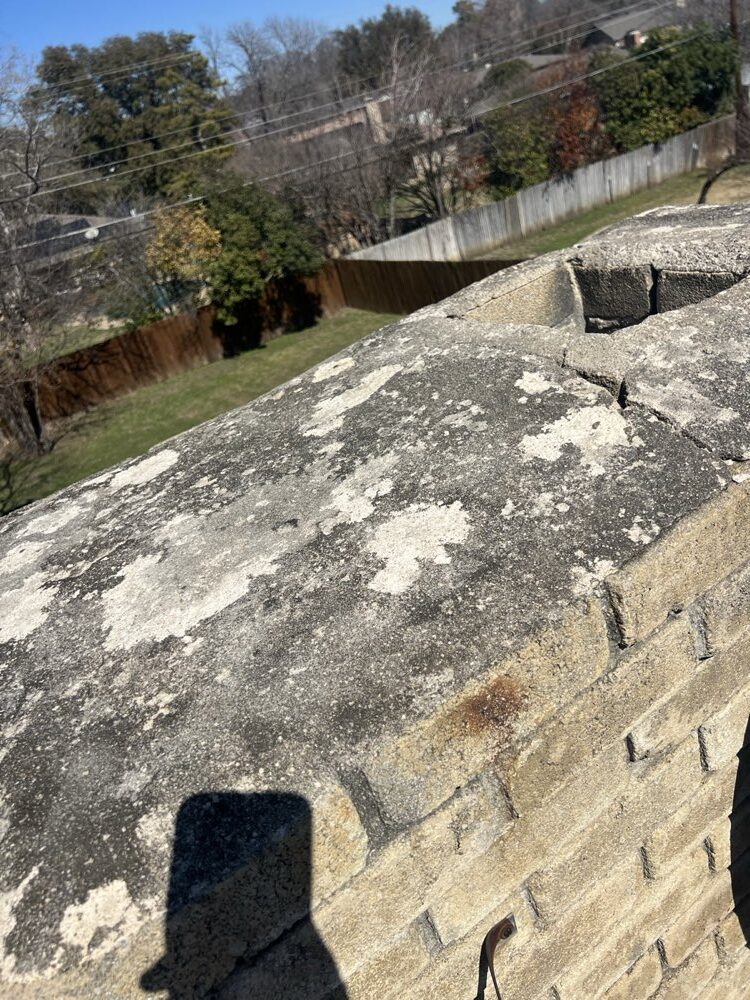
Spring hail rounds it out. The chimney is the highest point on the roof and takes the first hit. After a storm, roofers check the shingles and nobody checks the crown. If the crown or brick is damaged, chimney crown repair and chimney brick repair are the pages to read.
- White staining on the brick, a sign water is moving through it
- A visible lean, or a gap opening between the chimney and the wall
- Chunks of mortar or crown showing up in the gutters
- Spalling: brick faces popping off in flakes or chunks
The Liner Question in Older Duncanville Homes
Most Duncanville flues are lined with clay tile that went in with the house. Clay tile is a good liner until it cracks, and it cracks for the same reasons everything else here does: soil movement, heat cycles, and time. Cracked or shifted tiles let heat and combustion gases reach parts of the chimney that were never meant to see them.
The oldest homes near Original Downtown can be a different story. Some flues from the early decades were never lined at all. There is no way to judge a liner from the ground. We run a camera up the flue, photograph every joint, and show you the images. If the tiles are sound, that is the report. If they are not, you will see exactly which ones and where, before any decision is on the table.
What We Do Here, and What We Hand Off
Our work is the masonry and venting side: sweeping, inspection with photos, crown and mortar work, brick repair, caps, dampers, flashing, and waterproofing.
Many Duncanville fireplaces have gas logs or gas starters in them. The gas line, the valve, and the pilot are a gas fitter’s work, not ours, and we will tell you that on site rather than touch something outside our trade.
If you are not sure where to start: a chimney inspection fits a house with an unknown history, a chimney sweep fits one that burns regularly, and chimney repair fits a problem you can already see.
New Company, Documented Work
Duncanville calls itself the City of Champions, mostly for its high school teams, and it is the kind of place where word of mouth carries weight. We are new here and have no word of mouth yet, so we built the business on something you can check yourself: photos of everything we find, before and after. You judge the work with your own eyes, not our adjectives. When you call, you talk to the technician, and the technician is who shows up.
We cover all of Duncanville, both residential ZIP codes, 75116 and 75137, plus the neighboring Best Southwest cities of DeSoto, Cedar Hill, and Lancaster, and southwest Dallas.
Talk To Someone Who Works In Duncanville
Tell us what you are seeing or hearing and we will tell you whether it needs a sweep, an inspection, or a repair. If it is nothing, we will say that too.
WHAT HAPPENS WHEN YOU CALL
You call or send the form
We ask what you are seeing or hearing. A person, not a queue.
We arrive and cover everything
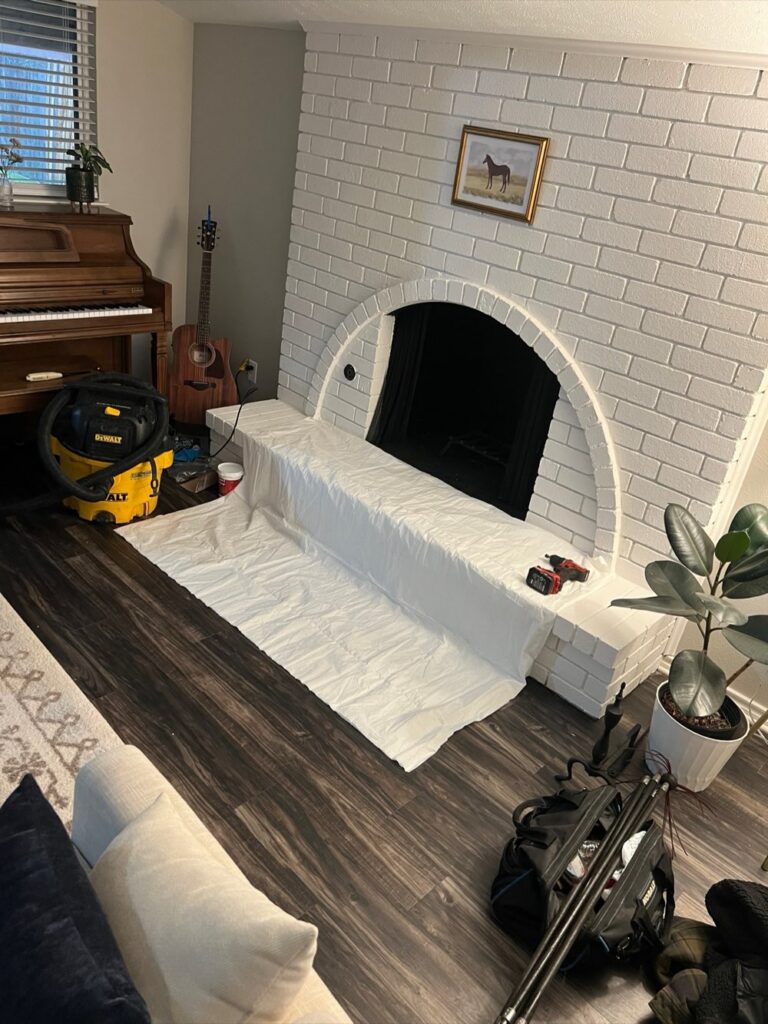
Tarps down and the vacuum ready before a tool comes out.
Camera, brushes, eyes on all of it
Firebox, damper, flue and the top of the chimney, photographed.
Photo report the same day
You see what we saw and decide what happens next.
COMMON QUESTIONS
Start with an inspection, not a sweep. A camera up the flue and photos of the crown, brick, and firebox tell you what shape it is in. If the flue is clean and the tiles are sound, you get those photos and nothing else. If something is wrong, you see it before you decide anything.
Not blind. An unused flue in a 1960s Duncanville home can hold a cracked liner, a failed damper, an old bird nest, or decades of debris. One inspection settles it. After that, if everything checks out, burn away.
Common enough that we look for it on every visit. The clay soil under southwest Dallas County moves foundations, and a 60-year-old masonry chimney moves with them. A hairline gap is worth photographing and watching. A gap that grows season to season needs a real structural look.
Yes. When camera photos show cracked or shifted tiles, relining is usually the fix, and you will see the exact tiles in the images before we talk about it. The chimney liner replacement page explains the options.
We handle the chimney around them: the flue, damper, cap, and masonry. The gas line, valve, and pilot belong to a gas fitter, and we say so rather than work outside our trade. Plenty of Duncanville jobs involve both, one visit from us and one from them.
All of it. Both residential ZIP codes, 75116 and 75137, from the pre-1940s blocks around Original Downtown to Swan Ridge Estates and Lime Tree. We are a mobile company, so we come to you, and we also serve DeSoto, Cedar Hill, and Lancaster next door.
It depends on burning, not the calendar. The burn season runs roughly November through February. If you burn most weekends of that stretch, have the flue checked yearly before the first fire. If the fireplace mostly sits, an inspection will tell you whether a sweep is needed at all.
REQUEST A CALL BACK
A person calls you back about your chimney, not a dispatcher.
Is Your Duncanville Chimney Aging With the Rest of the Block?
Most flues here went in with the house fifty years ago. We photograph the tiles and the crown and send the report, even when nothing is wrong.