
Chimney Crown Repair in Dallas-Fort Worth
The concrete cap on top of your chimney is the only thing keeping rain out of the brick. When it cracks, water gets in. We find the cracks, show you photos, and fix the crown before the damage spreads down.
CAMERA INSPECTION
We look before we quote, every time
PHOTOS OF EVERY FINDING
No photo, no claim
MASONRY AND VENTING ONLY
Gas lines go to a gas fitter and we say so
SAME-DAY REPORT
In your inbox before we finish the day
The crown is the concrete slab that covers the top of your chimney. Most homeowners have never seen theirs up close. It sits two stories up, takes the full Texas sun all summer, and takes every rainstorm head on. It has one job: shed water away from the brick below it.
When the crown cracks, that job stops. Rain runs into the crack instead of off the edge. From there it soaks into the brick and mortar inside the chimney, where you can’t see it. By the time water stains show up on a ceiling or the brick starts flaking, the crown may have been leaking for years.
We repair and rebuild chimney crowns across Dallas-Fort Worth. Every job starts with photos from the roof, so you see exactly what we see before any work begins. That’s how we run every job: Photos Not Promises.
Chimney crown repair restores the concrete slab on top of a chimney that sheds rain away from the brick. Hairline cracks in a sound crown are sealed with a flexible waterproof coating; a structurally failed crown is removed and poured new with proper slope, a drip-edge overhang, and an expansion gap around the flue. Local Chimney Experts repairs and rebuilds crowns across Dallas-Fort Worth, photographing every finding from the roof.
YOU SEE WHAT WE SEE
You cannot see your own chimney. That is the whole problem with this trade, and it is why people feel talked into things.
Every visit ends with photographs of what we found, walked through with you before anything is quoted. If the pictures show nothing wrong, that is the report you get.
- Camera up the flue, not a guess from the hearth
- Every finding photographed before it is quoted
- The same spots photographed again after the work
- Written report in your inbox the same day
What the Crown Actually Does
Picture the chimney as a brick tower with an open top. The crown is the concrete lid poured across that top, sloped so water runs off and over the edge instead of down into the structure. A well-built crown overhangs the brick slightly, so runoff drips clear of the walls instead of streaking down them.
The flue pipe passes up through the crown. Everything around that pipe, the whole top surface of the chimney, depends on the crown staying solid and sealed. If the crown fails, there is nothing else stopping rain from entering the chimney core.
- Covers the open top of the chimney structure
- Sloped to shed rain away from the flue opening
- Overhangs the brick so water drips clear of the walls
- The first line of defense between weather and the inside of your chimney
Why Texas Weather Is Hard on Crowns
Concrete expands in heat and shrinks in cold. A DFW crown bakes through months of triple-digit rooftop temperatures, then gets hit with sudden cold snaps in winter. That constant expand-and-shrink cycle stresses the concrete until it cracks.
Then the freeze finishes the job. Water sits in a hairline crack, a hard freeze turns it to ice, and ice expands. Each freeze pries the crack a little wider. A crack that started too thin to see can open wide enough to fit a coin in a couple of winters. The 2021 and 2022 hard freezes did exactly this to crowns all over the metroplex, and many of those chimneys are still leaking today without the owners knowing.
- Summer rooftop heat expands the concrete for months at a time
- Winter cold snaps shrink it back fast
- Water in a crack freezes, expands, and forces the crack wider
- The cycle repeats every year until someone fixes it
Seen The Crown Lately?
The slab on top fails first and nobody sees it from the yard.
Hairline Cracks vs. Structural Damage
Not every crack means the same thing, and the fix depends on which kind you have.
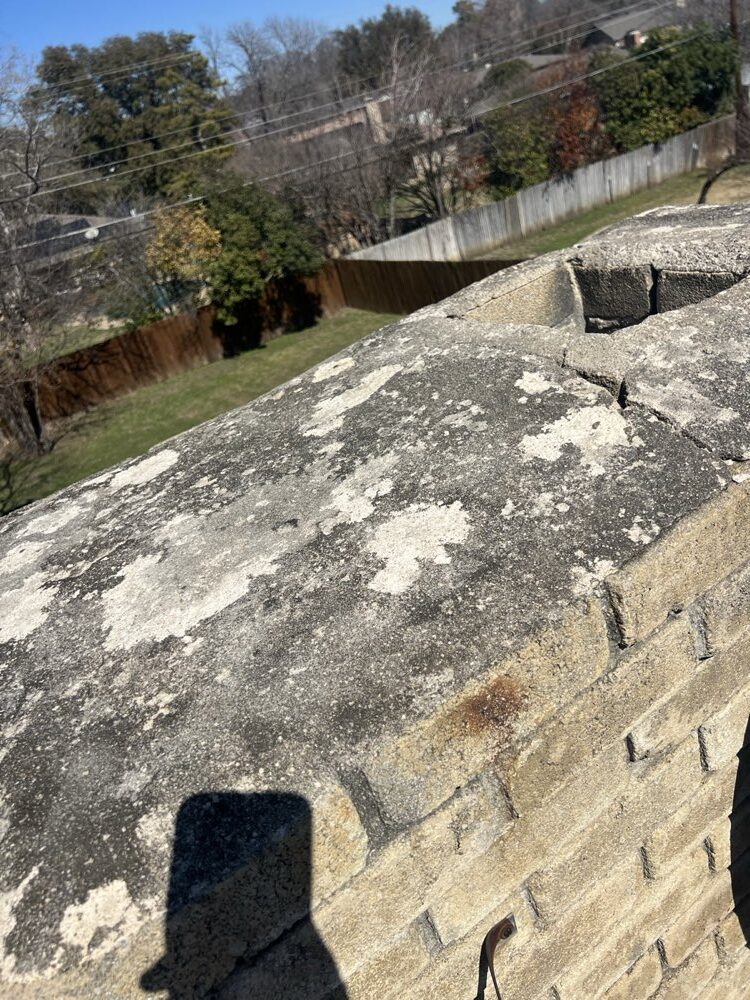
Hairline cracks are thin surface lines in otherwise solid concrete. The crown still holds its shape and sheds most water. Caught at this stage, the crown can usually be sealed, which is the cheaper and faster repair.
Structural cracking is different. The cracks go deep, sections of concrete are loose or lifting, corners have broken off, or the crown has separated from the flue pipe or the brick edge. At that point sealer is a bandage on a broken bone. The failed concrete has to come off and a new crown has to be built.
The honest answer about which one you have comes from getting on the roof and looking. That’s what we do, and we photograph what we find so you’re not taking our word for it.
- Hairline: thin surface lines, crown still solid, sealing usually works
- Structural: deep cracks, loose sections, missing corners, gaps at the flue
- Sealing a structurally failed crown wastes money, the water still gets in
- Photos from the roof settle the question, not guesswork from the ground
Crown Sealing: For Crowns Caught Early
If the crown is sound but showing hairline cracks, sealing stops the problem before it grows. We clean the crown surface, fill the cracks, and coat the whole crown with a flexible waterproof sealant made for this exact job. Flexible matters: a rigid patch just cracks again the next time the concrete moves with the temperature. The right coating stretches with the seasonal expand-and-shrink instead of fighting it.
This is the repair you want to qualify for. It costs less, takes less time, and adds years to the crown you already have. The only way to qualify is to catch the cracks early, which is why we recommend having the crown looked at before it fails rather than after the ceiling stains show up.
- Surface cleaned and cracks filled first, then the full crown coated
- Flexible sealant moves with the concrete through hot and cold
- Before and after photos included with every sealing job
- The early-catch repair: cheaper and faster than a rebuild
Crown Rebuilding: When Sealing Isn't Enough
When the crown is structurally gone, we remove the failed concrete and pour a new one. A proper rebuild fixes the design flaws that made the original fail early. Many DFW crowns were poured flat, with no overhang, using plain mortar instead of real concrete. Those crowns were leaking on a schedule from day one.
A rebuilt crown gets a real slope so water runs off, an overhang with a drip edge so runoff falls clear of the brick, and an expansion gap around the flue pipe so the flue and crown can move independently without cracking each other. Done right, a new crown outlasts the original by a wide margin.
You get photos at every stage: the failed crown, the cleaned top after removal, and the finished pour. The whole record, not just the after shot.
- Failed concrete removed down to sound structure
- New crown poured with proper slope and a drip-edge overhang
- Expansion gap around the flue so temperature movement doesn't re-crack it
- Full photo documentation from tear-off to finished crown
What Ignoring a Cracked Crown Costs
A cracked crown never gets better on its own. Every rain sends more water into the chimney core, and the damage compounds quietly.
Water soaking into brick dissolves the mortar holding it together. Freezes pop the faces off bricks, which is why you sometimes see brick flakes on the roof or in the yard below a chimney. Water reaching the flue rusts metal components and breaks down clay flue tiles. Keep going long enough and it reaches the framing and drywall around the chimney inside the house.
The repair bill climbs with each stage. A sealed crown is the small fix. A rebuilt crown is the medium fix. Rebuilding the top courses of brick because the mortar washed out, plus interior water damage, is the large one. The gap between catching it early and catching it late is the most expensive part of this whole problem.
- Water dissolves mortar joints inside the chimney where you can't see it
- Freezing water pops the faces off wet bricks
- Rusted dampers, damaged flue tiles, and stained ceilings follow
- Left long enough, the top of the chimney itself has to be rebuilt
How to Check Your Crown From the Ground
You don’t need to climb on the roof to get a first read on your crown. On a clear day, stand back far enough to see the top of the chimney and use binoculars or your phone camera zoomed in.
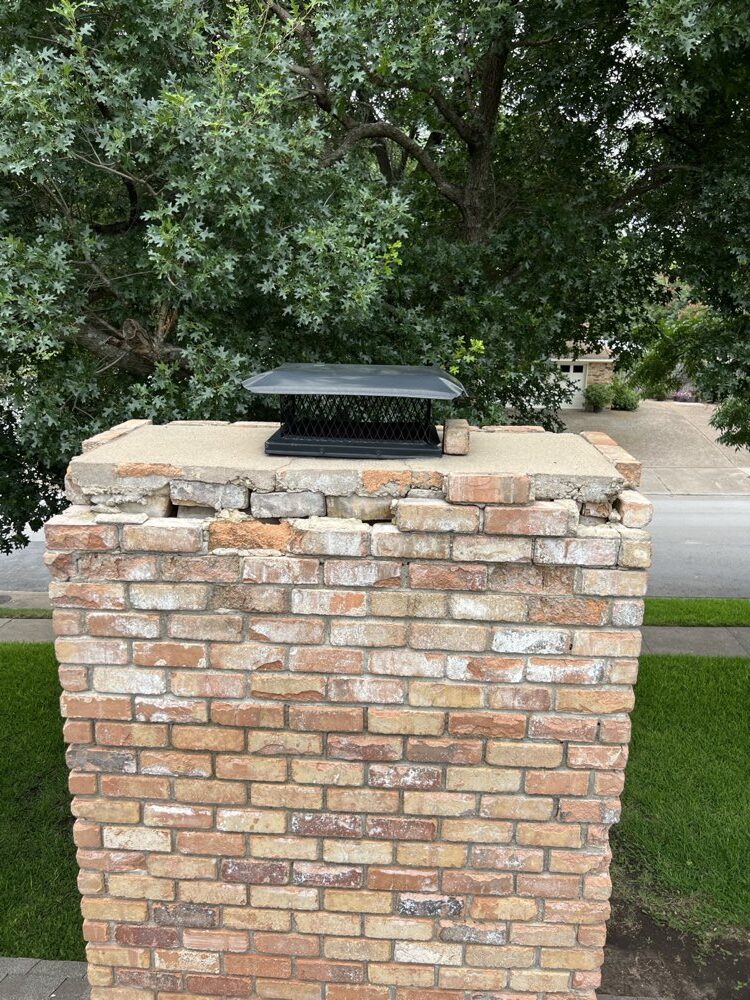
Look for visible cracks across the concrete cap, chunks missing from the edges or corners, dark streaks running down the brick from the top, and white chalky staining on the upper brick, which is a mineral residue water leaves behind as it moves through masonry. Any one of those is a reason to get it inspected. None of them means the top looks fine up close, though: hairline cracks and gaps at the flue don’t show from the yard. A ground check tells you when to worry. A roof inspection with photos tells you what’s actually there.
- Use binoculars or a zoomed phone camera from the yard or street
- Cracks, missing chunks, or dark streaks below the crown are warning signs
- White chalky staining on upper brick means water is moving through the masonry
- A clean look from the ground is not a clean bill of health, hairline cracks hide
Send Us What You Saw From The Ground
If something looked wrong from the driveway, a photo report settles it. We get on the roof, photograph the crown up close, and tell you whether it needs resurfacing, a rebuild, or nothing at all.
WHAT HAPPENS WHEN YOU CALL
You call or send the form
We ask what you are seeing or hearing. A person, not a queue.
We arrive and cover everything
Tarps down and the vacuum ready before a tool comes out.
Camera, brushes, eyes on all of it
Firebox, damper, flue and the top of the chimney, photographed.
Photo report the same day
You see what we saw and decide what happens next.
COMMON QUESTIONS
From the ground with binoculars you can spot bigger problems: visible cracks in the concrete cap, missing chunks, or dark water streaks on the brick just below the top. Hairline cracks and gaps around the flue pipe usually can’t be seen from the yard. The definite answer comes from a roof inspection, and we photograph everything we find so you can see it yourself.
The crown is the concrete slab poured across the top of the chimney structure. The cap is the metal cover that sits above the flue opening to keep out rain and animals. They fail in different ways and are fixed differently. Many chimneys need both looked at, and we check both on every crown visit.
It depends on how far the damage has gone. Hairline surface cracks in a solid crown can usually be filled and coated with a flexible waterproof sealant. Deep cracks, loose sections, or a crown separating from the flue mean the concrete has failed and needs to be removed and poured new. We show you photos of your specific crown and explain which situation you’re in.
Sealing a sound crown is typically done in a single visit, weather permitting. A full rebuild takes longer because the old concrete has to come off and the new pour needs time to cure before it’s sealed. We give you a timeline for your specific chimney after we’ve seen it, not a generic estimate before.
Usually two reasons working together. First, DFW weather: months of intense rooftop heat followed by winter freezes make the concrete expand and shrink until it cracks, then ice widens the cracks. Second, original construction: many crowns were poured flat and thin with mortar instead of real concrete, with no overhang, so they started failing early. A proper rebuild corrects those flaws.
The damage happens in the part of the chimney you can’t see first. Water entering through the crown soaks brick and mortar for a long time before anything shows on a ceiling. By the time there’s an interior stain, the repair is usually much bigger than a crown fix. Catching it while sealing is still an option is the cheapest point in the whole timeline.
Yes. That’s the core of how we work. We photograph the crown from the roof before we touch it, walk you through what the photos show, and explain the repair we recommend and why. After the work, you get photos of the finished job. You never have to take our word for something you can see.
REQUEST A CALL BACK
A person calls you back about your chimney, not a dispatcher.
Get Eyes on Your Crown Before the Next Storm
We inspect your chimney crown, photograph exactly what’s up there, and tell you straight whether it needs sealing, rebuilding, or nothing at all. Serving homeowners across Dallas-Fort Worth.