
Chimney Cap Replacement in Dallas and Fort Worth
The lid on top of your chimney is the part keeping rain, leaves and animals out of your living room.
CAMERA INSPECTION
We look before we quote, every time
PHOTOS OF EVERY FINDING
No photo, no claim
MASONRY AND VENTING ONLY
Gas lines go to a gas fitter and we say so
SAME-DAY REPORT
In your inbox before we finish the day
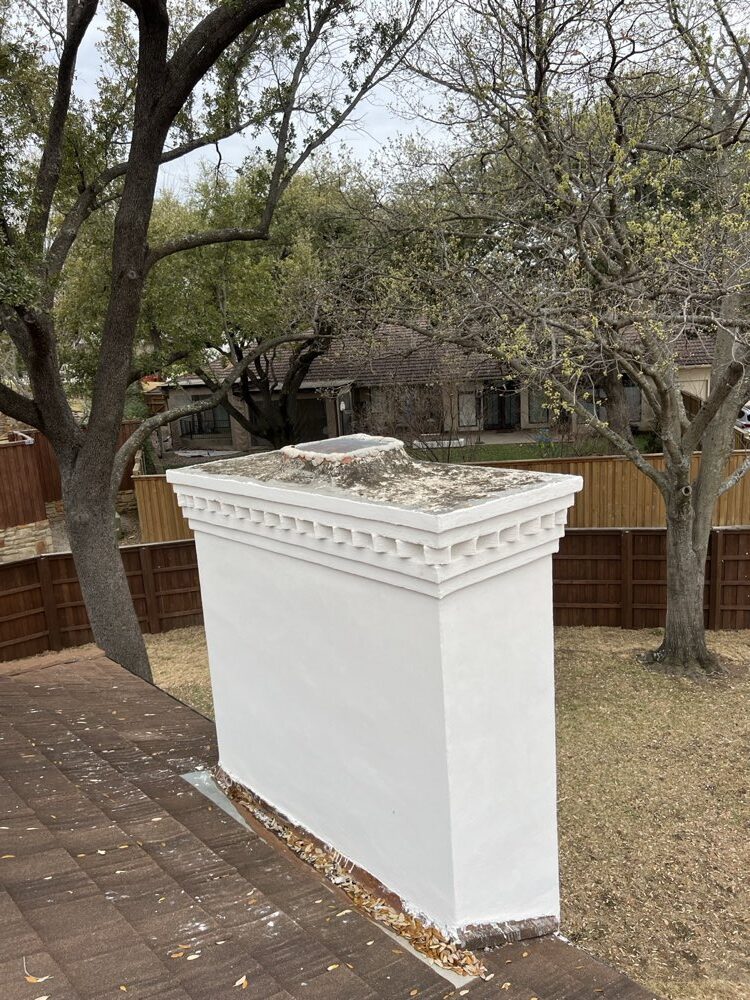
You can see it from the driveway. The top of your chimney is an open square hole, or the thing up there that used to be a cap is now rust orange and sitting at an angle.
That opening runs straight down into your firebox. Rain takes that path, and so does anything with claws. A cap is a metal lid with mesh sides that closes the opening without closing off the smoke.
It is one of the smaller jobs on a chimney and it prevents some of the biggest. We photograph the top before we touch anything and send you the picture. Photos, not promises.
YOU SEE WHAT WE SEE
You cannot see your own chimney. That is the whole problem with this trade, and it is why people feel talked into things.
Every visit ends with photographs of what we found, walked through with you before anything is quoted. If the pictures show nothing wrong, that is the report you get.
- Camera up the flue, not a guess from the hearth
- Every finding photographed before it is quoted
- The same spots photographed again after the work
- Written report in your inbox the same day
What that lid on top is actually doing
A chimney cap is a small metal roof over the flue opening. It stands on legs so smoke still leaves, and it has mesh on all four sides. Four jobs at once.
- Keeps rain out of the flue, the smoke shelf and the damper.
- Keeps squirrels, raccoons and birds out of what looks to them like a hollow tree.
- Keeps leaves and twigs from packing the top of the flue.
- The mesh catches embers on the way up, before they land on your roof.
What gets in when there is no cap
Water costs the most and shows up the latest. A masonry chimney is clay tile inside brick. Rain falling down an open flue soaks the tile, pools on the smoke shelf, and rusts the damper until it will not swing. Months later a brown ring shows on the ceiling beside the chimney. People blame the roof. It is often the top of the chimney.
Animals are the part you hear. Scratching above the damper, chirping at first light, or a smell that gets worse every afternoon in July.
Debris is quieter. Leaves and twigs stack at the top of the flue until the first fire of the year pushes smoke back into the room.
Wind is last. An open flue on a gusty day sends cold air and old soot smell into the house. A solid lid takes the edge off it. It is not a cure for every fireplace that smokes, and we will say so rather than sell you a cap for a problem it will not fix.
Cap Missing Or Rusted Through?
An open flue takes rain and animals all year.
How to check your own chimney without a ladder
Walk to the end of the driveway, or across the street, and look at the top of the chimney against the sky.
- A metal lid floating above the opening. An open square, or a clay pipe with nothing over it, means no cap.
- Orange rust streaks down the brick or the concrete top. A steel cap is corroding above them.
- A cap sitting crooked, lifted at a corner, dented, or torn open at a mesh corner where squirrels widen gaps.
- Chalky white staining on the brick, which is water moving through the masonry.
- Inside the room: a damper that will not move, dripping in the firebox while it rains, or birds you can hear and cannot see.
One flue, or a cap across the whole top
Count the openings up there.
One opening usually means one fireplace and a single flue cap. It sits over the clay tile that sticks up above the concrete top and clamps or bolts to it. The size comes off the outside measurement of that tile, so it gets measured on the roof, not guessed.
Two or more openings usually means the fireplace plus a flue for a water heater or a furnace. Cap each one separately, or cover the whole top with one wide cap that anchors into the brick. The wide one also shades the concrete top from rain, and that concrete is what cracks first on older chimneys here.
If an opening vents a gas water heater or a furnace, the cap goes over it and keeps the vent clear. We do not touch the appliance.
Why a cheap cap does not last in North Texas
Caps here fail for reasons that have nothing to do with fire.
Hail. Spring storms in North Texas dent car hoods, and a thin lid on a roof takes the same hits. A dented lid stops shedding water where it was meant to.
Sun. A metal lid on a Dallas roof in August bakes all day and moves as it heats and cools. Every cycle works on the fasteners, and two sheet metal screws driven into clay tile do not survive many of them.
Thin steel and rain. Most caps we take off are galvanized, which is steel with a zinc coat. The coat gets scratched in shipping and again on install. Once bare steel shows, rust starts and runs down the brick where the whole street can see it. Stainless steel and copper do not go that way, and they stay up there.
Three questions worth asking anyone who quotes you a cap:
- What metal is it, and what gauge is the mesh.
- Does it clamp to the flue tile, bolt to it, or anchor into the brick.
- Does it cover the concrete top, or only the flue opening.
Talk To Someone About Your Chimney
Not sure whether you need a single-flue cap or one across the whole top? Ask, and we will walk you through what you have before anything gets quoted.
Animals come out first, the cap goes on second
We do not seal a live animal inside a chimney. It comes out first, then the cap goes on. A capped chimney with a trapped raccoon in it becomes a much worse job within a week.
One case takes it out of our hands. Chimney swifts are small birds that nest inside flues, and they are protected under the federal Migratory Bird Treaty Act. If there is an active nest with young in your chimney, that nest stays until the birds leave on their own. We show you the photo, tell you what you have, and come back to close the top once the flue is empty.
How the job actually goes
We get on the roof and photograph the top before anything comes off, including the parts you cannot see from the ground. We measure the flue tile, the width of the chimney, and the condition of the concrete top. If that top is cracked we say so, because a new cap over a cracked crown is a chimney that still lets water in.
Then you see the options and what each is made of, and you pick. The old cap comes off, the new one gets fastened into something that will hold it, and we shoot the finished top from the same angle. The technician sends both over with a note on what we found.
Not sure whether you have a cap up there
Take a photo from the driveway, zoomed in as far as your phone goes, and send it to us. We will tell you what you are looking at and what it takes to close that opening.
WHAT HAPPENS WHEN YOU CALL
You call or send the form
We ask what you are seeing or hearing. A person, not a queue.
We arrive and cover everything
Tarps down and the vacuum ready before a tool comes out.
Camera, brushes, eyes on all of it
Firebox, damper, flue and the top of the chimney, photographed.
Photo report the same day
You see what we saw and decide what happens next.
COMMON QUESTIONS
Stand across the street and look at the top against the sky. A cap looks like a small metal roof floating above the opening, with a visible gap under it. If you see an open square, or a clay pipe sticking up with nothing over it, there is no cap. Orange streaks running down the brick mean there is one and it is rusting apart.
People do. The two parts that go wrong are the measurement and the attachment. A cap that is half an inch off will not clamp, and a cap held by two screws into clay tile comes loose in a spring wind and lands on somebody’s roof. Add a steep composition roof and a heavy chimney, and that is the real reason most people hand it over.
Only if wind was the cause. Smoke rolling into the room is more often a blocked flue, a damper that is not fully opening, or the house pulling air out of the fireplace because it has nowhere else to get it. We look at all of that before blaming the cap.
Surface rust on a heavy cap is not an emergency. What matters is whether the mesh is closed all the way around, whether the lid still sheds water, and whether the legs and fasteners are solid. Rust that has eaten holes through the metal is an open chimney with extra steps. We photograph it and you decide from the picture.
You need every opening covered. That can be two separate caps, or one wide cap that spans the whole top and anchors into the brick. The wide one has a second benefit, which is keeping rain off the concrete top where cracks usually start.
It closes one of the four ways water gets in. The others are a cracked concrete crown, the metal flashing where the chimney meets the roof, and the brick and mortar themselves. A cap on a chimney leaking through the flashing changes nothing at all. We check all four and tell you which one you actually have.
Yes, start there. Zoom in from the yard with your phone and send us the picture. We can usually tell you from that whether the cap is missing, rusted through or simply sitting crooked, and whether this is worth anyone climbing on a roof for.
REQUEST A CALL BACK
A person calls you back about your chimney, not a dispatcher.
Is Your Cap Still Doing Its Job?
We photograph the cap and crown from the roof and send you the pictures, so you decide from the same view we have.