
Chimney Sweep & Fireplace Service in Waxahachie, TX
From Gingerbread City Victorians near the courthouse to new builds off I-35E, Waxahachie chimneys span two centuries. Here is what we see, with photos to prove it.
LOCALLY BASED IN DFW
We drive to you, no national call center
WRITTEN PHOTO REPORT
Every finding shown before it is quoted
SAME-WEEK SCHEDULING
Booked in days, not weeks
OWNER-ANSWERED PHONE
The person who answers is the person who comes
In the older blocks around downtown, the chimney is often original to the house, which means it has stood through more than a century of Texas weather on lime mortar and hand-laid brick. In the new subdivisions, the fireplace arrived on a truck as a metal box. Both fail, just in different ways.
Local Chimney Experts is new to the trade in Waxahachie, and we will not pretend otherwise. What we offer is careful work and photos of everything we find, before and after, so nothing rests on our word alone. If nothing is wrong, that is the report you get.
This page is about Waxahachie homes specifically: the Victorian stock the town is famous for, the new construction filling in around it, and what Blackland clay and North Texas weather do to both.
YOU SEE WHAT WE SEE
You cannot see your own chimney. That is the whole problem with this trade, and it is why people feel talked into things.
Every visit ends with photographs of what we found, walked through with you before anything is quoted. If the pictures show nothing wrong, that is the report you get.
- Camera up the flue, not a guess from the hearth
- Every finding photographed before it is quoted
- The same spots photographed again after the work
- Written report in your inbox the same day
The Gingerbread City Earned Its Name, and Its Chimneys Show Their Age
Waxahachie calls itself the Gingerbread City, and the name is earned. The cotton boom paid for it: in the early 1900s Ellis County was among the top cotton-producing counties in the country, and the money went into Queen Anne and Victorian houses with turrets, wraparound porches, and the ornate wooden trim that gave the town its nickname. Five neighborhoods sit on the National Register of Historic Places: West End, North Rogers Street, Oldham Avenue, the Wyatt Street Shotgun House district, and the blocks around the courthouse.
Those houses come with true masonry chimneys. Tall brick stacks, soft lime mortar, and flues that may be clay tile or nothing at all, because many were built before liners were standard. A chimney like that can be in fine shape at 120 years old or quietly crumbling from the inside, and you cannot tell from the curb. That is what a camera in the flue is for.
Every June the Gingerbread Trail tour opens a handful of these homes to visitors. The chimneys never make the tour brochure, but they are working parts of the same old houses, and they need the attention the woodwork gets by default.
The Other Waxahachie Is Brand New
The 2020 census counted 41,140 people in Waxahachie. Current estimates put the city above 50,000, growth of roughly a fifth in about five years, and most of it lands in new subdivisions spreading out from I-35E.
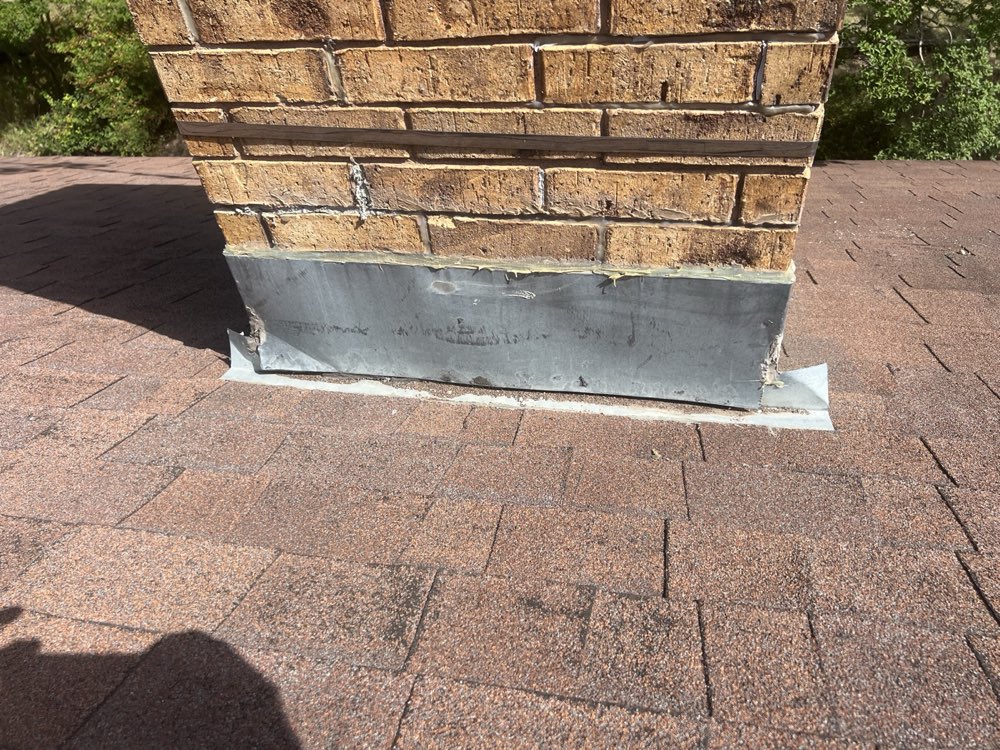
Almost none of those new houses has a masonry chimney. They use factory-built fireplaces: a metal firebox and flue pipe inside a wood-framed chase, wrapped in brick veneer or siding, topped with a sheet metal chase cover. The weak point is that cover. It rusts, the seams open, and rain gets into the framing, where the damage stays hidden until it shows up as a stain on a ceiling.
If your house went up in the last few decades, odds are this is what you own. The maintenance is different from masonry: less about mortar, more about metal, sealant, and keeping water out of the chase.
We Cover Waxahachie.
Tell us what you are seeing and we will tell you which visit it needs.
Blackland Clay Under the Whole County
Waxahachie sits in the middle of the Blackland Prairie, and the dominant soil under Ellis County is Houston Black, a clay that swells when it rains and shrinks hard in the summer heat. It is one of the most movement-prone soils in Texas. It is also the same dirt that grew all that cotton.
Foundations ride that movement, and a masonry chimney is the heaviest, most rigid thing attached to the house. When the foundation shifts, the chimney can lean, crack at the roofline, or pull away from the wall. If you can see daylight between chimney and siding, the problem started in the soil, not in the brick. Caulk hides it. It does not stop it.
What the Weather Adds Each Year
Water is the main enemy. Rain soaks into brick and cracked crowns, and each winter brings a handful of hard freezes that turn that water into a wedge. The freeze-thaw cycle opens mortar joints a little wider every year, and the February 2021 storm showed how much a single long freeze can do in one week.
Spring hail hits the top of the chimney first: dented caps, punctured chase covers, cracked crowns. After a storm the roof gets inspected and the chimney usually gets skipped. It should not be.
- White crusty staining on brick, a sign water is moving through it
- Mortar sand collecting on the roof or in the gutters
- Rust streaks running down a siding-wrapped chase
- A damp or smoky smell from the firebox after rain
Old Brick Needs a Lighter Touch
The brick and mortar in a West End or Oldham Avenue house are softer than anything sold today. Repointing with modern hard mortar traps moisture and forces it out through the brick face, which is how a repair ends up destroying the wall it was meant to save. The right approach matches the mortar to the original, keeps pressure washers away, and uses a breathable water repellent, never paint or a sealer that locks moisture in.
The courthouse on the square is standing proof that masonry lasts when it is treated right. Finished in 1897 out of granite and red sandstone, with carved stone faces still looking down on the town, it has outlasted every building shortcut invented since. A chimney is a smaller version of the same lesson.
One practical note: if your house sits in one of the historic districts, check with the city’s heritage preservation office before work that changes how the chimney looks from the street. We photograph and document either way, which makes those conversations easier.
New Company, Documented Work
We do not have a long history in town to lean on, so the business is built around something you can check yourself: photos. The inside of your flue before we sweep. The crack in the crown we found. The same spots after the work. We call it Photos Not Promises. If nothing is wrong, the photos say so, and that is the whole report.
When you call, you talk to the technician, and the technician is who shows up. If you are not sure where to start: a chimney inspection fits a house with an unknown history, a chimney sweep fits a fireplace that gets regular use, and chimney repair is for problems you already know about.
Talk To Someone Who Works In Waxahachie
Tell us what you are seeing or hearing and we will tell you whether it needs a sweep, an inspection, or a repair. If it is nothing, we will say that too.
WHAT HAPPENS WHEN YOU CALL
You call or send the form
We ask what you are seeing or hearing. A person, not a queue.
We arrive and cover everything
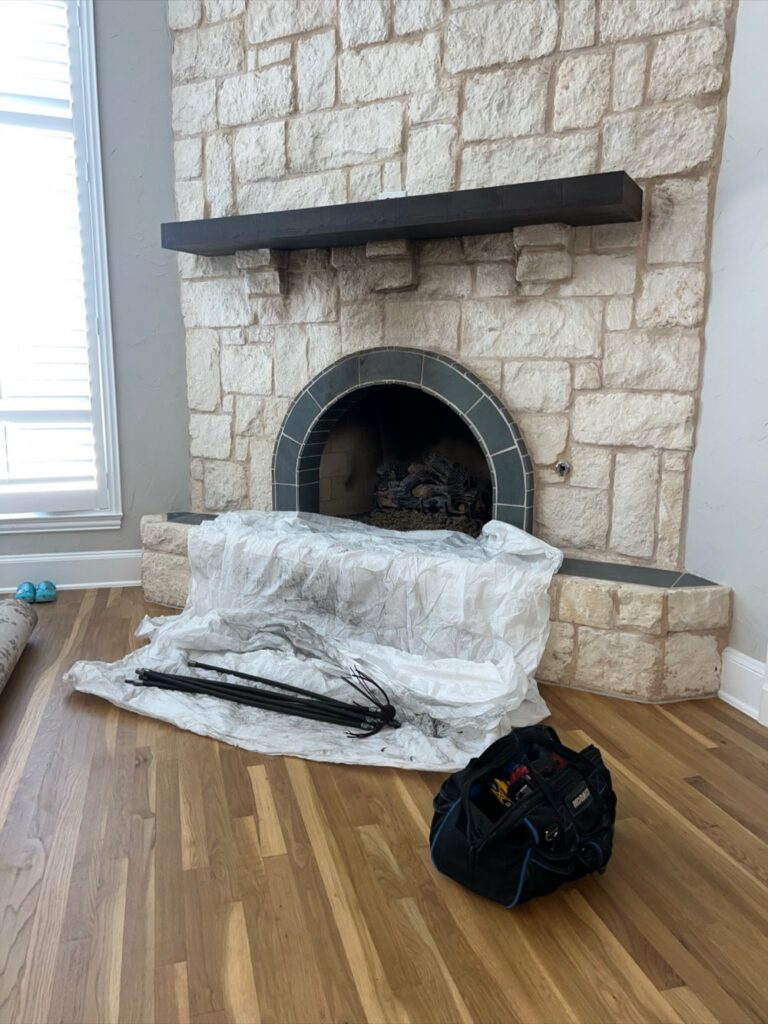
Tarps down and the vacuum ready before a tool comes out.
Camera, brushes, eyes on all of it
Firebox, damper, flue and the top of the chimney, photographed.
Photo report the same day
You see what we saw and decide what happens next.
COMMON QUESTIONS
Yes, and carefully. Houses from the 1880s through the 1910s have soft brick, lime mortar, and flues that may never have been lined. We photograph the flue and the masonry before recommending anything, so you see the actual condition instead of taking our word for it.
It is a Blackland Prairie problem, and Waxahachie is in the middle of it. Houston Black clay swells and shrinks with the weather and moves foundations, and the chimney moves with them. A small stable gap is worth watching. A growing one needs a real look. We record measurements and photos so you can compare over time.
Many chimneys built before 1900 have no liner, just bare brick. Gaps in aging mortar joints can let heat and gases reach the wood framing around the chimney. A camera inspection shows whether yours is lined and what condition it is in. Adding a stainless liner is the usual fix when it is not.
Not while the nest is active. That sound is almost always chimney swifts, small birds that nest in open flues across Texas each summer, and federal migratory bird law protects active nests. The honest plan: wait until they leave, usually by late summer, then sweep the flue and cap the chimney so it does not repeat.
We work on the masonry and venting side only: firebox, flue, liner, damper, cap, and crown. Gas lines, valves, and pilots are a gas fitter’s work, and we will tell you that plainly rather than improvise outside our lane.
The burn season here runs roughly November through February. If you burn most weekends of that stretch, a yearly check before the first fire makes sense. If you barely use it, an inspection will tell you whether a sweep is needed at all. Buildup follows your wood and your habits, not the calendar.
All of Waxahachie, from the historic districts around the square to the new subdivisions off I-35E, plus the rest of Ellis County and north toward Dallas. We are a mobile company, so we come to you.
REQUEST A CALL BACK
A person calls you back about your chimney, not a dispatcher.
Which Waxahachie Chimney Do You Own?
Hand-laid brick near the square or a metal chase off I-35E, we photograph what we find before anything is quoted.