
Chimney and Fireplace Service in Weatherford, Texas
From Victorian homes near the courthouse square to new builds off I-20, Weatherford chimneys fail in their own ways. Here is what we look for, with photos to prove it.
LOCALLY BASED IN DFW
We drive to you, no national call center
WRITTEN PHOTO REPORT
Every finding shown before it is quoted
SAME-WEEK SCHEDULING
Booked in days, not weeks
OWNER-ANSWERED PHONE
The person who answers is the person who comes
Some of the oldest houses in this part of Texas stand within walking distance of the Parker County Courthouse. Queen Anne and Victorian homes built around 1900, with chimneys as old as their walls. On the edges of town, new subdivisions are going up with factory-built fireplaces that fail in completely different ways. Weatherford has both, and this page covers both.
Local Chimney Experts is new to the trade, and we will not dress that up. What we offer is careful work and a photo record of everything we find, before and after, so nothing rests on our word alone. If nothing is wrong with your chimney, that is the report you get.
Below: what Weatherford’s housing stock actually looks like, what the ground and the weather here do to chimneys, and what to watch for in yours.
YOU SEE WHAT WE SEE
You cannot see your own chimney. That is the whole problem with this trade, and it is why people feel talked into things.
Every visit ends with photographs of what we found, walked through with you before anything is quoted. If the pictures show nothing wrong, that is the report you get.
- Camera up the flue, not a guess from the hearth
- Every finding photographed before it is quoted
- The same spots photographed again after the work
- Written report in your inbox the same day
The Oldest Chimneys in Parker County Stand Near the Square
Weatherford is the seat of Parker County, and the 1886 courthouse is the proof: three stories of limestone in the Second Empire style, holding down the middle of the square. The downtown blocks around it were listed on the National Register of Historic Places in 1990, and the residential streets just beyond hold dozens of Queen Anne and Victorian homes from around the turn of the twentieth century.
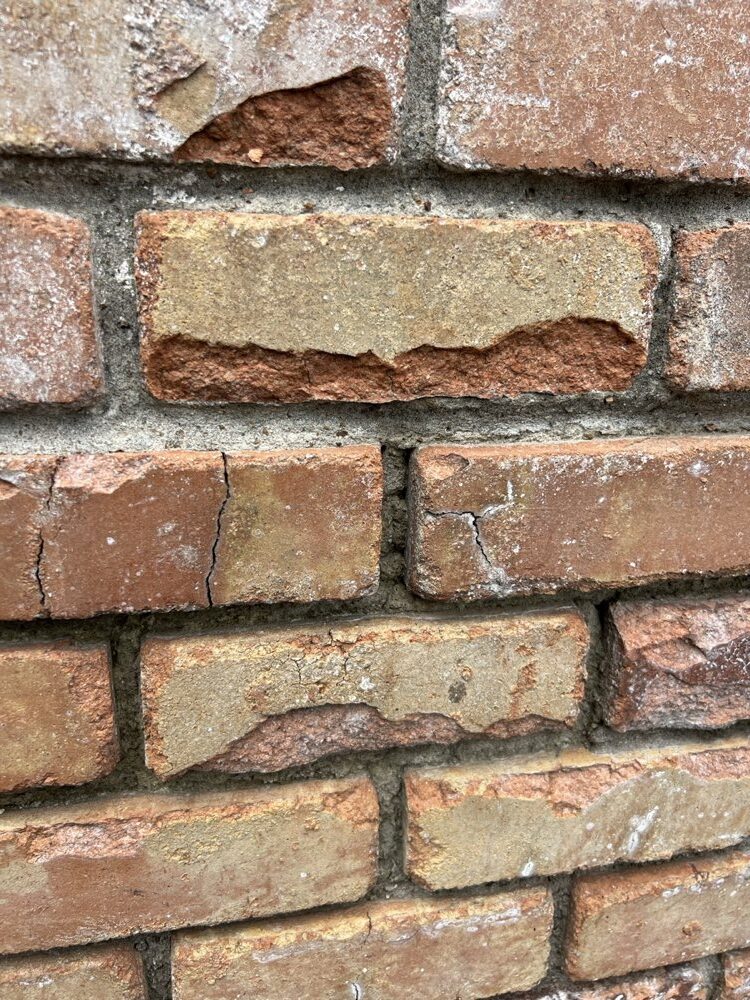
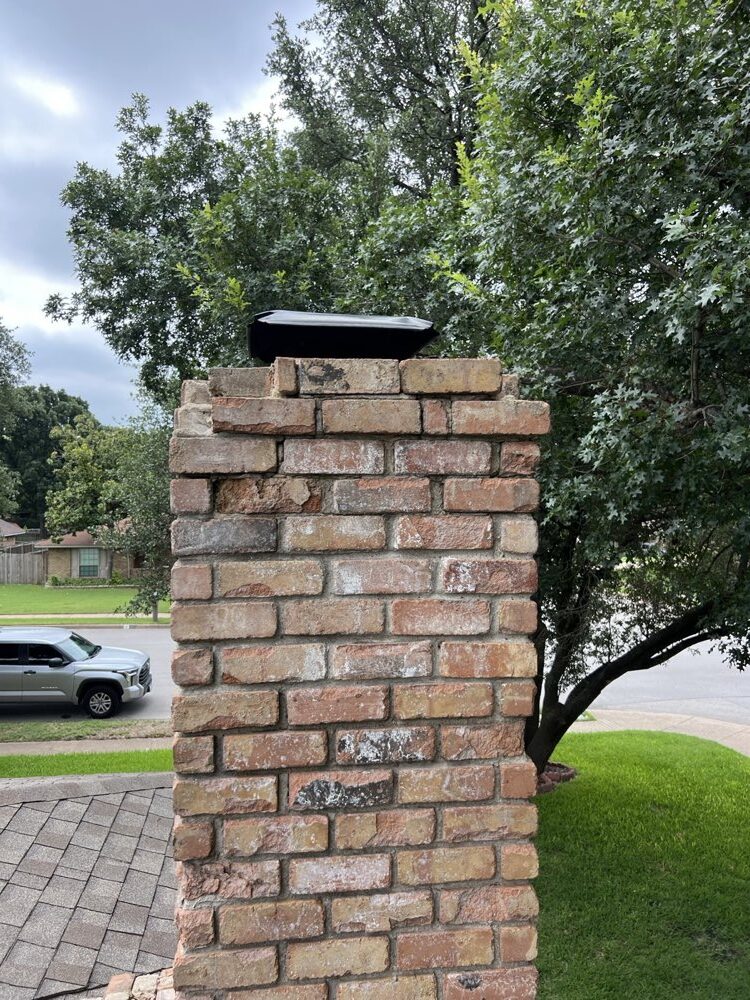
Houses of that age have true masonry chimneys. Brick laid in lime-based mortar that is softer than anything used today, with a clay tile liner if the flue was ever updated, and bare brick if it was not. That softness matters. Aggressive grinding or a hard modern mortar can do more damage to a century-old chimney than another decade of weather. Chimney brick repair on these houses means matching the material, not just filling the joint.
Our rule here is simple. Photograph the flue and the masonry first, show you what is actually there, and only then talk about work. A chimney inspection is the right starting point for any house near the square with an unknown flue history.
The New Side of Town Fails at the Top
Weatherford grew by roughly a fifth between the 2010 and 2020 censuses, passing 30,000 people, and the growth shows in the newer neighborhoods spreading out from I-20 and the highways. Almost none of those homes have a masonry chimney. They have a factory-built fireplace: a metal firebox, a metal flue pipe, a wood-framed chase wrapped in brick veneer or siding, and a sheet-metal cover on top.
That cover is the weak point. It rusts, the rust becomes a hole, and rain runs straight into the wood framing around the flue. From the yard it looks fine. From the roof, the rust streaks tell the story. A chimney chase cover replacement is a routine fix when it is caught early and a framing repair when it is not.
We Cover Weatherford.
Tell us what you are seeing and we will tell you which visit it needs.
Weatherford Sits on Two Kinds of Ground
Dallas and Fort Worth sit on expansive clay almost everywhere. Weatherford is more mixed. Parts of town sit on clay-heavy soil that swells after rain and shrinks in the summer heat. Other parts sit on the sandy loam of the Cross Timbers, which drains fast and moves far less. Two houses a mile apart can behave completely differently at the foundation.
On the clay side, the chimney is usually the first thing to show movement. It is the heaviest, most rigid part of the house, so when the ground shifts, the chimney leans or pulls away from the wall. A gap you can see daylight through started in the soil, not in the brick. On the sandy side, lean is less common, but water, freeze cycles, and hail do the same damage they do everywhere in North Texas.
We do not guess which ground your house is on. We look at what the chimney itself says and photograph it, so you can compare the same crack or gap a year from now.
- A gap opening between the chimney and the siding
- Stair-step cracks in the brick near the chimney base
- White staining on brick, a sign water is moving through it
- Doors near the fireplace that stick after wet or dry spells
Freezes and Hail Hit the Top of the Chimney First
Most Weatherford winters bring a handful of hard freezes, and the long February 2021 freeze showed what an extended one does. Water soaks into brick and into hairline cracks in the crown, freezes, expands, and pries the masonry apart a little more each cycle. The crown, the flat weather cap of mortar or concrete at the top, takes the worst of it because it holds standing water the longest.
Spring hail is the other recurring hit. It dents caps, punctures chase covers, and cracks crowns. After a storm, roofing crews canvass Parker County and the roof gets attention. The chimney sticking through that roof usually does not. If your roof was replaced after hail, the top of the chimney deserves the same look. Chimney crown repair and chimney cap replacement are two of the most common jobs that follow a hail year.
Horse Country Means Fireplaces That Sit Idle
Weatherford holds the official title of Cutting Horse Capital of the World, and the acreage on the edges of town backs it up: horse properties, arenas, and homes where the fireplace burns a few nights a year at most. The Peach Capital of Texas designation, and the July Peach Festival that goes with it, is the other side of the same fact. This is still partly a rural county seat, and a lot of its fireplaces sit unused most of the year.
An idle flue has its own problems. Animals move into chimneys without caps. Chimney swifts nest in open flues across Texas every summer, and federal law protects an active nest, so the honest answer is to wait until they leave in late summer, then sweep and cap the flue. Moisture sits in unused chimneys too, which is where that musty smell after rain comes from.
If your fireplace has been idle for years, do not light it on the first cold night. Have the flue looked at first. An inspection will tell you whether a chimney sweep is even needed, or whether the real problem is a missing cap or a blocked flue.
What We Do, and What We Hand Off
We work on the masonry and venting side of the chimney: sweeping, inspections, caps, crowns, flashing, chimney leak repair, liners, and firebox repair. Gas lines, gas valves, and pilots are a gas fitter’s trade, not ours, and we say so instead of working past the edge of what we should touch.
The rest is the same promise we make everywhere: photos of what we find before anything is quoted, photos of the work after, and a plain report if nothing is wrong. When you call, you talk to the technician, and the technician is who shows up.
Talk To Someone Who Works In Weatherford
Tell us what you are seeing or hearing and we will tell you whether it needs a sweep, an inspection, or a repair. If it is nothing, we will say that too.
WHAT HAPPENS WHEN YOU CALL
You call or send the form
We ask what you are seeing or hearing. A person, not a queue.
We arrive and cover everything
Tarps down and the vacuum ready before a tool comes out.
Camera, brushes, eyes on all of it
Firebox, damper, flue and the top of the chimney, photographed.
Photo report the same day
You see what we saw and decide what happens next.
COMMON QUESTIONS
Yes, and they need the most careful hands. Brick from around 1900 is softer than modern brick, and the original mortar is softer still. We photograph the flue and the masonry before recommending anything, and we match repairs to the age of the house instead of forcing modern materials onto old walls.
It is common in the parts of town that sit on clay soil, which swells and shrinks with moisture and moves foundations. Homes on the sandier Cross Timbers ground see it less. Either way, a small gap is worth watching and a growing one needs a real look. We photograph it so you can compare the same spot over time.
Not while the nest is active. Those are almost certainly chimney swifts, and federal law protects them while they are nesting. They usually leave by late summer or early fall. After that, we can sweep the flue and install a cap so it does not happen again next June.
With an inspection, before the first fire. A long-idle flue can hold nests, debris, moisture damage, or a liner problem nobody knew about. We photograph the inside of the flue and the firebox, show you what is there, and tell you plainly if it is ready to burn as-is.
No. Gas lines, valves, and pilots belong to a gas fitter. We handle the chimney itself: the masonry, the flue, the cap, the crown, and the venting. If your problem is on the gas side, we will tell you that instead of guessing at it.
Yes. The same hail that ruined the shingles hits the chimney cap, the chase cover, and the crown, and those rarely make it into a roofing scope. A quick look at the top of the chimney, with photos, tells you whether the storm left anything behind.
All of Weatherford and the surrounding Parker County towns, and east to Fort Worth and the rest of the metro. We are a mobile company, so we come to you.
REQUEST A CALL BACK
A person calls you back about your chimney, not a dispatcher.
Square-Side Brick or a New Chase Off I-20?
Either way, it starts the same: we photograph what we find, match the repair to the age of your house, and quote nothing before you have seen the pictures.