Chimney Sweep, Inspection & Repair in Dallas-Fort Worth, TX
Real DFW crew, not a national call center
You see every finding before any quote
Booked in days, not weeks
Talk to the person who does the work
Before & After That
Speaks For Itself.
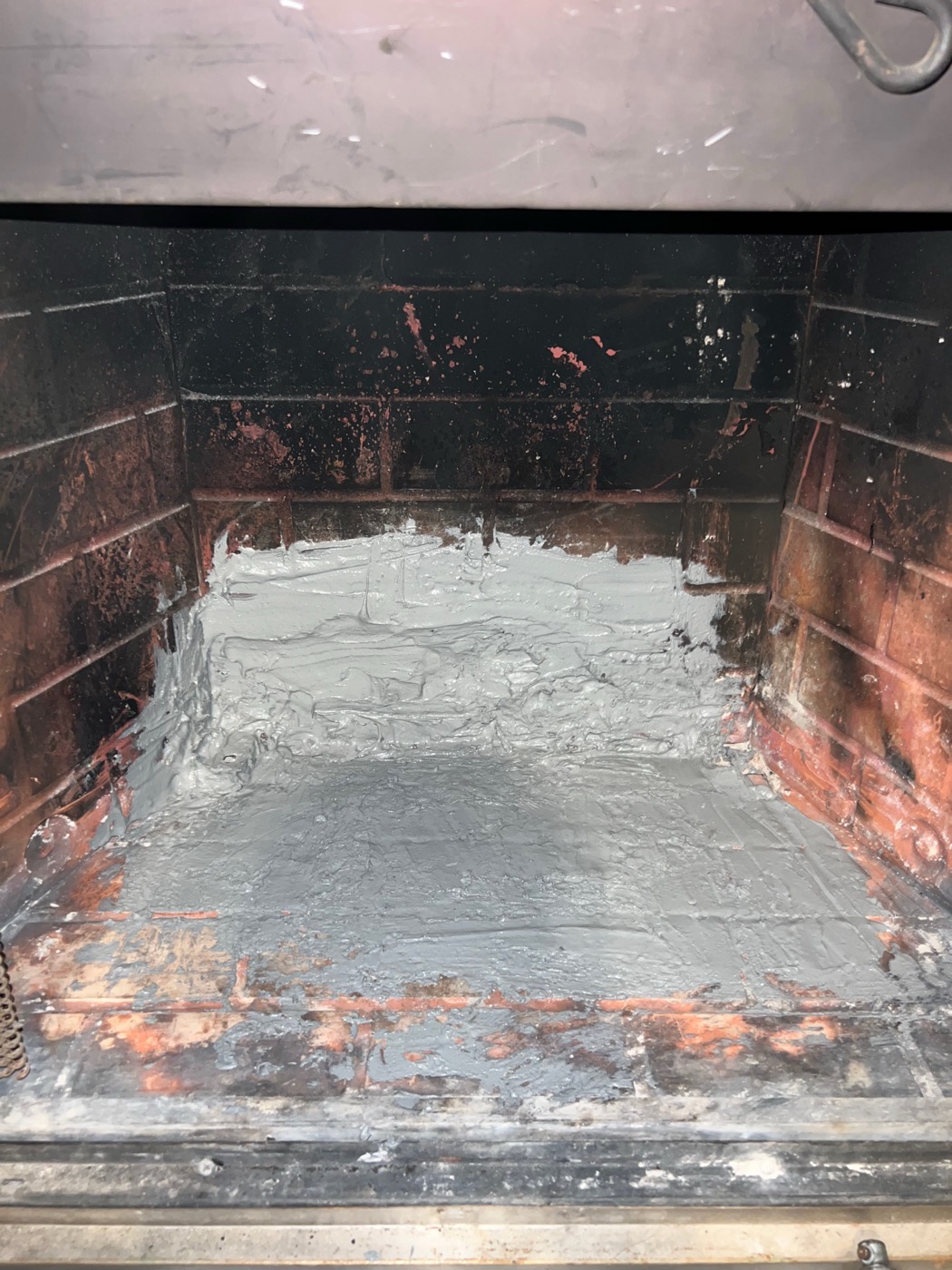
Every job gets photographed, before the work and after it. Nothing is staged and nothing is cropped to flatter us. This is a real firebox in a Dallas-Fort Worth home.
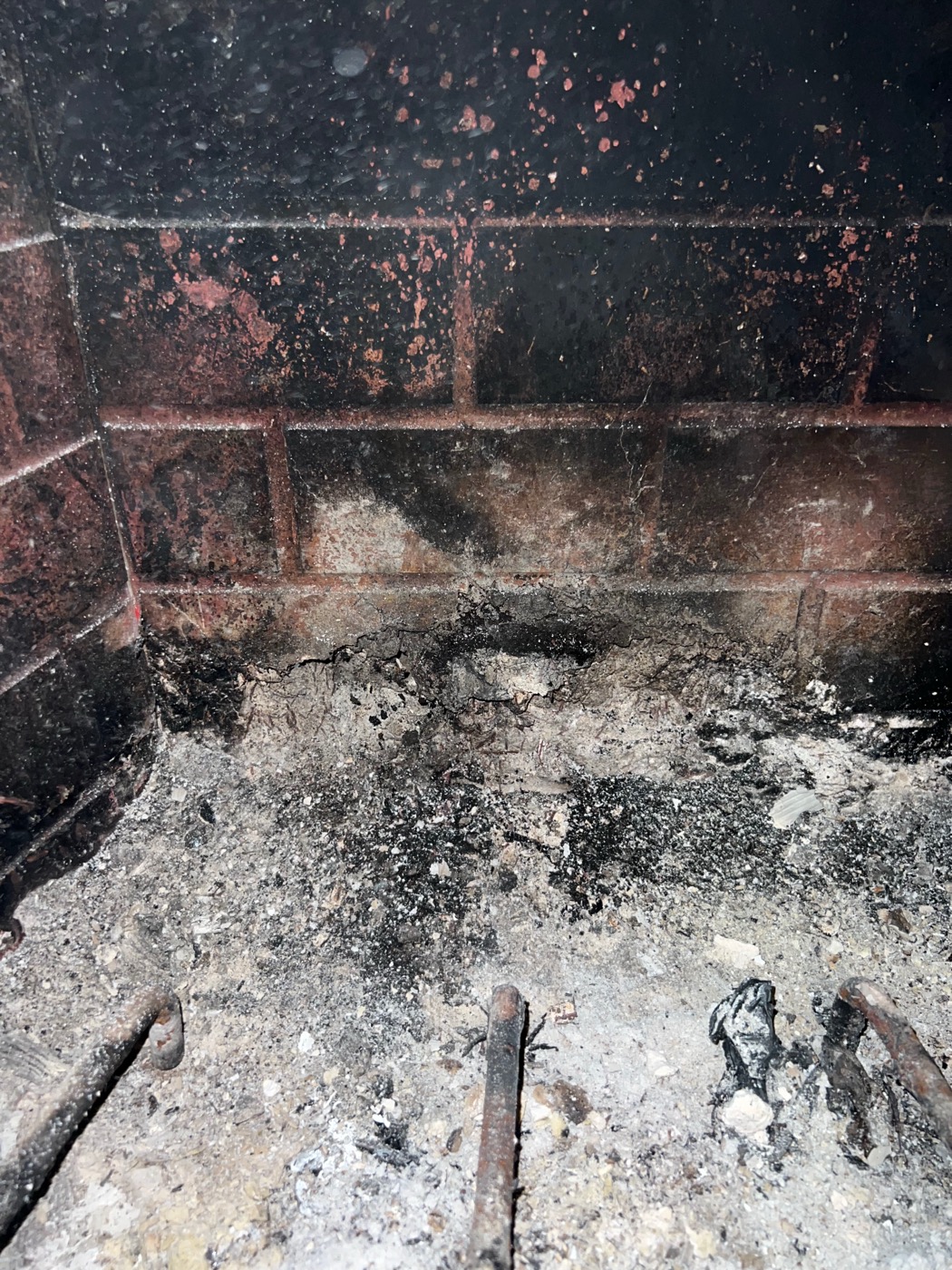
 Before
After
↔
Drag the handle. Same firebox, same angle: cracked joints and loose ash on one side, packed joints and a resurfaced floor on the other.
WHAT WE DO (THE RIGHT WAY)
INSPECT
Camera up the flue, eyes on the crown. Nothing quoted before it is seen.
EXPLAIN
You see the photos and hear it in plain words, not trade jargon.
FIX IT RIGHT
Masonry and venting work done once, documented twice.
FOLLOW UP
The full photo report lands in your inbox the same day.
SMOKE IN THE ROOM? WATER LEAK? CRACKED BRICK?
Don’t wait. Small issues turn into big repairs.
CHIMNEY SERVICES WE PROVIDE.
One crew, the full chimney system: from the firebox to the crown. Every service starts with an inspection and photos, so you know exactly what you are paying for.
A camera up the flue and photos of every finding, before anyone talks about work.
Spalled brick, failed mortar joints and the cracks that let water into the stack. Repointing and rebuild where the damage has gone past the face.
The concrete slab on top is the first thing to fail on most chimneys here. Resurfacing when it is early, a poured rebuild when it is not.
Breathable sealer that keeps rain out of the masonry without trapping vapour inside it. Done after repairs, never instead of them.
Where the chimney meets the roof is where most leaks actually start. Step and counter flashing, resealed or replaced.
Birds, squirrels and raccoons nest in an uncapped flue. We clear it, clean it, and cap it so it does not happen again.
HOW OUR PROCESS WORKS.
Four simple steps. Every time.
You call or send the form
We ask what you are seeing or hearing. Real person, not a queue.
We arrive and cover everything
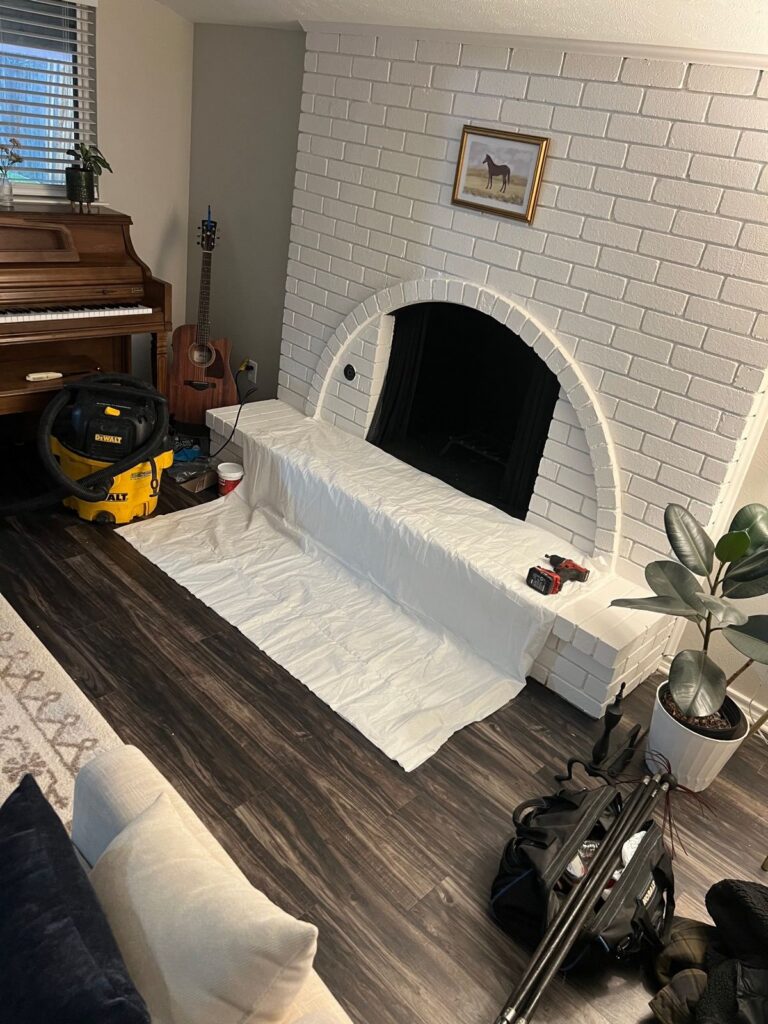
Tarps down, HEPA vacuum ready before a single tool comes out.
Camera, brushes, eyes on it all
Firebox, damper, flue and the top of the chimney, photographed.
Photo report emailed same day
You see what we saw and decide what happens next.
WHAT OUR CUSTOMERS SEE
YOU SEE WHAT WE SEE
Every visit ends with a written photo report. If nothing is wrong, the report says so.
KNOW WHO'S COMING
You book with the technician, you talk to the technician, and the technician is who shows up.
NEW NAME, DOCUMENTED WORK
We are new in DFW. Reviews are coming in. Until then, judge the photos, not adjectives.
Local Pros.
Not A Franchise Script.
Local Chimney Experts is run out of Dallas under NOG LLC. There is no call center between you and the person who does the work, and no regional office deciding what a technician three states away is allowed to tell you.
That shows up in ordinary ways. The phone is answered by someone who has been on roofs in this area. If your chimney is a 1960s clay-lined stack in Oak Cliff, that is a different conversation from a 2014 factory-built unit in Frisco, and the answer you get should reflect which one you actually have.
It also shows up in what we will not say. We do not have a script that turns every inspection into a rebuild. When the flue is sound, the report says the flue is sound, and the photographs are attached either way so you can check the claim yourself or hand it to someone else.
What Actually Goes Wrong With Chimneys in North Texas
North Texas gives a chimney an odd job. National Weather Service normals for DFW show 29 nights a year at or below freezing, and about two thirds of the year’s heating load lands in December, January and February. The fireplace works hard for a few weeks, then sits for ten months. Most of what goes wrong here traces back to that.
Short seasons make cool fires. Wood bought the same week it gets burned sends cool smoke up a cold chimney, and cool smoke leaves a sticky glazed deposit instead of light soot. A damper rusted shut over the summer, or a nest built in October, announces itself on the first cold night, in a room filling with smoke.
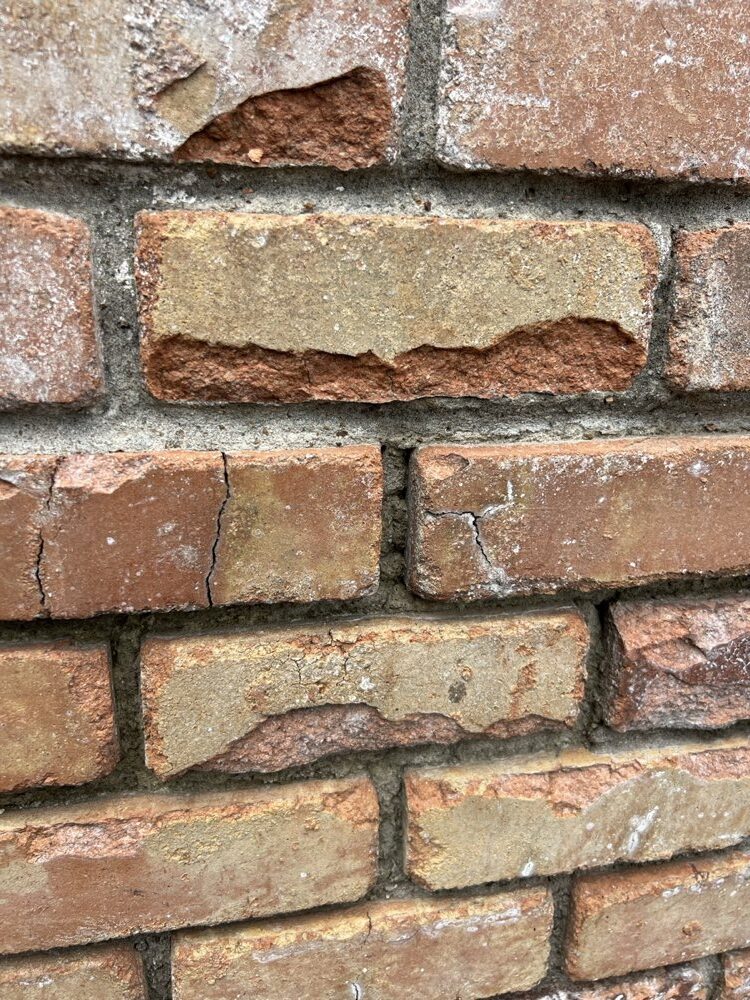
Our freezes are few and badly timed. A normal January day at DFW runs from about 36 degrees at dawn to about 56 by afternoon, so wet masonry freezes overnight and thaws by lunch. Water expands as it freezes, and each cycle works brick faces and crown hairlines further apart. That is why the damage here shows as flaking brick and open joints rather than one clean crack.
Then comes spring. NOAA storm reports rank Texas first in the country for large hail, and the top of a chimney is the thinnest metal on the tallest part of the house. A dented chase cover holds water in the dent and rusts from the middle out. Roofs get looked at after a storm. Chimney tops almost never do.
House age decides which set you get. The median home in Dallas was built in 1983 and in Fort Worth in 1998, against 2007 in McKinney and 2010 in Frisco. Older cores mean masonry: crown, mortar, clay tile, flashing. Newer suburbs mean factory-built fireplaces, where the failure is usually a rusting chase cover or worn firebox panels.
How a Visit Works, Start to Finish
It starts on the phone, and that call matters more than people expect. We ask what changed and when: smoke in the room, a stain on the ceiling, scratching above the damper, or a sale that needs a report by a certain date. We ask what you burn and when the fireplace last worked properly. Those answers decide what gets loaded on the truck, and sometimes they tell us you do not need a visit at all.
On arrival, nothing gets touched until the floor is covered and the room is protected. We look before we work: the firebox, the damper, the smoke chamber, then the flue, then the top of the chimney from the roof, which is where the answer usually turns out to be.
All of it gets photographed that day, close enough to see the thing being discussed: crown, cap or chase cover, flashing, mortar joints, liner, damper plate, firebox floor. Anything that could not be seen goes in the report as not seen rather than guessed at.
Then we stop and show you. You look at pictures of your own chimney before a number is said out loud. The number comes after that, in writing, split into what needs doing now and what can wait a season. Work starts when you say it starts, and you are welcome to take the photos to another company and compare.
If nothing is wrong, the report says nothing is wrong. We write that down in plain words with the pictures behind it, and there is no repair list attached to soften the news. A visit that ends in a clean report and no work is a visit that went the way it should.
What We Do, and What We Hand Off
Our work is the masonry and the venting. Brick and mortar, crowns, caps and chase covers, flashing at the roof line, liners, fireboxes, dampers and flues. That is the part of the system that carries heat and keeps water out, and it is where nearly every chimney complaint in this area starts.
Gas is a different trade. Piping, valves, regulators and pilot assemblies belong to a gas fitter. A chimney crew guessing at gas work is guessing with the one part of the house where guessing does the most harm. If your fireplace runs on gas, we still handle the flue, the liner, the cap and the masonry around it. The gas connection stays with the person whose trade it is.
Drawing that line will cost us jobs, and it is a trade we will take. A company that claims every part of your fireplace has told you nothing about what it is good at. Scope is the first thing you can check us on, and it is the cheapest promise for a company to break quietly, months later, on your roof where nobody is watching.
When a visit turns up something outside our lane, it does not vanish from the report. We photograph it, write down what it looks like, and tell you which trade to call. You keep the pictures either way, so the next person gets evidence instead of a description.
- Gas piping, valves, regulators and pilot assemblies: a gas fitter
- A chimney leaning away from the house or moving with the foundation: a structural engineer looks first, masonry follows
- Roof replacement or rotted decking: a roofer, though the flashing where the chimney meets the roof is ours
- The furnace or water heater itself: the technician who services it, while the flue it vents into is ours
Questions Homeowners
Ask Us First.
Straight answers, so you know what you are getting into before you pick up the phone.
Once a year for a fireplace burning wood, and the inspection matters more than the sweeping. A chimney burning a few fires a winter may have very little to remove, but the crown, the cap, the flashing and the liner still change year to year. The visit is what catches those; the sweeping is the easy part.
Yes. Same visit, same work, two words for the same job. Sweep is the trade word and cleaning is what most people say when they call. If you asked for either one, you asked for the same thing.
Most sweep and inspection visits run about ninety minutes to two hours from the time we put down drop cloths to the time we pack up. A chimney that has not been touched in years, or a roof that needs a ladder set twice, takes longer. Repairs are quoted separately after you have seen the photographs.
Photographs of what we found, with a short note under each one saying what you are looking at and whether it needs attention. It is emailed the same day. If nothing is wrong, the report says nothing is wrong, and you keep the pictures either way.
We handle the masonry and the venting on a gas fireplace: the flue, the liner, the cap and the brickwork around it. The gas piping, valves and pilot assembly belong to a gas fitter, and we will tell you that rather than guess at it.
It is common and it is fixable. Warm humid air moving down a flue carries the smell of old creosote into the room. Cleaning removes the source; a cap and a properly drawing flue keep the air moving the right way. If the smell survives a sweep, the draft itself is worth looking at.
Someone needs to let us in to reach the fireplace, and it helps to have you there at the end so we can walk through what the photographs show. If that is not possible, the report still arrives by email the same day.
Dallas, Fort Worth and the surrounding cities across the metroplex. If you are not sure whether your address is in range, calling is the fastest way to find out.
REQUEST A CALL BACK
A person calls you back about your chimney, not a dispatcher.
All Over Dallas-Fort Worth.
We work across the metroplex, and the chimneys are not the same from one side of it to the other. Older stacks in central Dallas and Fort Worth tend to show mortar and crown wear first. Newer construction out in Frisco, Allen and McKinney more often has factory-built units where the cap, the chase cover and the flashing are what fail. The city pages below say what we actually see in each one.
Dallas Fort Worth Arlington Plano Frisco McKinney Irving Garland Mesquite Richardson Waxahachie Weatherford Denison Sherman Gainesville Corsicana Duncanville North Richland Hills Grand Prairie Carrollton Denton Lewisville Allen Flower Mound
WE'RE READY WHEN YOU ARE.
Tell us what you are seeing or hearing. We will tell you what it usually means.