
Water Heater and Furnace Flue Service (the Utility Flue)
The flue that vents your gas water heater or furnace is not your fireplace flue. We inspect it, clean it, and reline it with photos of what we find.
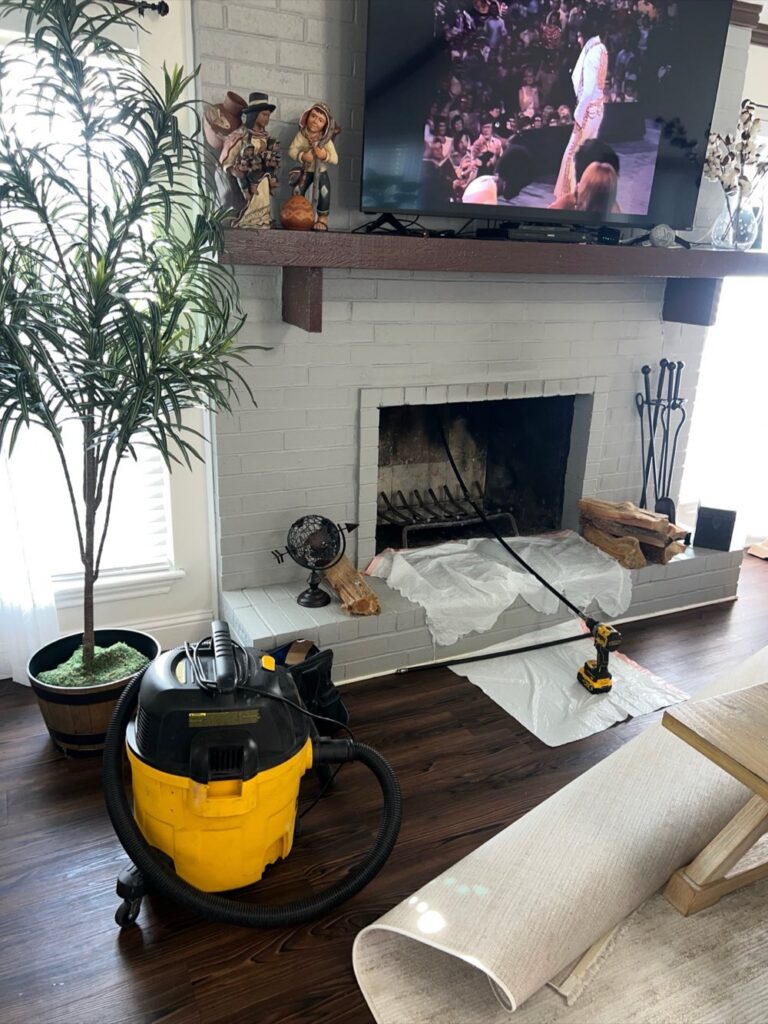
CAMERA INSPECTION
We look before we quote, every time
PHOTOS OF EVERY FINDING
No photo, no claim
MASONRY AND VENTING ONLY
Gas lines go to a gas fitter and we say so
SAME-DAY REPORT
In your inbox before we finish the day
Most Dallas-Fort Worth chimneys built before the 1990s are not one flue. They are two. One vents the fireplace. The other, usually a round clay tile flue tucked behind or beside the fireplace flue, carries exhaust from the gas water heater and, in a lot of houses, the furnace too, through a metal connector pipe that ties into the masonry near the floor of the utility closet.
Nobody local really covers that second flue. Chimney sweeps clean fireplaces. HVAC companies work on the furnace and the water heater itself. The flue carrying their exhaust up through the brick sits in the middle, unchecked, sometimes for the life of the house.
Local Chimney Experts inspects and services that utility flue directly: the tile liner, the connector, the cap, and anything blocking draft. The technician runs a camera down it, photographs the tile condition and any blockage, and shows you the footage before recommending anything. If the flue is clear and sound, that is the report you get.
We work the masonry and venting side of the system. The gas line, the control valve, and the appliance itself stay with the technician who installs and services that equipment. If our inspection turns up something on their side of the job, we tell you exactly what we saw so you know who to call next.
YOU SEE WHAT WE SEE
You cannot see your own chimney. That is the whole problem with this trade, and it is why people feel talked into things.
Every visit ends with photographs of what we found, walked through with you before anything is quoted. If the pictures show nothing wrong, that is the report you get.
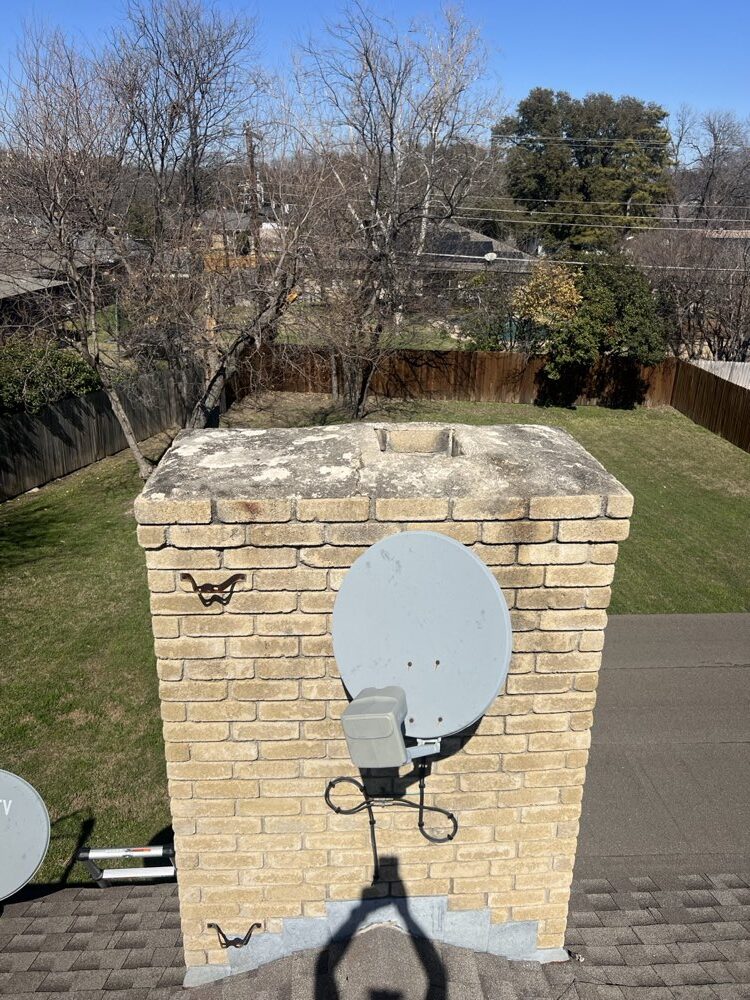
- Camera up the flue, not a guess from the hearth
- Every finding photographed before it is quoted
- The same spots photographed again after the work
- Written report in your inbox the same day
What a Utility Flue Actually Is
A masonry chimney is a brick chase built around one or more separate flues, and a lot of DFW houses with a wood-burning fireplace also have a second flue built into the same chase for the water heater, sometimes the furnace, and occasionally an older gas floor heater. That second flue is usually round, lined with fired clay tile sections stacked one on top of the other, and it has no damper. It carries exhaust straight up and out whenever the appliance fires.
A metal connector pipe, usually galvanized, runs from the appliance’s draft hood into the base of that flue, sometimes through a thimble in the brick. From the utility closet, it looks like ductwork. Inside the chimney, it is a completely separate flue from the one over your fireplace, with its own liner, its own cap, and its own set of problems.
- A dedicated clay tile flue, separate from the fireplace flue
- A metal connector pipe running from the appliance's draft hood into the masonry
- Its own cap and crown at the top of the chimney
- No damper, since it runs continuously whenever the appliance fires
The Orphaned Water Heater Problem
The most common way this flue goes bad has nothing to do with the flue itself. It starts with a furnace replacement. A newer high-efficiency furnace usually vents out a side wall through PVC pipe instead of up the masonry flue, since its exhaust runs too cool to rise on its own. That leaves the water heater alone on a flue that was sized to handle two appliances firing together.
A flue built for a furnace and a water heater is oversized once only the water heater is left venting through it. The extra volume of air lets the exhaust cool before it clears the top of the chimney, and cooled exhaust does not rise the way it should. Instead of drafting cleanly, it lingers, condenses, and in worse cases spills back down into the utility closet instead of leaving the house. This is one of the most common results of an otherwise normal furnace upgrade, and it usually goes unnoticed until someone smells something or the water heater itself starts corroding from the top down.
- Furnace recently replaced with a sidewall-vented, high-efficiency unit
- Rust or soot forming around the water heater's draft hood or flue collar
- A metallic or musty smell near the water heater closet
- Visible condensation or staining inside the flue on camera
Utility Flue Never Serviced?
The flue your water heater breathes through deserves one look.
Blockages Nobody Checks Until Something Goes Wrong
A fireplace flue gets looked at because people use the fireplace and eventually call someone. A utility flue runs quietly in the background for the life of the appliance, and its cap almost never gets checked. Birds and squirrels nest in flues that sit warm and sheltered. Old clay tile sections crack and shed pieces into the flue over decades of heating and cooling. A cap missing its screen lets debris fall straight down onto the connector.
Any of that reduces the open path the exhaust needs to leave the house. A partially blocked utility flue does not always announce itself. Sometimes it shows up as a water heater that takes longer to relight, a pilot light that keeps going out, or a faint exhaust smell drifting into the room instead of going up and out.
- Bird or rodent nesting material inside the flue
- Cracked or displaced clay tile sections blocking part of the path
- A cap with a torn or missing screen letting debris fall in
- Standing water or debris visible at the base after rain
Liner Condition and Resizing
Clay tile flue liners installed decades ago were sized for the appliances of that decade, not for what runs through them now. Combustion exhaust carries moisture, and that moisture condenses against the tile as it cools, especially in a flue that has gone from serving two appliances to serving one. Over the years, that condensation works into the mortar joints between tile sections, and the joints erode. Water and exhaust start finding their way between the tile and the brick instead of staying inside the flue.
When the tile is cracked, eroded, or missing sections, or the flue is simply too large for the single appliance left venting through it, the fix is a properly sized liner, usually stainless steel, run the full height of the flue and matched to that appliance’s exhaust output. It restores a tight, correctly sized path for the exhaust to follow instead of an oversized masonry shaft with gaps in it.
What We Handle, and What Stays With Your Gas Technician
This is a masonry and venting job. We inspect and service the flue, the tile liner, the connector where it enters the masonry, and the cap at the top. If the flue needs relining, cleaning, or the cap needs replacing, that is our side of the work.
The gas line, the control valve, the thermocouple, the pilot assembly, and the appliance itself are not ours to touch. Those stay with the technician who installs and services your water heater or furnace. If our inspection turns up something on that side, for example an appliance that looks like it is spilling exhaust at the draft hood, we tell you exactly what we saw and photograph it, so you can bring it to the right person instead of guessing.
Signs Worth a Look
Most of these symptoms show up in the utility closet or on the outside of the chimney, not up in the flue where you would have to go looking for them.
- Rust streaks on the water heater's flue collar or draft hood
- A musty, metallic, or sooty smell near the water heater or furnace closet
- The furnace was recently replaced with a high-efficiency, sidewall-vented unit
- White or rust-colored staining running down the chimney exterior
- A pilot light or water heater that struggles to stay lit
- Condensation or standing moisture at the base of the flue
Photos of the Flue You Never See
Nobody checks their own utility flue. It sits behind a closet door or inside a brick chase, and short of a mirror and a flashlight in a hot, cramped space, there is no way to look at it yourself. The technician runs a camera down it instead, photographs the tile, the connector, and anything blocking the path, and shows you the same view before recommending any work. If the flue is clear and the liner is sound, that is the report you get.
Get Your Utility Flue Checked
Call, or request a call back. We inspect the flue that vents your water heater or furnace and send you photos of exactly what’s inside.
WHAT HAPPENS WHEN YOU CALL
You call or send the form
We ask what you are seeing or hearing. A person, not a queue.
We arrive and cover everything
Tarps down and the vacuum ready before a tool comes out.
Camera, brushes, eyes on all of it
Firebox, damper, flue and the top of the chimney, photographed.
Photo report the same day
You see what we saw and decide what happens next.
COMMON QUESTIONS
It is the separate flue inside your masonry chimney that vents a gas water heater, and often a furnace, through a metal connector pipe. It is not the same flue your fireplace uses, and it needs its own inspection.
A high-efficiency furnace usually vents out a side wall instead of up the masonry flue, leaving the water heater alone on a flue sized for two appliances. That oversized flue can cool the exhaust before it clears the chimney, which leads to poor draft and condensation.
A blocked or poorly drafting flue can let combustion exhaust back up into the house instead of venting outside. If you smell exhaust near the water heater or furnace closet, or a carbon monoxide alarm goes off, treat it as urgent and have the appliance and the flue checked.
No. We handle the masonry and venting side, the flue, liner, connector, and cap. The gas line, valve, and appliance stay with the technician who installs and services your water heater or furnace.
A camera inspection shows it directly. From the utility closet, watch for rust on the draft hood, condensation inside the flue opening, and a musty smell near the appliance.
Yes. It is a separate flue in the same chimney chase. Relining the utility flue does not require opening up or altering the fireplace flue next to it.
Sharing a chase is common. Each still has its own flue inside it, running to its own cap. We work on the utility flue serving your gas appliance unless you ask for fireplace service too.
Have it checked any time you replace a furnace or water heater connected to it, and any time you notice rust, staining, or odor near the appliance closet.
REQUEST A CALL BACK
A person calls you back about your chimney, not a dispatcher.
Does Your Water Heater Still Have a Safe Flue?
We check the utility flue for draft and spillage and send you the readings, whether or not anything needs doing.