
Chimney Cricket Installation in Dallas-Fort Worth
A wide chimney with no ridge behind it dams water on the roof instead of shedding it. We measure the width, build the cricket, and photograph the water going around instead of pooling.
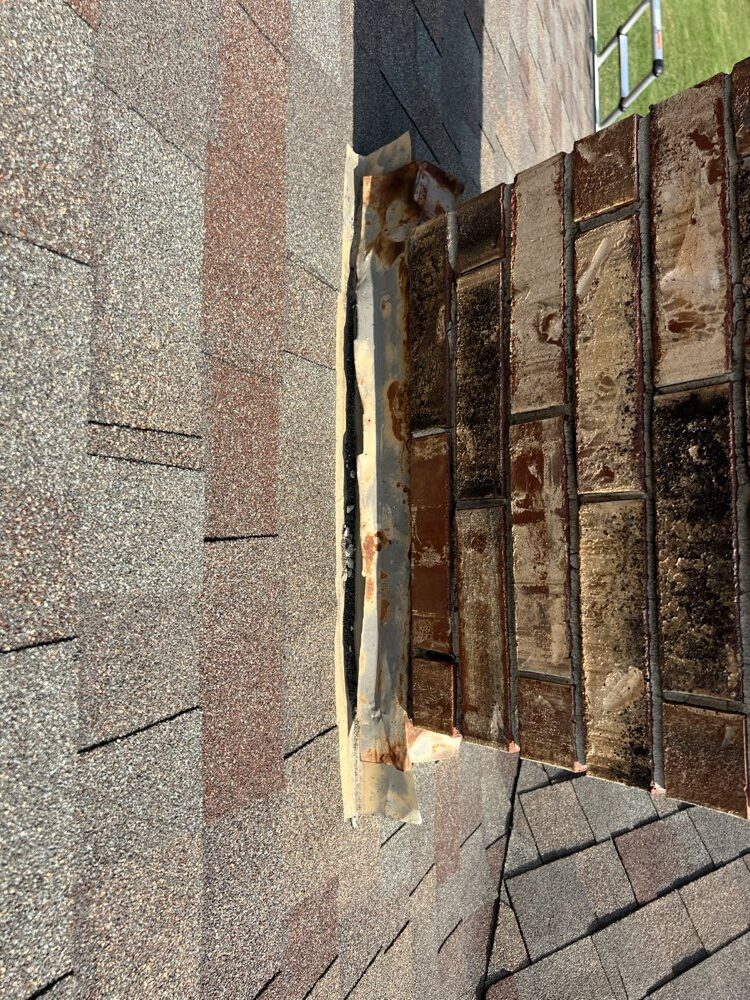
CAMERA INSPECTION
We look before we quote, every time
PHOTOS OF EVERY FINDING
No photo, no claim
MASONRY AND VENTING ONLY
Gas lines go to a gas fitter and we say so
SAME-DAY REPORT
In your inbox before we finish the day
A cricket is a small peaked ridge built into the roof on the uphill side of a chimney, at the spot where a wide chimney sits square across the slope. Roofers also call it a saddle. Instead of one flat wall stopping everything the roof sheds, the cricket splits that water into two paths and sends it around the chimney on either side.
Most homes never need one. A narrow chimney sheds water past its own sides without any help. Building codes generally call for a cricket once a chimney measures wider than 30 inches across the slope, because past that width a flat roof-to-brick joint cannot move enough water fast enough, and it starts pooling instead of running off.
A missing or undersized cricket rarely announces itself the way a torn cap or a cracked crown does. It shows up as a ceiling stain that keeps coming back after a flashing repair, because the flashing was never the actual problem. Water was stacking up behind the chimney and finding a way in on its own schedule.
We are new in Dallas-Fort Worth. The technician gets on the roof, photographs the back of your chimney dry and after a rain, and shows you how the water is actually moving before framing anything. If your chimney does not need a cricket, that is the answer you get, with the photo that shows why.
YOU SEE WHAT WE SEE
You cannot see your own chimney. That is the whole problem with this trade, and it is why people feel talked into things.
Every visit ends with photographs of what we found, walked through with you before anything is quoted. If the pictures show nothing wrong, that is the report you get.
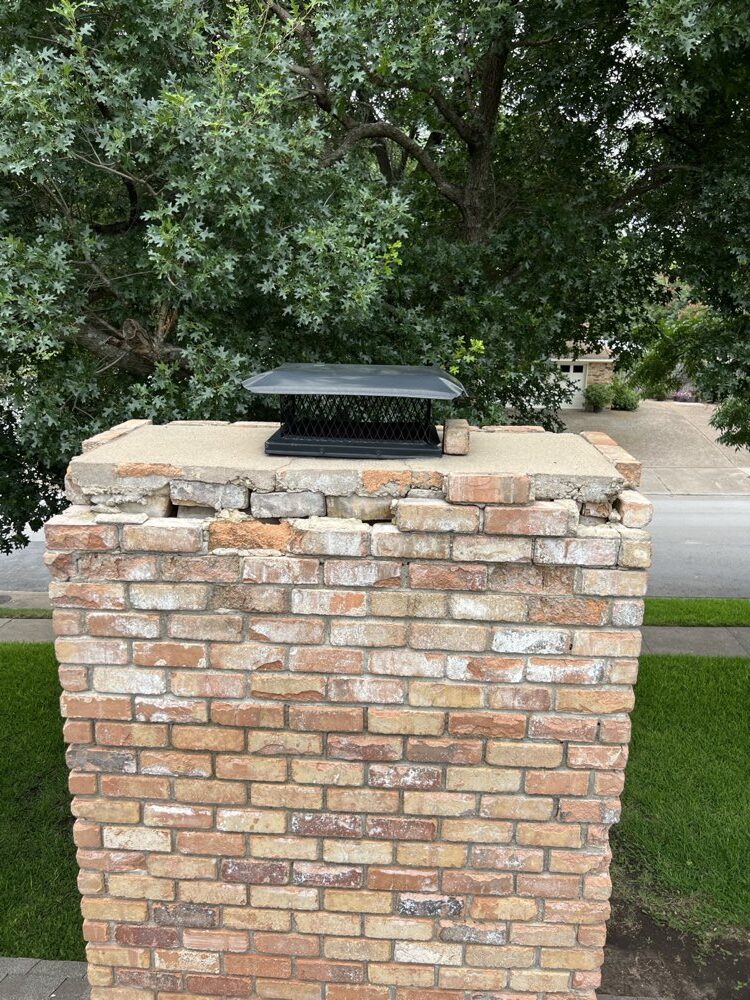
- Camera up the flue, not a guess from the hearth
- Every finding photographed before it is quoted
- The same spots photographed again after the work
- Written report in your inbox the same day
What a Cricket Actually Does
Rain hitting a sloped roof above a chimney has nowhere to go but down, and a chimney sitting square across that slope works like a small dam. Behind a narrow chimney, water slips around the corners on its own. Behind a wide one, the same water has farther to travel sideways before it clears the brick, and in a hard rain it arrives faster than it can escape.
A cricket solves that with shape instead of sealant. Two sloped faces meet at a center ridge and carry water off to either side of the chimney, the same way a small roof valley works anywhere else on the house. Nothing about the idea is complicated. It works because it gives water somewhere to go, instead of something to seep through.
- Water builds up fastest directly behind the widest part of a chimney
- A cricket splits that flow into two paths that run around the sides
- Leaves and roof grit wash around too, instead of packing in against the brick
The 30-Inch Line, and Why Width Is What Matters
The number that comes up most in cricket guidance is 30 inches, measured across the slope of the chimney rather than up and down it. Below that width, most roofs shed water around a chimney without extra help. Above it, the same rain has too much surface to cross and starts backing up against the uphill brick.
Thirty inches is not a line where the physics changes overnight. It is a practical cutoff because it lines up with where flat flashing alone stops being enough on its own. A chimney sitting a little under that width on a steep, fast-draining roof can still get by. A wide chimney on a gentle slope needs a cricket more, because slower water has more time to pool before it clears the joint.
- Measured side to side across the roof slope, not front to back
- Roof pitch changes how much margin a borderline width actually has
- A cricket rarely hurts a chimney even where it is not strictly called for
Water Pooling Behind The Chimney?
A cricket sheds what a flat roofline collects.
How a Missing Cricket Turns Into a Leak
Standing water finds the smallest gap eventually, and the back of a wide chimney has more of them than most people realize: the seam where flashing meets brick, a mortar joint that has started to open, the top edge of a chase cover. None of those need to fail badly. They just need water sitting against them for hours instead of running off in minutes.
This is why flashing gets resealed and the ceiling stain comes back anyway. The flashing was never wrong. It was holding back more water than any flashing joint is built to hold, because nothing upstream was splitting that water away from it first. Once a cricket is in place, the same flashing that kept failing usually holds, because it finally has less water to fight.
- A ceiling stain that returns after a flashing repair, in the same spot
- Standing water or a damp line visible on the roof itself behind the chimney
- Moss, dark streaking, or granule loss concentrated on that one section of roof
- Framing near that wall staying damp longer than the rest of the attic after a storm
What a Cricket Is Built From
A cricket is framing first and covering second. Underneath, it is usually wood built up into the two-sided peak, tied into the existing roof deck so it carries load the way the rest of the roof does. On top, it gets covered with sheet metal or with the same material as the surrounding roof, so the seam between the cricket and the roof is a material match rather than a patch.
We weave the cricket’s covering under the existing step flashing rather than caulking it against the surface, for the same reason any flashing joint holds better woven than glued. Whatever covers the cricket carries the water down onto the roof field, where the rest of the roof drainage already knows what to do with it.
- Sheet metal covering, often matched to your existing flashing
- Shingles matched to the rest of the roof, on lower slopes
- Framing tied into the roof deck, not just set on top of it
Adding a Cricket to a Chimney That Never Had One
Plenty of houses in Dallas-Fort Worth were built with a wide chimney and no cricket at all. That does not necessarily mean the chimney was built wrong. What it means today is that a leak this old house has fought for years, through two or three flashing repairs, might trace back to a ridge that was never there.
Adding one after the fact means opening the roof at the back of the chimney, building the frame, and re-lacing the flashing into it correctly, rather than laying new metal over the old problem. It is roof work as much as chimney work, and we say so plainly when a job needs a second trade working alongside us.
How the Visit Works
the technician handles the measuring, the photos, and the explanation himself, start to finish.
- Measure the chimney across the slope and photograph the back of it dry
- Check the roof for standing water, moss, or granule loss concentrated behind the chimney
- Explain, with the photos, whether the width and slope actually call for a cricket
- Frame and cover the cricket, woven under the existing flashing rather than caulked over it
- Photograph the finished ridge and the water path running around each side
- Recommend against one, with the same photos, when the chimney does not need it
Photos Not Promises
Nobody climbs onto their own roof to check the back of a chimney, so you are trusting whoever tells you what is up there. Our answer is the same on every job: you see the photo of the pooling water or the open gap before we build anything, and you see the finished ridge after, so “you needed a cricket” is something you can look at instead of something you take on faith. We are new in Dallas-Fort Worth, and photo proof is how we plan to earn the next call.
Stop Re-Flashing the Same Leak
If a wide chimney keeps leaking in the same spot after every repair, the missing ridge behind it might be the real gap. The technician measures it, photographs it, and shows you the water path before building anything.
WHAT HAPPENS WHEN YOU CALL
You call or send the form
We ask what you are seeing or hearing. A person, not a queue.
We arrive and cover everything
Tarps down and the vacuum ready before a tool comes out.
Camera, brushes, eyes on all of it
Firebox, damper, flue and the top of the chimney, photographed.
Photo report the same day
You see what we saw and decide what happens next.
COMMON QUESTIONS
A small peaked ridge built into the roof on the uphill side of a chimney. It splits water running down the slope into two paths and sends it around the chimney instead of letting it pool against the brick.
It shows up in building codes as the width where a cricket becomes required, measured across the slope of the chimney rather than up and down it. Below that width most roofs handle a chimney without one. It works less like a magic number and more like the point where flat flashing alone stops being enough.
Yes. It means opening the roof behind the chimney, framing the peak, and re-lacing the flashing into it, rather than laying anything over the existing joint. It is more work than a flashing repair alone, and worth it on a chimney that keeps leaking in the same spot.
The strongest sign is a leak that returns in the same place after a flashing repair. Flashing that keeps failing in one spot is usually fighting more water than it was built to handle, and that points uphill, to whether anything is splitting the water away before it ever reaches the flashing.
Wood framing underneath, built into the two-sided peak, covered with sheet metal or the same material as the rest of your roof. The covering gets woven under the existing step flashing rather than caulked on top of it.
No. A steep roof drains fast enough that a borderline-width chimney can go years without an issue. A gentle slope gives the same amount of water more time to sit against the brick, which is where a cricket earns its keep.
Yes. We measure it, photograph the back of the chimney, and if the width and slope do not call for a cricket, that is what we tell you, with the photo that shows why.
Often both. A cricket routes water around the chimney, but the flashing at the base still has to shed whatever reaches it. We check both together rather than assume fixing one clears the other.
REQUEST A CALL BACK
A person calls you back about your chimney, not a dispatcher.
Is Water Pooling Behind Your Chimney?
We photograph the roof line above the stack and tell you whether a cricket would solve it or whether the flashing is the real problem.