Chimney Inspection When Buying a House
A camera look inside the flue before your option period ends, with photos you can hand to your agent at the negotiating table.
CAMERA INSPECTION
We look before we quote, every time
PHOTOS OF EVERY FINDING
No photo, no claim
MASONRY AND VENTING ONLY
Gas lines go to a gas fitter and we say so
SAME-DAY REPORT
In your inbox before we finish the day
You found the house. The general home inspection came back, and under the fireplace section it says something like: recommend evaluation by a chimney professional. That one line is doing a lot of work, and most buyers scroll right past it.
Here is the problem. The chimney is one of the only parts of a house nobody can see into without special equipment. Cracks, rust, and old fire damage all hide above the damper, in the dark. A house can have a serious flue problem and still look perfect from the curb and from the living room.
I’m the technician with Local Chimney Experts. We put a camera up the flue, photograph every finding, and get a written report into your hands while the option period is still open. Not a verbal opinion. Photos.
YOU SEE WHAT WE SEE
You cannot see your own chimney. That is the whole problem with this trade, and it is why people feel talked into things.
Every visit ends with photographs of what we found, walked through with you before anything is quoted. If the pictures show nothing wrong, that is the report you get.
- Camera up the flue, not a guess from the hearth
- Every finding photographed before it is quoted
- The same spots photographed again after the work
- Written report in your inbox the same day
Why Your Home Inspector Usually Cannot See Inside the Flue
General home inspectors in Texas work from a standard checklist, and that checklist does not require them to look inside the flue. Most inspectors shine a flashlight up from the firebox, note what they can see, and move on. That is not a knock on them. They have a whole house to cover in a few hours, and they do not carry chimney cameras.
A flashlight from the firebox shows the first few feet at best. The damper blocks most of the view. Everything above it stays invisible: the smoke chamber, the flue walls, the joints between the clay tiles. That is exactly where fire damage and cracks live.
So the report says recommend further evaluation. That is the inspector being honest about the limits of the tool in their hand. It is also your cue to get someone in there with a camera before you sign anything final.
- Cracked or shifted flue tiles above the damper
- Gaps and missing mortar in the smoke chamber
- Rust holes in a metal flue pipe
- Heavy creosote hiding damage underneath it
- Evidence of a past chimney fire the seller may not even know about
What a Camera Inspection Actually Covers
The industry name for this is a Level 2 inspection, and it is the standard recommendation any time a home changes hands. In plain terms: we run a camera the full length of the flue and check everything you are about to own, inside and out.
The camera is the part no one else on your buying team can do. It records the flue from the firebox to the top, so a cracked tile at the halfway point gets caught, not guessed at. While the camera does its job, we go over the rest of the chimney the old-fashioned way: eyes and hands on every part we can reach.
- Full camera scan of the flue, bottom to top
- Firebox, damper, and smoke chamber
- Crown, cap, and the brick or siding up top
- Flashing where the chimney meets the roof
- Accessible attic framing around the chimney
- For factory-built fireplaces: rust, panel condition, and how the unit was installed
Under Contract? Get It Looked At.
We inspect, photograph everything, and send the report the same day.
The Photo Report Is Your Negotiating Tool
Our habit is simple: photos, not promises. Every finding gets photographed, labeled, and written up in plain English. What it is, why it matters, and how urgent it is. No scare language, no padding. If the chimney is in good shape, the report says so and you close with one less worry.
If it is not, you now hold something a verbal opinion can never give you: proof. Hand the report to your agent and you have three clean moves. Ask the seller to make the repair before closing. Ask for a credit and handle it yourself after. Or, if the damage is big enough, walk away while your contract still lets you.
Chimney work can run from a small mortar fix to a full rebuild, and a rebuild is not a small line item. Buyers who skip this step find out the number after closing, when it comes out of their own pocket and nobody else’s.
Red Flags in DFW Houses
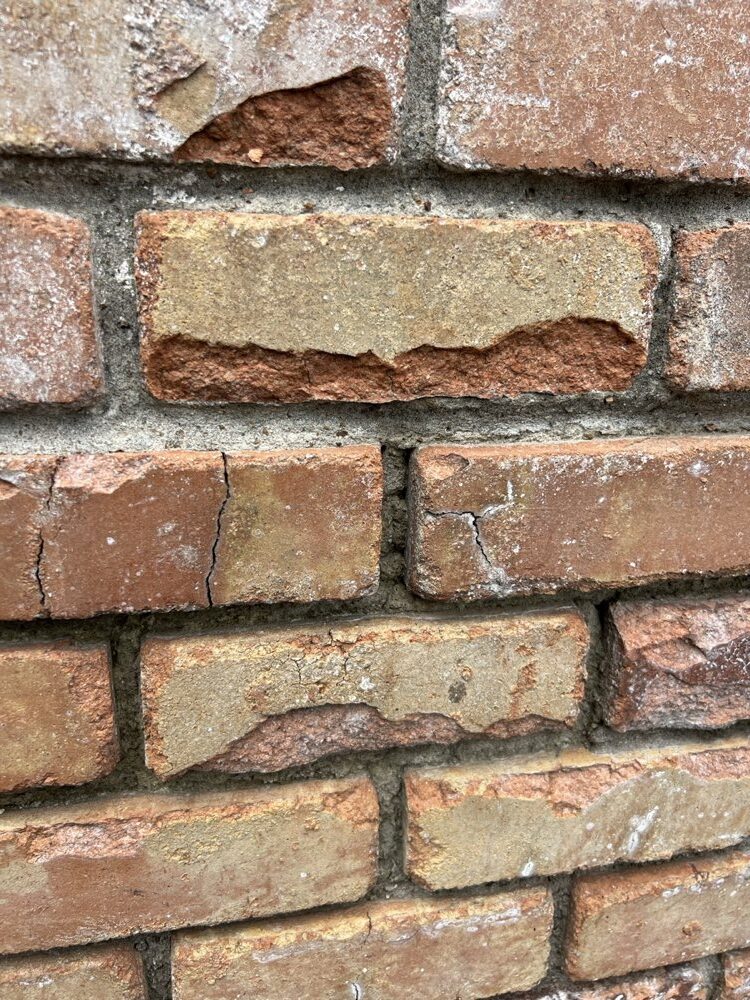
Dallas-Fort Worth sits on expansive clay soil. It swells when it rains and shrinks through the summer heat, and every house on it moves a little. Masonry chimneys are heavy and stiff, so that movement shows up in them early: cracks in the brick, a crown that has split, a chimney slowly leaning away from the wall it was built against.
The other big local pattern is age of build. Huge numbers of DFW homes went up in the 1980s and 1990s with factory-built metal fireplaces instead of full masonry. Those units were never meant to last forever. The metal flues rust, the panels crack, and for many models the replacement parts stopped being made years ago. A buyer who inherits a dead unit is often looking at a full replacement, not a repair.
- A visible gap where the chimney meets the exterior wall
- Cracks in the crown letting rain straight into the structure
- Flue tiles cracked or shifted by soil movement or a past fire
- Rust stains or flaking metal in a factory-built firebox
- Gas logs sitting in a fireplace that was never set up for them
- A missing or damaged cap after a Texas storm season
Book Before the Option Period Ends
Texas contracts usually give buyers an option period, and it is measured in days, not weeks. During that window you can renegotiate or back out. After it closes, the chimney is yours in whatever condition it is in, discovered or not.
That deadline is why we treat home-buyer inspections as schedule priorities. Call us as soon as your contract is signed, tell us the deadline, and we will work around the seller’s schedule to get in. The photo report goes out fast, usually the same day we shoot it, so you and your agent still have room to use it.
The worst time to learn about a cracked flue is the first cold weekend in your new house. The best time is while someone else can still pay for it.
In Your Option Period Right Now?
Tell us the address and the deadline. We will get a camera in the flue and a photo report in your hands while you can still negotiate.
WHAT HAPPENS WHEN YOU CALL
You call or send the form
We ask what you are seeing or hearing. A person, not a queue.
We arrive and cover everything
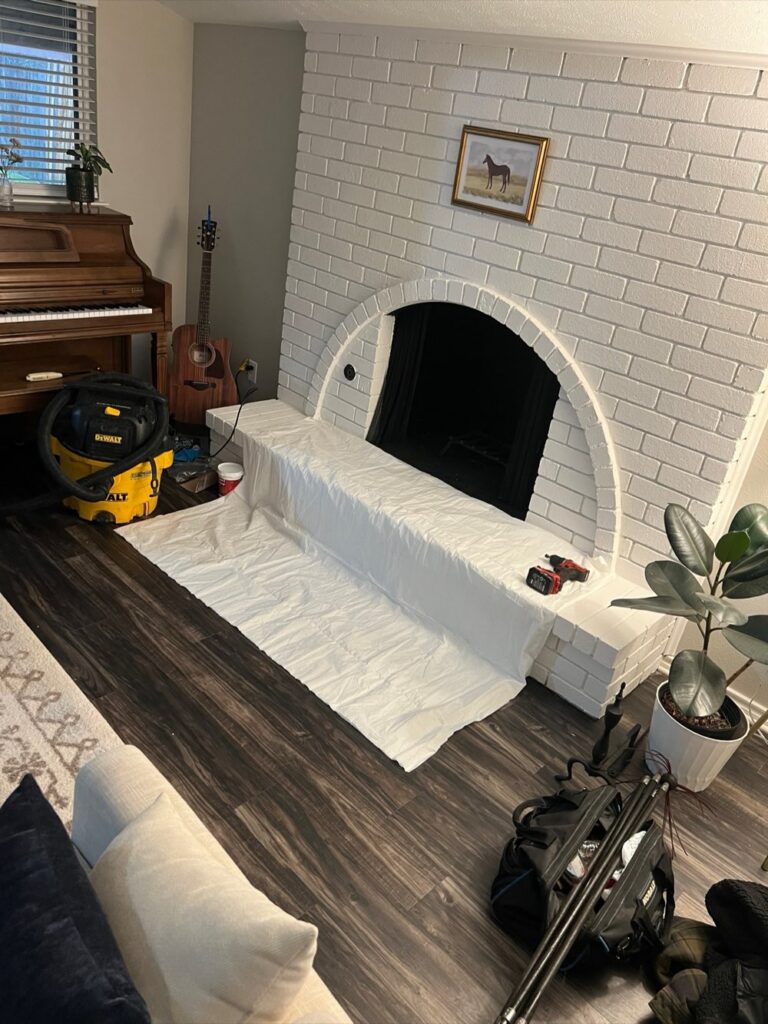
Tarps down and the vacuum ready before a tool comes out.
Camera, brushes, eyes on all of it
Firebox, damper, flue and the top of the chimney, photographed.
Photo report the same day
You see what we saw and decide what happens next.
COMMON QUESTIONS
Only partly. The home inspector looks at what is visible: the firebox, the exterior brick, maybe a flashlight glance up from below. Texas home inspection standards do not require looking inside the flue, and most inspectors will write recommend further evaluation for exactly that reason. The inside of the flue is where the expensive problems hide.
It is the industry term for an inspection that includes a camera scan of the full flue plus all accessible parts of the chimney, inside the house, on the roof, and in the attic. It is the standard recommendation whenever a property is being sold. A basic visual check without the camera cannot tell you what the flue looks like above the damper.
Plan on roughly an hour to an hour and a half for most houses. Larger homes with more than one flue take longer. We photograph as we go, so the written report follows quickly, usually the same day.
Yes, that is the main reason buyers order it. A written report with photos gives your agent something concrete to bring to the seller: a specific problem, documented, with a repair need attached. Sellers can dismiss a verbal comment. A photo of a cracked flue tile is much harder to argue with.
Especially then. Factory-built units from the 80s and 90s are common across DFW, and they have a limited working life. Rusted flues, cracked panels, and discontinued parts are the usual findings. If the unit is at the end of its life, you want that priced into the deal, because the fix is often full replacement.
No. In Texas, repairs are a negotiation, not an obligation. The seller can agree to fix it, offer a credit, or refuse. What the report does is put you in a position to ask with evidence, and to decide with real information if they say no.
Tell us your option period deadline when you call and we will schedule against it. Home-buyer inspections jump the line here because the window is short. The sooner you call after signing, the more room you leave yourself to act on what we find.
REQUEST A CALL BACK
A person calls you back about your chimney, not a dispatcher.
Under Contract and Need This Settled Fast?
We inspect, photograph everything, and send a report you can hand to the seller or your agent the same day.