
Chimney Sweep & Fireplace Service in Garland, TX
From 1913 bungalows near the downtown square to chase-built fireplaces in Firewheel, Garland chimneys age in very different ways. Here is what we look for, with photos of everything we find.
LOCALLY BASED IN DFW
We drive to you, no national call center
WRITTEN PHOTO REPORT
Every finding shown before it is quoted
SAME-WEEK SCHEDULING
Booked in days, not weeks
OWNER-ANSWERED PHONE
The person who answers is the person who comes
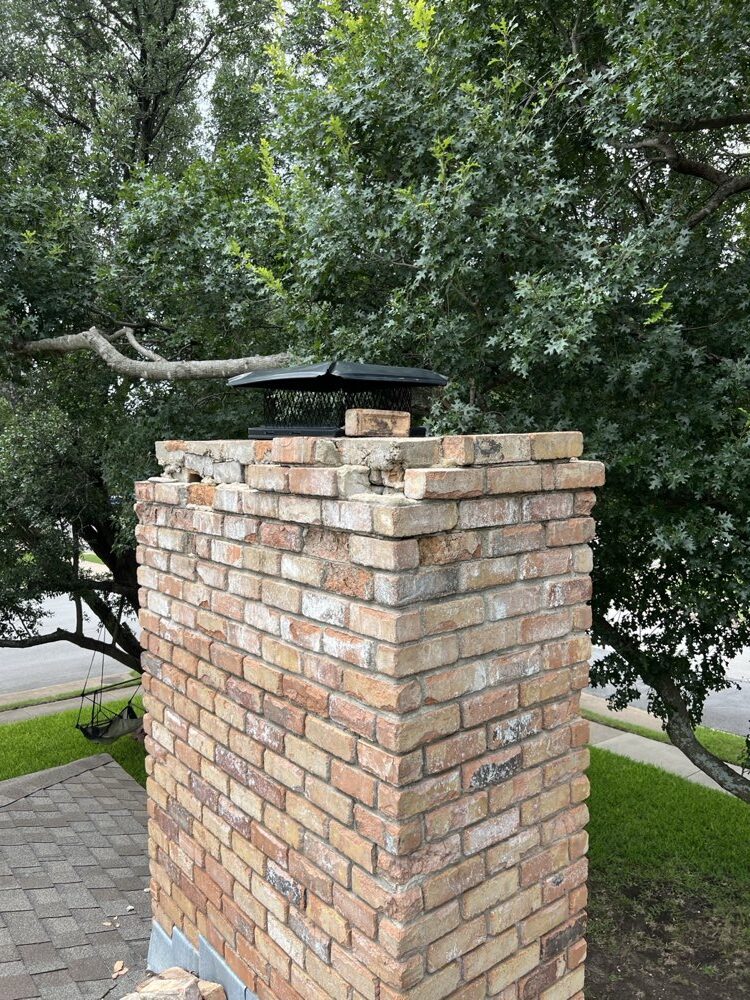
The fireplace in your Garland ranch worked fine for years. Now there is a white crust creeping up the brick, a musty smell after rain, or a crack in the crown you spotted while cleaning the gutters. Or the roofers just finished a hail claim and you are wondering whether anyone actually looked at the chimney while they were up there.
Local Chimney Experts is new to the trade, and we will say that plainly rather than dress it up. What we offer instead is documented work: we photograph what we find and show you before anything is quoted. If nothing is wrong, that is the report you get.
This page is about Garland homes specifically. The city’s housing stock has a clear shape, most of it built in one remarkable twenty-year stretch, and that shape decides what tends to go wrong with its chimneys.
YOU SEE WHAT WE SEE
You cannot see your own chimney. That is the whole problem with this trade, and it is why people feel talked into things.
Every visit ends with photographs of what we found, walked through with you before anything is quoted. If the pictures show nothing wrong, that is the report you get.
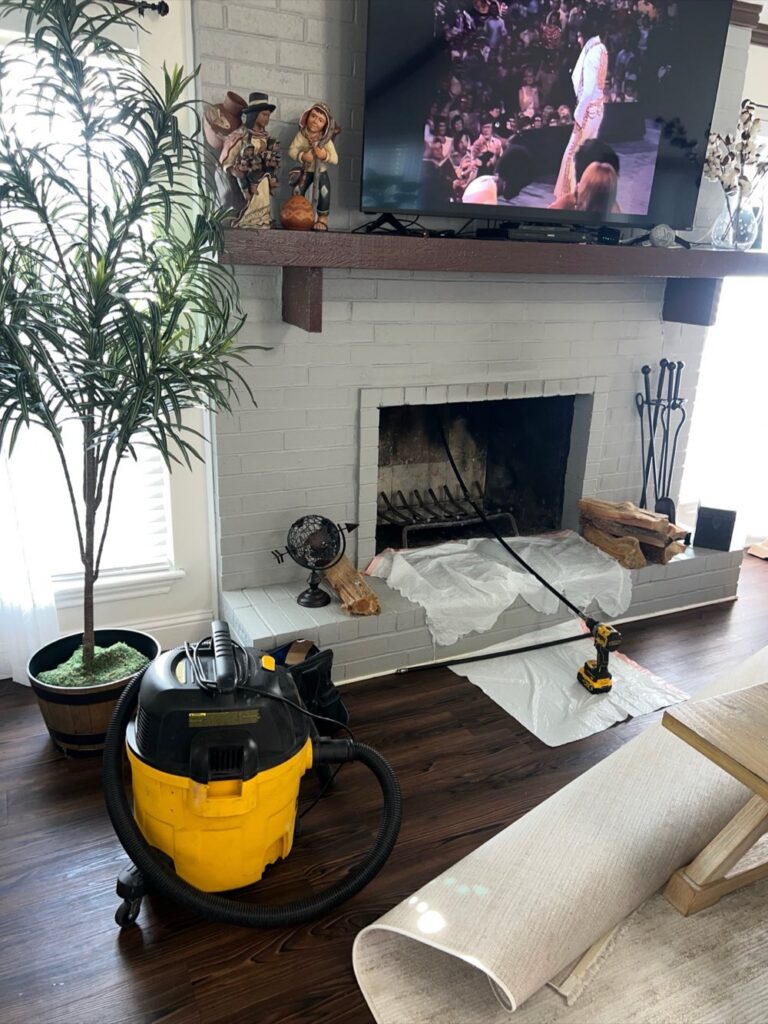
- Camera up the flue, not a guess from the hearth
- Every finding photographed before it is quoted
- The same spots photographed again after the work
- Written report in your inbox the same day
Garland Grew Fast, and Its Chimneys Are Aging Together
Garland went from just over 10,000 people in 1950 to more than 80,000 by 1970. Street after street of one-story brick homes went up in those two decades, and a large share of them are still standing between the old downtown and the newer north side.
That means a huge number of Garland chimneys are now sixty to seventy years old, all at once. These are true masonry chimneys: brick, mortar, and in most cases a clay tile liner that has never been replaced. Mortar joints from that era are reaching the age where they soften and let water in. Crowns, the concrete caps that shed rain off the top, crack and start feeding water down into the brick.
None of that means a mid-century chimney is unsafe by default. It means the original parts are old enough that someone should actually look, instead of assuming. A camera in the flue and photos of the crown settle the question either way.
The Oldest Flues: Travis College Hill and the Streets Near the Square
Downtown Garland still has its square, and the blocks around it hold the city’s oldest houses. Two blocks of Eleventh Street were platted in 1913 as the Travis College Hill Addition, built for families who wanted to ride the electric interurban line into Dallas. The district was listed on the National Register of Historic Places in 2017, and its Craftsman bungalows are past the century mark.
Chimneys that old were built with softer brick and older mortar than anything modern, and some flues were never lined at all. They need a lighter touch. Aggressive cleaning or the wrong repair mortar can do real damage to hundred-year-old masonry. We photograph the flue and the brickwork first, show you the condition, and only then talk about what, if anything, should be done.
We Cover Garland.
Tell us what you are seeing and we will tell you which visit it needs.
North Garland Is Different: Firewheel and the Chase-Built Fireplace
The Firewheel area on Garland’s north side developed mostly from the late 1990s onward, and Firewheel Town Center opened in 2005. Homes there rarely have a masonry chimney at all. Instead they have a factory-built fireplace: a metal firebox and a metal flue pipe running up inside a wood-framed chase, wrapped in brick veneer or siding, with a sheet metal cover on top.
These fail from the top down. The chase cover is just a fabricated metal pan, and when it rusts through or its seams split, rain drips straight onto the framing and the firebox below. From the yard it can look fine for years while the inside of the chase quietly rots.
- Rust streaks running down the siding or brick veneer of the chase
- A chase cover that ponds water instead of shedding it
- White or brown staining on the ceiling near the fireplace wall
- A cap or shroud that rattles or has visibly shifted after wind
Blackland Clay Moves, and It Takes Chimneys With It
Garland sits on Blackland Prairie clay, the same soil that keeps foundation repair companies busy across Dallas County. It swells after rain and shrinks hard in the summer heat, and the house rides on top of that movement.
A masonry chimney is the heaviest, most rigid part of the structure. When the slab moves, the chimney can lean or pull away from the wall it was built against. If you can see a widening gap between the chimney and the siding, or daylight where there used to be none, that problem started in the soil, not in the brick. Caulking the gap hides the symptom. What matters is whether it is still moving, which is why we photograph and measure it so you can compare over time.
Storms Here Are Not Theoretical: December 26, 2015
Garland knows storm damage firsthand. On December 26, 2015, a violent tornado crossed Interstate 30 at the George Bush Turnpike and tore through parts of Garland and neighboring Rowlett. It was the deadliest tornado in the country that year, and it destroyed hundreds of homes.
Most storm damage to chimneys is far less dramatic and far easier to miss. Spring hail dents caps, punctures chase covers, and cracks crowns. After a hailstorm, the roof gets inspected for the insurance claim and the chimney usually gets glanced at, if that. Flashing, the metal where chimney meets roof, is a common leak point after a re-roof because it sits at the edge of the roofer’s scope.
If your Garland home has had a roof replaced in the last few years and you have never had the chimney itself looked at, that is a gap worth closing.
- Dents or punctures in the cap and chase cover after hail
- Cracked or spalled crown concrete
- Flashing that was bent back but never resealed during a re-roof
- New ceiling stains near the fireplace after heavy rain
New Company, Documented Work
We do not have decades of history to point to, so the business is built around proof you can check yourself: photos of the inside of your flue before we sweep it, the crack we found in your crown, the same spots after the work. You judge with your own eyes, not our adjectives. When you call, you talk to the technician, and the technician is who shows up.
One honest boundary: we work on the masonry and venting side of the fireplace. Gas lines, valves, and pilot assemblies belong to a gas fitter, and if your issue turns out to be on that side, we will tell you so instead of touching it.
If you are not sure where to start: a chimney inspection fits a house with an unknown history, a chimney sweep fits a fireplace that gets regular use, and chimney repair fits a problem you can already see.
Talk To Someone Who Works In Garland
Tell us what you are seeing or hearing and we will tell you whether it needs a sweep, an inspection, or a repair. If it is nothing, we will say that too.
WHAT HAPPENS WHEN YOU CALL
You call or send the form
We ask what you are seeing or hearing. A person, not a queue.
We arrive and cover everything
Tarps down and the vacuum ready before a tool comes out.
Camera, brushes, eyes on all of it
Firebox, damper, flue and the top of the chimney, photographed.
Photo report the same day
You see what we saw and decide what happens next.
COMMON QUESTIONS
Yes, and they are most of what Garland is. Chimneys from that era usually have their original clay tile liner and original mortar, both now sixty-plus years old. We run a camera through the flue, photograph the crown and joints, and show you exactly what shape it is in before recommending anything.
Very common. Blackland clay under Garland swells and shrinks with the weather, and the chimney, being heavy and rigid, often separates as the foundation moves. A small stable gap is worth watching. A growing one needs a real assessment, not a bead of caulk. We photograph and measure so you can track it.
Yes. Hail that totals a roof also hits the cap, the chase cover, and the crown, and chimney flashing is often disturbed during the re-roof itself. None of that shows up from the ground. A quick inspection with photos tells you whether the storm left anything behind.
Newer, yes. Maintenance-free, no. Factory-built fireplaces in chase construction depend on a sheet metal cover that rusts and fails long before the house is old. If yours has never been looked at and the home is fifteen or twenty years old, the cover and cap are worth photographing.
No. We handle the chimney, flue, firebox, and venting. Gas lines, valves, and pilots are a gas fitter’s work, and we say so plainly. If we spot something on the gas side during an inspection, we photograph it and tell you to bring in the right trade.
It depends on use, not the calendar. The burn season here is short, roughly November through February. If you burn most weekends of that stretch, get it checked yearly before the first fire. If the fireplace mostly sits idle, an inspection will tell you whether a sweep is even needed.
All of Garland, from the historic blocks around the downtown square to Firewheel and everything between, plus nearby cities like Dallas, Richardson, Sachse, and Rowlett. We are a mobile company, so we come to you.
RELATED
REQUEST A CALL BACK
A person calls you back about your chimney, not a dispatcher.
Has Anyone Looked Since the Sixties?
Most Garland flues still carry their original clay tile and mortar. One camera pass through the flue, plus photos of the crown, tells you exactly where yours stands.