
Chimney Sweep & Fireplace Service in Fort Worth, TX
Fewer than one Fort Worth home in ten predates 1950, and close to half the city went up after 2000. Those two numbers decide almost everything about your chimney here.
LOCALLY BASED IN DFW
We drive to you, no national call center
WRITTEN PHOTO REPORT
Every finding shown before it is quoted
SAME-WEEK SCHEDULING
Booked in days, not weeks
OWNER-ANSWERED PHONE
The person who answers is the person who comes
A chimney in a 1915 bungalow off Magnolia Avenue and a chimney in a 2016 house off Heritage Trace Parkway share a name and nothing else. One is brick and lime mortar stacked by hand. The other is a metal pipe in a wooden box under a sheet metal lid.
Local Chimney Experts is new in Fort Worth and says so plainly. Behind the work sits evidence: photographs of what we find, before any quote and again after.
This page is about Fort Worth housing: what got built here and when, and which failures turn up where.
YOU SEE WHAT WE SEE
You cannot see your own chimney. That is the whole problem with this trade, and it is why people feel talked into things.
Every visit ends with photographs of what we found, walked through with you before anything is quoted. If the pictures show nothing wrong, that is the report you get.
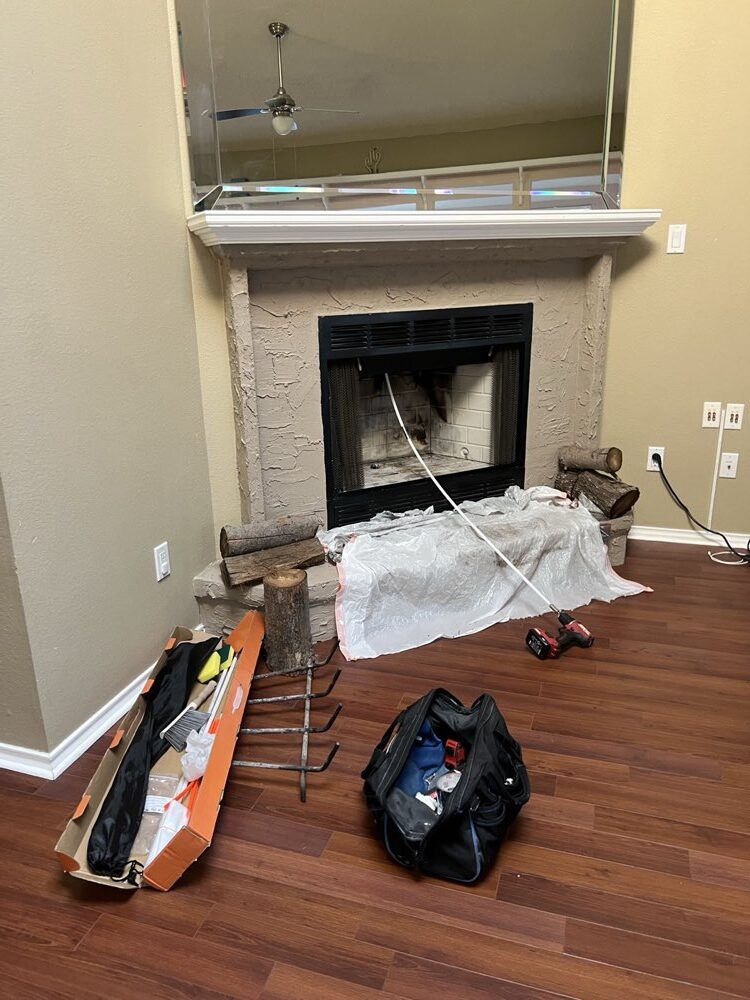
- Camera up the flue, not a guess from the hearth
- Every finding photographed before it is quoted
- The same spots photographed again after the work
- Written report in your inbox the same day
Fort Worth Crossed a Million People, and the Chimney Math Followed
Fort Worth passed one million residents in 2024, moving ahead of Austin as the fourth largest city in Texas. Most of that growth is recent, and the housing counts say it better than the population counts do.
Census survey figures put Fort Worth at roughly 398,000 housing units. About 20,000 date to 1939 or earlier and another 15,000 went up during the 1940s, so under one Fort Worth home in ten predates 1950. At the other end, roughly 192,000 units, close to half the city, were built in 2000 or later. The middle matters too: the 1950s alone account for about 41,000 Fort Worth homes, more than either the 1960s or the 1970s produced, and then building slowed for two decades before the 2000s wave arrived.
That curve sorts the city into three kinds of chimney.
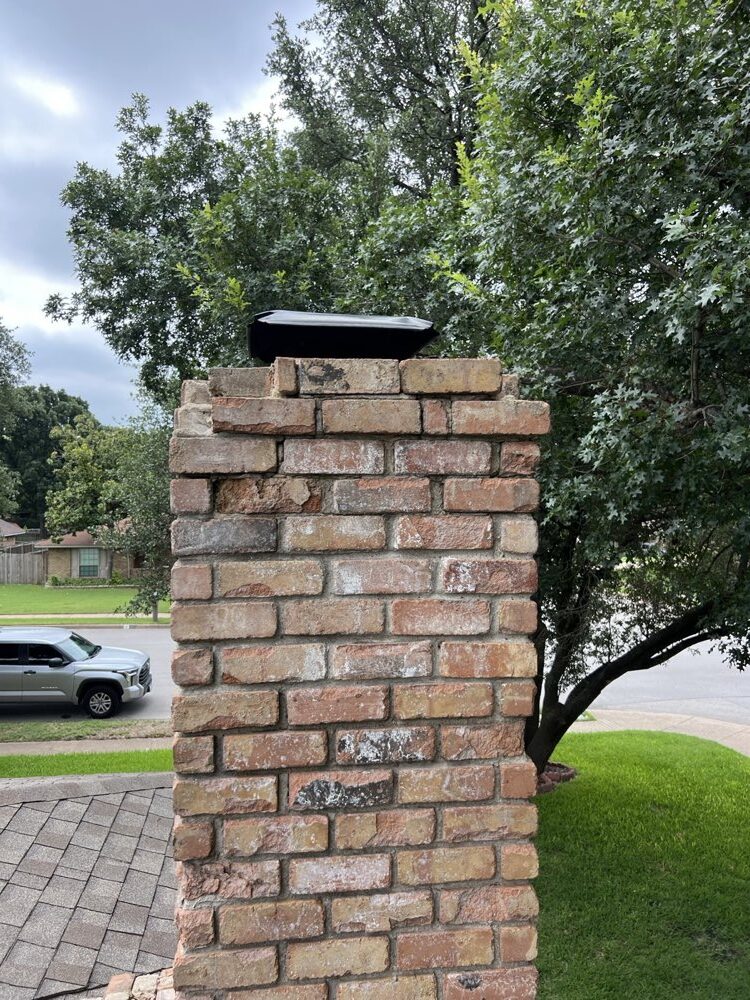
Pre-1950 houses have true masonry: brick on a footing, mortar joints, a clay tile liner if the flue was ever updated, and frequently no liner at all. They fail slowly and from the top down, as crowns split and joints wash out.
Houses from the 1950s through the 1970s are masonry too, but lighter and faster built, with thinner crowns, shallower footings, and dampers that have not moved in decades. Fort Worth has tens of thousands of those hitting fifty to seventy years old together, the age at which a crown poured as a thin skim starts letting water into the brick below it.
Houses from the mid-1980s onward are almost all factory built: a metal firebox and a multiwall flue pipe standing inside a wood framed chase finished in brick veneer or siding. Nothing about the outside tells you which one you have. Because close to half of Fort Worth went up after 2000, that is now the most common chimney in the city by a wide margin, and the type owners most often assume needs nothing.
The Ground Under Fort Worth Behaves Differently From the Ground East of It
Tarrant County runs in bands north to south. Most of Fort Worth sits on the Grand Prairie, also called the Fort Worth Prairie, where shallow clayey soil lies over alternating limestone and marl, and toward the west the limestone comes close enough to the surface that there is barely any soil above it. The deep Blackland clay that governs Dallas and the suburbs east of it only reaches the southeastern corner of the county.
So a Fort Worth chimney founded on thin soil over rock does not ride seasonal swelling the way one in deep clay does. It can sit still while the house shifts, or sit on a clay pocket while a neighbor’s stack sits on stone. Cracking here is differential more often than uniform.
- A gap opening between chimney and wall on one side only
- Stair step cracking through mortar joints, not brick faces
- White crusty staining, meaning water is moving through masonry
- Crown or brick fragments in the gutter
We Cover Fort Worth.
Tell us what you are seeing and we will tell you which visit it needs.
Fairmount, Ryan Place, and Mistletoe Heights: Where the Old Masonry Is
Fort Worth’s pre-1950 housing is concentrated, not scattered, and most of it sits on the near south side.
Fairmount is the largest piece: roughly a square mile below downtown, more than a thousand contributing buildings, assembled from about twenty subdivisions platted between 1883 and 1907. Building ran from around 1890 into the late 1930s and left one of the largest concentrations of Craftsman bungalows and American Foursquares in the country. Ryan Place was platted in 1911, its Elizabeth Boulevard houses reaching a scale Fairmount rarely does. Mistletoe Heights was platted across 1909 and 1910, its land values lifted by Texas Christian University’s move to Fort Worth in 1910 and the streetcar line that followed.
Chimneys in those neighborhoods share a profile. The brick is softer than modern brick and the mortar is lime based, so the stack was built to flex and shed water rather than resist it. Many flues are unlined, and a fair share of the lined ones were lined later and badly.
Camp Bowie Bungalows and the Stockyards Blocks
Arlington Heights began as a streetcar suburb in the 1890s, laid out west of downtown by the Chamberlin brothers with a trolley running toward Lake Como. In 1917 the Army built Camp Bowie across roughly 2,200 acres of it to train the 36th Infantry Division, and the camp’s main road took the Camp Bowie Boulevard name in 1919. Once the tents came down, bungalows and English cottage style houses went up on that ground, which is why the corridor is full of 1920s masonry with shallow crowns and unrelined flues. The North Side dates to the same window for a different reason: Armour and Swift broke ground at the Stockyards in 1902, and worker housing filled in around Exchange Avenue.
Older Fort Worth stacks are often tall, narrow, and shared, two flues in one chimney serving rooms on either side of a wall. When one is abandoned and the other still burns, smoke crosses a failed division wall. That shows on camera, never from the roof.
North of Loop 820, the Chimney Is a Pipe in a Wooden Box
Most recent building in Fort Worth is north, up I-35W toward Alliance and the Heritage Trace corridor, with newer edges west and far south. If your address sits there, the fireplace is very likely factory built.
Those systems are not inferior. They fail somewhere else. The weak point is the top: a folded sheet metal chase cover that ponds water, rusts through at the seams, and drains into wood framing. By the time a stain reaches a ceiling, the framing has been wet for a season or more. Second is the chase itself, a wooden box wearing siding or a brick face, where the joint between them opens. Third is the cap and pipe termination, which hail dents and storm wind shifts.
A chimney assembled wrong on the day the house was built never announces itself either.
In a Fort Worth Landmark District, Approval Comes Before the Mortar
Fairmount and Southside are designated by the city as a Historic and Cultural Landmark district, not only listed on the National Register, and Mistletoe Heights received its city designation in 2002. Inside districts like these, exterior changes require a Certificate of Appropriateness approved through Fort Worth’s Historic and Cultural Landmarks Commission.
Repointing with mortar that does not match the original, rebuilding a chimney top in different brick, adding a cap that changes the profile seen from the street, or coating historic masonry all get reviewed rather than assumed. Applications run on a monthly cycle, so a chimney inside a Fort Worth landmark district is not a same week rebuild. Better to hear that at the start than after materials are bought.
What We Photograph, and Where We Stop
Every Fort Worth visit produces the same artifact: pictures. The flue inside before anything is touched. The split in the crown, with something in frame for scale. The chase cover from above. The same views afterward. Call and you get the technician, who is also the one who climbs the ladder.
Our trade is masonry and venting: brick, mortar, crowns, caps, chase covers, flashing, liners, fireboxes, dampers, and the flue. Gas piping, valves, and pilots belong to a gas fitter.
Not sure where to begin: a chimney inspection fits a Fort Worth house whose history you do not know, a sweep fits a fireplace that gets used, repair fits what you can already see.
WHAT HAPPENS WHEN YOU CALL
You call or send the form
We ask what you are seeing or hearing. A person, not a queue.
We arrive and cover everything
Tarps down and the vacuum ready before a tool comes out.
Camera, brushes, eyes on all of it
Firebox, damper, flue and the top of the chimney, photographed.
Photo report the same day
You see what we saw and decide what happens next.
COMMON QUESTIONS
Exterior work in the Fairmount and Southside district goes through a Certificate of Appropriateness reviewed by Fort Worth’s Historic and Cultural Landmarks Commission, on a monthly application cycle. Sweeping is a different category from rebuilding a chimney top or changing how it looks from the street. We photograph first and say which one applies.
On a house in Fairmount, Ryan Place, or Mistletoe Heights, usually not. Brick from that era is soft and the original mortar is lime based, deliberately weaker than the brick so the joint gives first. Hard modern mortar reverses that and pops brick faces off within a few winters.
Yes, because of the chase cover. That sheet metal lid fails quietly, rusting at the seams and letting water into wood framing, and eight years is long enough to start. Worth confirming the system was assembled correctly at build, too, since those mistakes stay hidden until someone looks.
Not in the same way. Most of Fort Worth sits on the Grand Prairie, shallow clayey soil over limestone and marl, while the deep expansive Blackland clay runs through Dallas and the suburbs east of it. Less uniform seasonal movement here, more differential movement. A leaning Fort Worth chimney is worth photographing at the base and the roofline before anyone blames soil.
Look inside the firebox. Real masonry shows individual bricks with mortar joints up the back and sides. A factory built unit shows metal panels and refractory sections with a seam where the walls meet. Build year helps: if your Fort Worth house went up after the mid-1980s, it is almost certainly factory built.
It limits what we touch, not what we can inspect. We work the chimney side: flue, masonry, crown, cap, venting, firebox structure. Gas piping, valves, and pilots belong to a gas fitter.
REQUEST A CALL BACK
A person calls you back about your chimney, not a dispatcher.
Magnolia Avenue Brick or Heritage Trace Pipe?
One is brick and lime mortar stacked by hand, the other a metal flue inside a wood-framed chase, and the street view will not say which. The photo report shows you before any quote.