
Chimney Sweep & Fireplace Service in Plano, TX
Plano went from 3,695 people to 222,030 in forty years. That building record is written into every chimney here, and we photograph what we find in yours.
LOCALLY BASED IN DFW
We drive to you, no national call center
WRITTEN PHOTO REPORT
Every finding shown before it is quoted
SAME-WEEK SCHEDULING
Booked in days, not weeks
OWNER-ANSWERED PHONE
The person who answers is the person who comes
A 1978 brick chimney off Los Rios that nobody has ever looked inside. A 1991 house on the west side with rust running down the siding above the fireplace. A newer place near Legacy West where the fireplace has never once been lit. Three different problems, ten minutes apart in Plano.
Local Chimney Experts is a young company working the Plano side of Collin County, and we say so plainly rather than pad out a history. What we offer instead is evidence: pictures of the flue, the crown, the firebox and the chase, taken before anybody talks about work.
YOU SEE WHAT WE SEE
You cannot see your own chimney. That is the whole problem with this trade, and it is why people feel talked into things.
Every visit ends with photographs of what we found, walked through with you before anything is quoted. If the pictures show nothing wrong, that is the report you get.
- Camera up the flue, not a guess from the hearth
- Every finding photographed before it is quoted
- The same spots photographed again after the work
- Written report in your inbox the same day
How Plano Got Built, and What It Left on the Roofs
Plano is old on paper and new on the ground. The town was platted in 1873, a year after the Houston and Texas Central Railway reached it, and in August 1881 a fire took the entire downtown business district, better than fifty buildings, leaving one saloon standing west of the tracks. The town rebuilt, and it rebuilt in brick as the century turned. That is the first layer of Plano housing, and it is small.
Then very little happened for sixty years. The census counted 3,695 people in Plano in 1960. By 1970 it was 17,872. By 1980, 72,331. By 1990, 127,885. By 2000, 222,030. Nearly every house standing here today went up inside that run, and the run has two clearly different halves.
The first half, roughly the mid-1960s through the early 1980s, built brick ranch houses whose chimneys are solid masonry: laid brick, mortar joints, a crown poured on top, clay tile lining the flue. Those chimneys are now forty to sixty years old, and masonry wears out from the outside in. Mortar recedes, the crown splits, water starts treating the cracks as a route.
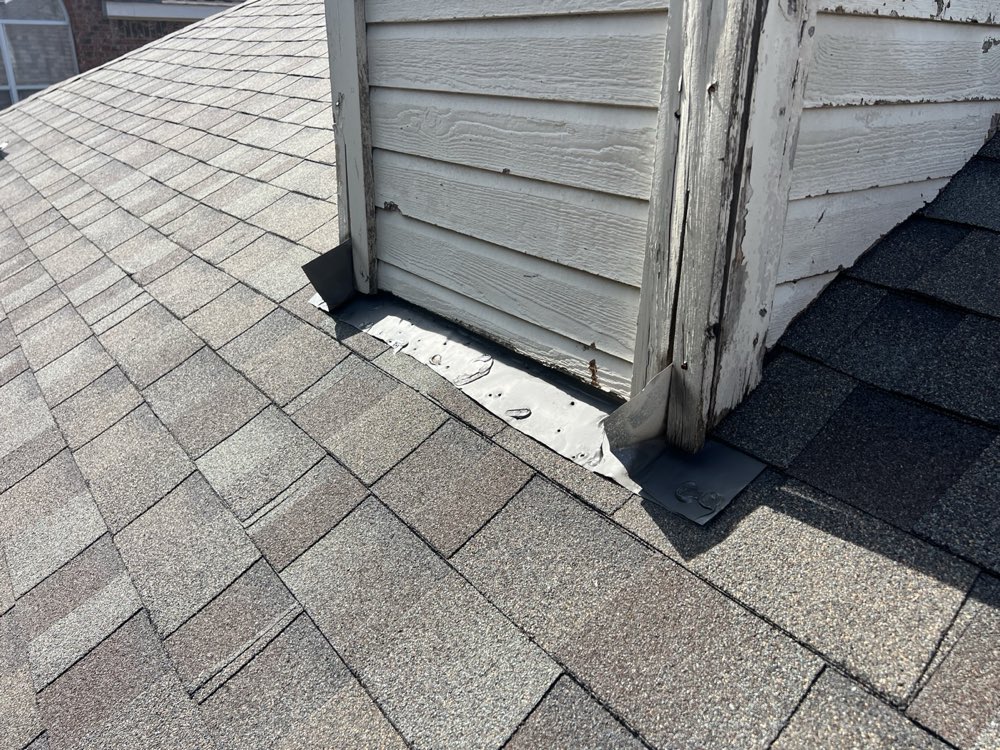
The second half, mid-1980s onward, built something else. By then the factory-built fireplace had taken over: a steel firebox and metal flue pipe inside a wood-framed box, dressed in brick veneer or siding, with a flat metal lid over the top. That system is not worse. It fails somewhere else, and sooner. The lid, called a chase cover, corrodes, holds standing water, and wets the framing underneath for months before anything shows indoors.
So Plano carries two chimney populations of comparable size, divided by about 1985. The first thing worth settling on any job here is which one is on your roof, because the checklist, the failure clock and the fix all change with the answer.
The Old Brick Sits in a Few Blocks Near Downtown
Housing that predates the boom is concentrated around downtown Plano. The Haggard Park Historic District, beside the park and the Interurban Railway Museum, was the city’s first planned residential neighborhood and was largely built out by the late 1920s; Queen Anne, Craftsman and Prairie four-square houses still stand there. Nearby is the Douglass Community, established in the 1860s by Andy Drake and Mose Stimpson and named for Frederick Douglass, among the oldest neighborhoods in Plano.
Houses that age raise questions the rest of the city never has to ask. The brick fires soft and the mortar tends to be lime-based, so hard modern mortar packed into those joints can pop the faces off the brick it meant to protect. The flue may still carry its first clay tiles, broken ones, or nothing at all.
There is a paperwork layer here too, and only here. Exterior work inside a Plano heritage district, or on a designated heritage landmark, runs through a Certificate of Appropriateness review with the city’s Heritage Preservation Officer. Our photos of existing conditions are yours to use.
We Cover Plano.
Tell us what you are seeing and we will tell you which visit it needs.
The 1970s Ring: Los Rios, Hunters Glen and Their Neighbors
Between the old core and the newer west side sits Plano’s first suburban ring. Hunters Glen, between US 75 and the Dallas North Tollway, is mostly 1970s and 1980s construction. Los Rios, on the east side, grew around a golf course that opened in the early 1970s and closed at the end of the 2010s, after which the city bought the 194-acre property to convert into parkland.
These are the houses where we most often meet a chimney that has burned for decades and never had a camera inside it. The pattern repeats street to street: a crown poured with the house, now cracked; soft mortar on the upper courses, which take the most weather and the least attention; clay tiles opened at the joints. All of it is smaller work found early.
West Plano Was Built by the Corporate Move-Ins, and It Has Chases
West Plano exists because of a decade of headquarters decisions. Ross Perot’s EDS began moving into the Legacy business park in 1985. Frito-Lay arrived the same year with a facility of roughly 556,000 square feet on 300 acres. J.C. Penney relocated from New York and opened here in 1992. Toyota’s North American headquarters opened at Legacy West in 2017.
Housing chased every wave. Willow Bend went up in the late 1980s on the grounds of the Willow Bend Polo and Hunt Club, which Norman Brinker opened there in 1973. Deerfield filled in from the late 1980s forward, the subdivisions north and west came through the 1990s and 2000s, and Legacy West added apartments and mid-rise units in the 2010s.
Almost all of it has a factory-built fireplace inside a framed chase. The oldest chases are pushing forty years, late in the life of an original sheet metal cover, and even the 1990s ones have absorbed thirty North Texas hail seasons. Rust streaking the siding below a chase top usually means water has been in the framing a while. None of it can be judged from the ground, which is why pictures of the chase top come standard on our west Plano visits.
What Actually Fails, Sorted by the Decade Your House Went Up
Plano is close to fully built out; the city’s own planning documents describe only a small supply of vacant land left. The chimney population here is no longer growing, it is aging. What we look for, keyed to build era:
- Pre-1930, near downtown Plano: soft brick, lime mortar, a possibly unlined flue, sometimes several flues in one stack
- Mid-1960s to 1985: split crown, receding mortar on the top courses, open joints between clay tiles
- 1985 to 2000: corroded chase cover, tired storm collar, aging firebox panels, spent flashing
- 2000 and newer: thin builder-grade caps and covers, plus crown sealant dried out and split
What We Do on a Plano Job, and Where We Stop
One condition crosses every decade here. The ground under Collin County is expansive clay that keeps moving with the seasons, and a masonry chimney is the heaviest rigid object bolted to a house, so it shows that movement first as a seam widening where chimney meets wall. A stable hairline seam is worth photographing and watching. One that opens further each year is a structural conversation, not a tube of sealant.
Our work is masonry and venting. Supply piping, valves and pilot hardware are a gas fitter’s trade, and we hand that over rather than guess at it.
- Chimney sweep for a fireplace that gets regular winter use
- Chimney inspection with a camera and a written photo report you keep
- Chimney repair for crowns, brick and mortar on older Plano masonry
- Chimney leak repair, traced to where water enters, not where it drips
- Chimney chase cover replacement for the framed chases across west Plano
- Chimney liner replacement when clay tiles in an older flue have opened up
Why the Camera Comes Out Before the Number Does
A chimney is the one part of a house an owner genuinely cannot check: above the roofline, and hollow. That blind spot is where this trade earned its reputation, and closing it is what we built the company around. The order never varies: look, photograph, show you, then discuss what should happen. The technician runs the schedule and reads every Plano job file, and a report with no pictures does not go out.
On what to book: an inspection suits a house whose chimney history you do not know, which in Plano covers most resales. A sweep suits a fireplace you burn all winter.
WHAT HAPPENS WHEN YOU CALL
You call or send the form
We ask what you are seeing or hearing. A person, not a queue.
We arrive and cover everything
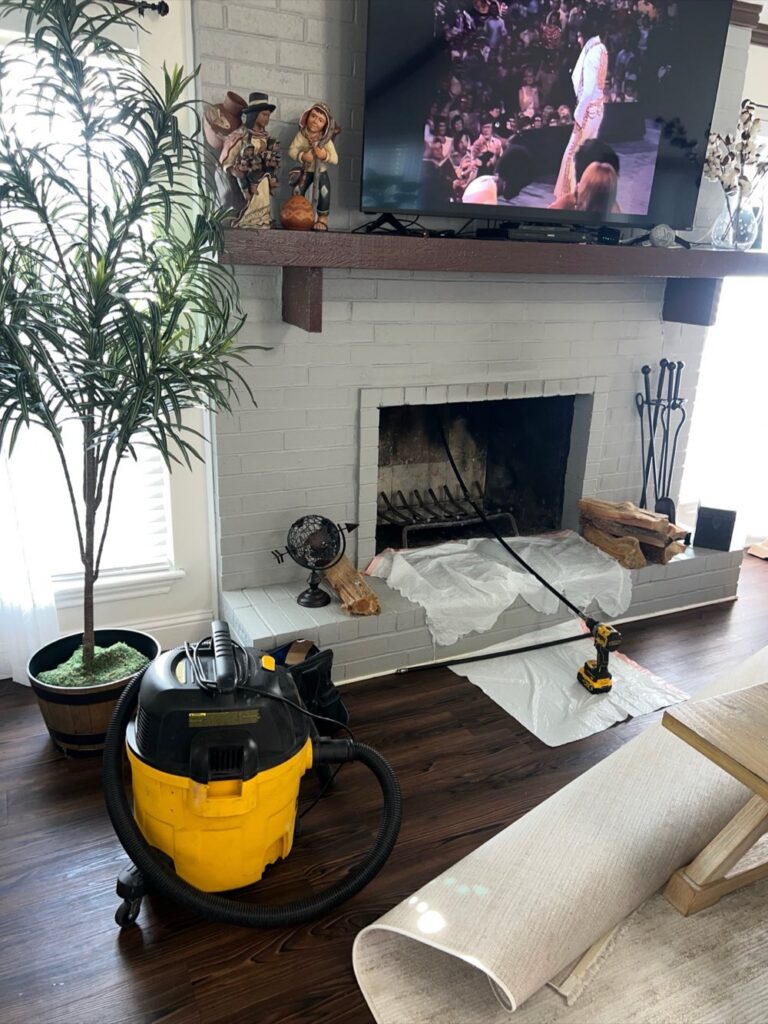
Tarps down and the vacuum ready before a tool comes out.
Camera, brushes, eyes on all of it
Firebox, damper, flue and the top of the chimney, photographed.
Photo report the same day
You see what we saw and decide what happens next.
COMMON QUESTIONS
Exterior work inside a Plano heritage district, or on a designated heritage landmark, goes through a Certificate of Appropriateness review with the city’s Heritage Preservation Officer. We photograph existing conditions on every visit anyway, and those images are yours to submit. Flue and firebox work sits differently, and we will say which side of that line your job falls on.
Look at the firebox floor and back wall. Firebrick laid in courses with mortar joints usually means masonry. Smooth steel panels with visible corner seams mean a factory-built unit inside a framed chase. Build year helps too: in Plano, before the early 1980s leans masonry, late 1980s onward leans prefabricated.
No, just a different machine with a different weak point. Factory-built systems hold up well when the top is maintained. What kills them is the chase cover: it rusts through, then rain runs into framing nobody can see. A thirty-year-old original cover deserves photographs, not assumptions.
A county burn ban restricts outdoor burning in the unincorporated parts of Collin County. It aims at brush piles and open flame outside, not at the firebox in your Plano living room. What should stop you is an unknown flue, not the ban.
Yes, and usually at the top rather than the firebox. An idle flue still collects rain, leaves and animals if the cap is missing, and a chase quietly taking water does not care whether anyone burned wood in it. One camera visit tells you whether it is ready to use, needs a small fix, or is better closed with a proper cap.
All seven Plano ZIP codes: 75023, 75024, 75025, 75074, 75075, 75093 and 75094, from the older core around downtown out to the Legacy corridor. We also work nearby Collin County cities including Frisco and McKinney.
REQUEST A CALL BACK
A person calls you back about your chimney, not a dispatcher.
Which Side of 1985 Is Your Chimney?
One camera visit settles it, and the photos of your crown or chase cover reach your inbox before any number does.