
Chimney Inspection for Insurance Claims
Photo documentation an adjuster can actually use, and a plain explanation of how the claim gets decided. Dallas-Fort Worth.
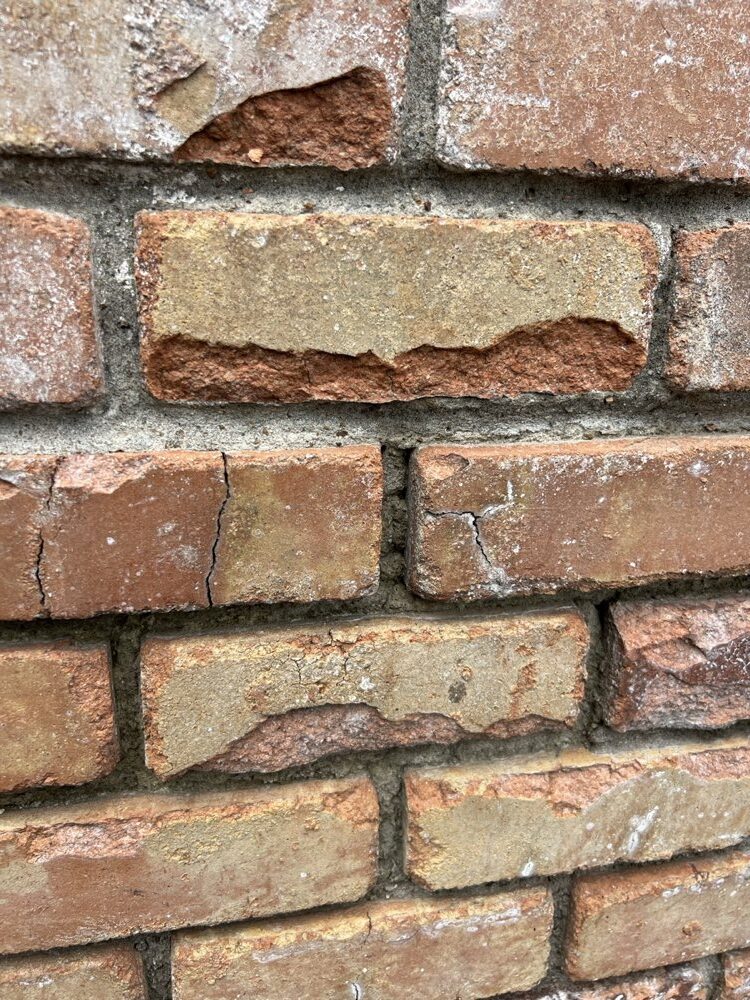
CAMERA INSPECTION
We look before we quote, every time
PHOTOS OF EVERY FINDING
No photo, no claim
MASONRY AND VENTING ONLY
Gas lines go to a gas fitter and we say so
SAME-DAY REPORT
In your inbox before we finish the day
Hail rolls through North Texas most springs, and the chimney is the tallest thing on the house, so it takes the hit before the shingles do. The crown cracks. The cap dents. The flashing lifts at a corner. Most homeowners never see it, because it sits two stories up on surfaces nobody looks at.
If you are filing a claim, the file is the whole game. Your insurance company is not deciding whether your chimney is broken. It is deciding what failed, where it sits, what caused it, and when it happened. A phone photo from the driveway answers none of those.
So we get on the roof, photograph the chimney the way a claim file needs it, and hand you a written report with every image labeled. Once the claim settles we can do the repair. What we will not do is adjust your claim or tell you what your policy covers.
YOU SEE WHAT WE SEE
You cannot see your own chimney. That is the whole problem with this trade, and it is why people feel talked into things.
Every visit ends with photographs of what we found, walked through with you before anything is quoted. If the pictures show nothing wrong, that is the report you get.
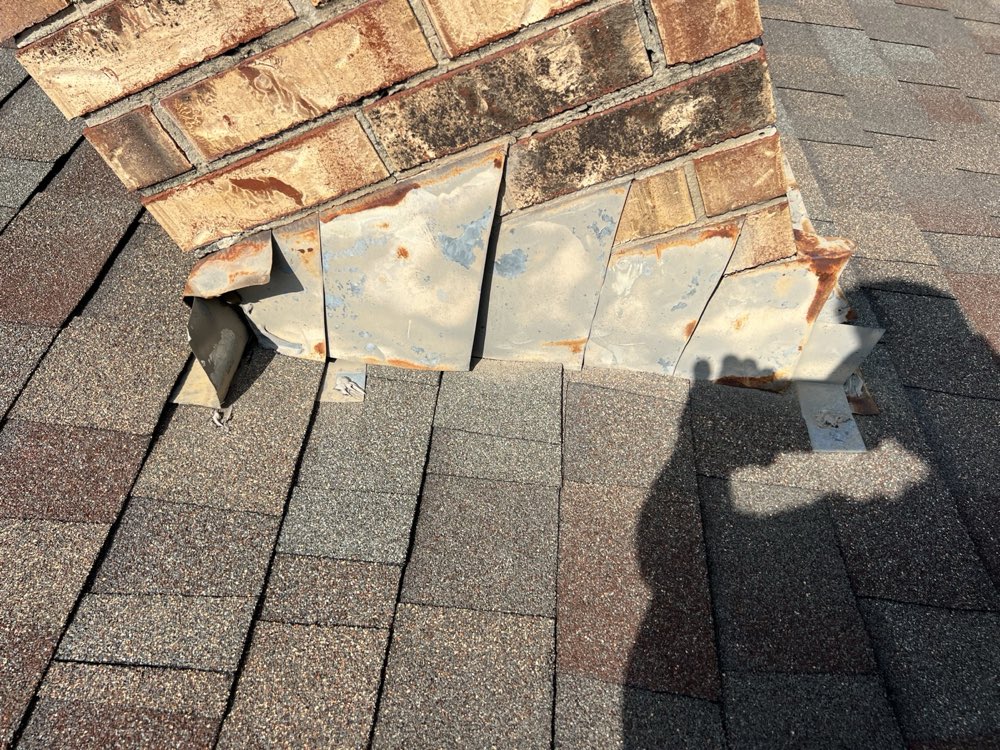
- Camera up the flue, not a guess from the hearth
- Every finding photographed before it is quoted
- The same spots photographed again after the work
- Written report in your inbox the same day
The four questions your file has to answer
Adjusters are not hunting for damage. They hunt for evidence, and evidence is damage plus context. Every image in a usable file answers one of four questions. A photo that answers none of them is a picture of a brick.
- What failed, named by component: crown, cap, chase cover, flashing, brick face, mortar joint, flue tile. Not the word chimney.
- Where it sits, so a tight shot of a fracture can be placed on your actual roof instead of taken on faith.
- What the break is consistent with: impact, wind, heat, water, or ordinary age.
- How recent it looks, the question almost nobody thinks to document and the one that quietly decides the most claims.
How the photo report gets built, and why the order matters
A pile of close-ups proves nothing. A tight shot of a fractured crown could have been taken on any chimney in Texas, and anyone who reads claim files knows it. What makes an image count is that it can be walked back to a place on your roof.
So the sequence runs far to near, each frame overlapping the last, and direction gets written down too, because hail arrives on a slant and works one face harder than the others.
- Orientation frame: the roof, so the chimney has an address on the structure.
- Whole-stack frame: which slope, which face, how it sits against the ridge and the flashing line.
- Context frame: the damaged zone with sound material still around it.
- Detail frame: the break itself, with a tape or a hand in shot for size.
- The compass face each damaged side points, written down rather than guessed later.
- Interior frames when the event could have reached inside: firebox, damper, smoke shelf, camera down the flue.
Insurer Wants Documentation?
A written photo report, to the level the policy asks for.
Recent break or long-standing break: what gets read
This is where chimney claims are usually settled, and the reasoning is physical.
Metal that has sat outdoors for years carries a film of oxidation, dust and algae. A hailstone landing on it scrubs that film off at the point of contact and leaves a bright clean spot. The trade calls it spatter. It is not damage, it is a timestamp, and it is temporary, because the film builds back over following seasons.
The second thing read is agreement across surfaces. Soft metal near the chimney bruises at roughly the thresholds a shingle does, so gutters, downspouts, vents and condenser fins give a second opinion on stone size and angle.
- Bright, clean impact centers on metal: recent. Grime settled back into the dent: older.
- Damage bunched on one or two faces: consistent with wind-driven impact from a direction.
- Damage ringing all four sides evenly: more often age, water and ground movement than one event.
- Nothing marked anywhere else on the lot: worth knowing before a claim rests on the chimney alone.
What you can check from the ground, and what each thing rules out
None of this needs a ladder, and you should not be on one after a storm. A walk around the perimeter with a phone at full zoom, plus a look into the firebox, tells you which conversation you are about to have.
- Cap crooked or gone: the flue is open. Every rain goes down it now, and so does anything that can fly. This one worsens fastest.
- Sand, grit or orange crumbs in the gutter below: material is shedding off the crown or the joints. Proof of something, not proof of a storm.
- A pale streak down the brick, or water in the firebox after rain: the top is open somewhere. Crown, cap, flashing and brick all produce that, and separating them is why anyone goes up.
- A ceiling stain beside the chimney indoors: usually flashing. Stains lag the leak by weeks, so the date it appeared will not match the storm.
- Shifted brick, a lean, or a gap where the stack meets the wall: stop there. No fire, no weight on that roof, get someone out.
- Nothing visible after a bad storm: normal. Crown fractures and cracked flue tile are invisible from the yard, and a strike can leave no exterior sign.
Document, protect, then repair, in that order
Sequence matters more than speed, and the two get confused.
Photograph before anything is touched. Once a crown is filled or a bent cover goes in a dumpster, the thing that would have carried your case no longer exists. Broken parts count too: Texas Department of Insurance guidance is to keep damaged material until the company says otherwise, and a punched chase cover is the exhibit.
Protect second. Tarping a leak or covering an open flue is expected of you, not held against you. Save those receipts. Permanent repair comes last, after the damage has been seen, unless leaving it is unsafe.
North Texas puts a clock on this. Damaging hail comes in spring. Our freezing nights, roughly twenty-nine in a normal year at DFW, arrive months later. A crack opened in April and left undocumented gets a summer of heat and storms, then a winter of freezes, before anyone photographs it. By February the fracture faces have weathered and the edges rounded, and what read as recent in May now reads as age.
After a chimney fire or a lightning strike
Both do their real work where nobody can see it, and both change which inspection you need.
NFPA 211, the published national standard for chimneys and venting, describes a deeper inspection level for exactly this: after a fire, a strike, or any sudden event that could have damaged the chimney. A camera travels the flue end to end, and the attic gets looked at too.
What it hunts for is specific. A flue fire heats clay tile faster than it can expand evenly, so the tile cracks, sometimes spiraling, sometimes straight across a joint. Mortar between tiles gets pushed out. Creosote that was flaky beforehand can end up puffed, blistered or glassy. Dampers warp.
None of that shows from the hearth rug. Those interior frames do double duty: whether the fireplace is usable, and how far the event actually reached.
Why the first check comes in under the repair
This blindsides almost everybody, and it is usually not a lowball. It is how the policy was written.
A policy values what it pays one of two ways. Replacement cost is what fixing it takes at today’s cost. Actual cash value is that same figure with depreciation removed for age and wear. The Texas Department of Insurance sets the difference out plainly, and it is worth knowing which you hold before you need it, because chimney components tend to be old.
On a replacement cost policy the money arrives in two pieces. The first is actual cash value: the estimate, less depreciation, less your deductible. Once the work is done and invoiced, the held-back portion is released, and that is what people mean by recoverable depreciation. On an actual cash value policy there is no second piece.
A crown that has been up there since the house was built depreciates hard, so the opening payment can look alarming. That is valuation, not documentation.
The clock, and what to hold on to while it runs
Texas publishes deadlines for how fast a company has to move, in Chapter 542 of the Insurance Code. In outline: acknowledge the claim, start investigating and ask for what it needs within fifteen days of notice; give written acceptance or rejection within fifteen business days of receiving everything it asked for, with a defined extension if it explains the delay; and pay within five business days of accepting. Those are published rules, and the Texas Department of Insurance help line will confirm them.
Most of that clock hangs on the phrase everything it asked for.
- A running list of who you spoke to, when, and what was said. TDI advises homeowners to keep exactly that, and on a slow claim it becomes the most useful page in the folder.
- Receipts for tarps, covers and anything bought to stop the damage spreading.
- The broken parts, until you are told you can let them go.
- Be home when the adjuster comes, and walk them to the chimney. Most are generalists, not chimney people.
- A copy of the assessment, asked for before they leave.
What we do, and what we stay out of
We do the looking and the documenting: inspect, photograph, write it up in plain language, hand it over. If the claim is approved we can quote and perform the repair, photographed before and after.
We do not adjust claims, file for you, argue with your carrier, or write a report to match what somebody hoped it would say. The report says what we found, including when it looks like ordinary age. Advocacy on a claim is a different trade.
WHAT HAPPENS WHEN YOU CALL
You call or send the form
We ask what you are seeing or hearing. A person, not a queue.
We arrive and cover everything
Tarps down and the vacuum ready before a tool comes out.
Camera, brushes, eyes on all of it
Firebox, damper, flue and the top of the chimney, photographed.
Photo report the same day
You see what we saw and decide what happens next.
COMMON QUESTIONS
Nobody outside your insurance company can answer that, and treat it as a warning sign if someone tries. What gets paid turns on the wording you bought and on what caused the failure. Our part is making sure the decision runs on evidence.
Usually depreciation and your deductible, both taken off up front. On a replacement cost policy the withheld depreciation is typically released once the work is finished and invoiced. On an actual cash value policy it is not withheld, it is gone.
You do not have to, and plenty of homeowners go first so the adjuster has something concrete in hand. A complete file speeds up the part of the timeline that waits on your paperwork.
Common, and not necessarily bad faith. A generalist working a whole neighborhood after hail is scoping shingles. A labeled photo set of the crown, cap, flashing and masonry gives your company something specific to reopen against.
Frequently, and we say so when we cannot. The tells are physical: whether impact points on metal are still bright or have grimed over, whether damage clusters on the storm-facing sides or rings the whole stack, and whether nearby metal took matching hits.
We will answer factual questions about what we saw and what the report means. We will not negotiate, argue coverage, or act as your representative. If you want somebody advocating for you on the claim, that is what public adjusters and attorneys are for.
Labeled images at four distances for every damaged area, from the roofline down to the break with scale in frame, the compass face each sits on, and a plain description of the finding. Anything we could not safely reach is written in as not examined.
Yes. Flue fires do their damage inside the liner, out of sight from the room. Cracked tile can let heat reach framing the next time you light it, and the small events that seem to put themselves out are the ones that get shrugged off.
REQUEST A CALL BACK
A person calls you back about your chimney, not a dispatcher.
Get it documented before anything gets fixed
Call or book online. We photograph the chimney the way a claim file needs it, write the report, and hand it to you. Repair after, once you know where you stand.