
Smoky Fireplace: Why Smoke Comes Back Into the Room
A smoky fireplace is almost always one of six things, and you can check three of them yourself before you call anybody.
CAMERA INSPECTION
We look before we quote, every time
PHOTOS OF EVERY FINDING
No photo, no claim
MASONRY AND VENTING ONLY
Gas lines go to a gas fitter and we say so
SAME-DAY REPORT
In your inbox before we finish the day
A smoky fireplace has a cause, and it is almost never the wood. You light a fire and a minute later the room hazes over. Smoke rolls out over the top of the opening instead of going up. Eyes sting, the alarm chirps, and the house smells like a campfire for two days.
A fireplace pulls because hot air rises in the flue and drags room air in behind it. When smoke comes at you instead, something broke that pull: a blockage, the damper, cold air in the flue, the house competing for air, the fire itself, or wind.
Work through these with the fireplace cold and the fire out. Plenty of people stop reading after the first one, because that was it.
YOU SEE WHAT WE SEE
You cannot see your own chimney. That is the whole problem with this trade, and it is why people feel talked into things.
Every visit ends with photographs of what we found, walked through with you before anything is quoted. If the pictures show nothing wrong, that is the report you get.
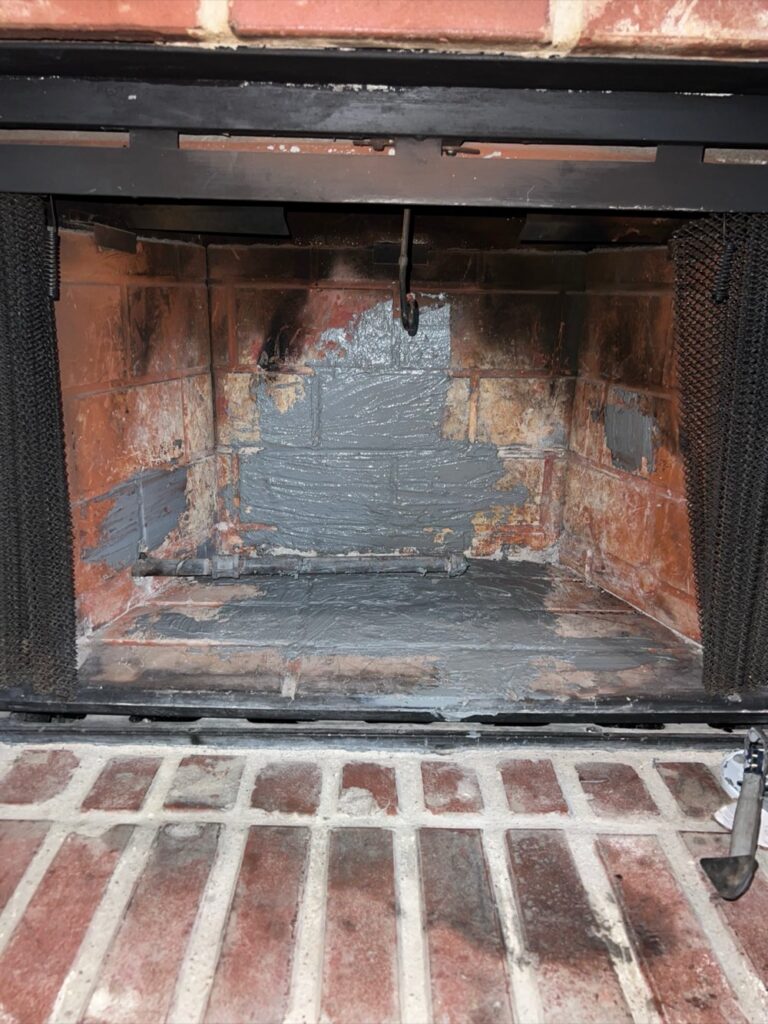
- Camera up the flue, not a guess from the hearth
- Every finding photographed before it is quoted
- The same spots photographed again after the work
- Written report in your inbox the same day
Start with the damper, because it usually is the damper
The damper is the metal plate in the throat of the fireplace, just above the opening. Closed, it seals the chimney off. Handles vary. Some push up, some pull down, some turn, and a stiff one can feel open when it is barely cracked.
If the handle moves and nothing changes, or the plate will not budge, leave it alone. Dampers warp, rust, and lose hinge pins, and a plate that lets go while your arm is under it lands on your hand.
- Look up with a flashlight. Dark shaft going up is open. Flat plate over your head is closed.
- Light a match in the opening. Flame leaning up the chimney means you have draft. Flame standing straight, or leaning at you, means you do not.
- See a thin cable or chain clipped inside the firebox? Your damper is at the top of the chimney and that clip releases it.
Something is blocking the flue
A flue does not have to be plugged to push smoke back at you. Narrow it enough and smoke takes the easier exit, which is your living room. Creosote, the tar wood smoke leaves behind, builds in layers and shrinks the opening. A nest, wet leaves, or an animal that got in and could not get out does it faster.
If you hear chirping or scratching in warm months in North Texas, that is very likely chimney swifts. They nest in open flues and they are protected under the federal Migratory Bird Treaty Act, so an active nest stays put. They leave at the end of the season, and that is when the flue gets swept and capped.
- Black flakes dropping onto the grate when you work the damper
- A smell like an old barbecue pit on humid days with no fire lit
- Stand in the yard and look at the chimney top: missing cap, crushed cap, or mesh matted shut with soot
- Smoking that got worse over a couple of winters instead of all at once
Smoke Where It Should Not Be?
Tell us what happens when you light it and we will tell you what that usually means.
The flue is cold and full of heavy air
Around here a fireplace sits unused most of the year, then a front comes through and everyone lights one the same evening. That first fire is the smokiest one you will have.
Cold air is heavy. A chimney sitting since last winter is a column of cold air pressing down on a small new flame, and the flame cannot lift it, so it spills into the room. Chimneys running up an outside wall stay colder and do this more. Warm the flue first: roll a sheet of newspaper, light one end, hold it up in the throat under the open damper for about thirty seconds. You will feel the draft flip.
- Smokes for the first few minutes and then clears? This is your answer.
- Build it hot and fast instead of smoldering it up slowly
- Prime the flue every time for the first fire of the season
Your house is pulling harder than your chimney
Newer houses are built tight, and that is fine until you ask a fireplace for air the house has no way to replace. The range hood over the stove is the usual culprit. So are bath fans, a running dryer, and return ducts leaking up in the attic. Two story homes are worse, because warm air escapes upstairs and the house looks for the lowest opening to pull replacement air through. Sometimes that opening is your fireplace.
This is the most useful minute you can spend. Crack a window near the fireplace two or three inches while it is smoking. If the smoke straightens out and goes up, your flue is fine and the house is the problem.
- Turn off the range hood, bath fans and dryer, then light it and watch
- Note whether it smokes worse while the heat is running
- Two fireplaces on one stack? Smoke from one can come down the other.
The wood, and where the fire sits
Wet wood smokes. The water boils off before the wood can burn, the fire runs cool, and a cool fire makes plenty of smoke and almost no lift. Wood split and stacked under cover through a summer burns clean. Wood that sat out in the rain does not.
Where it sits matters too. A grate pushed forward puts the smoke under the front edge of the opening instead of under the throat, so it comes straight out at you.
- Two pieces knocked together should sound hollow, not dull and heavy
- Slide the grate back toward the rear wall and stack the wood a little taller
- Never burn treated lumber, painted wood or trash
SMOKE OR SMELL IN THE ROOM?
Damper open and the room still fills? Describe what the fire does when you light it and we will run the same checks with you, from the damper to the draft.
It was built wrong, or the chimney is too short
Some fireplaces smoked from the day the house was finished. If yours has never worked right, stop blaming yourself. The firebox opening has to be in proportion to the flue behind it, and a face that somebody opened up in a remodel, with nobody touching the flue, will smoke no matter what you do.
Height counts too. NFPA 211 guidance is the three, two, ten idea: the chimney runs at least three feet above where it comes through the roof, and at least two feet above anything within ten feet of it. A short chimney or a two story addition that went up later can leave your flue sitting in dead air. Inside, the smoke chamber above the damper is supposed to be a smooth funnel, and on a lot of builds it is stepped, rough, or has mortar hanging in it.
- It has smoked since the day you moved in, in every kind of weather
- The face was opened up or the mantel was redone at some point
- The chimney looks noticeably shorter than the roof ridge beside it
Wind, and where your chimney sits
This one is easy to spot because it is not consistent. Fine most nights, then the wind swings around behind a front and that same evening the fireplace pushes smoke into the den. Wind hitting a roof, a tree line, or a taller wall of the house rolls over and comes back down. If your flue top sits in that rolling air, the wind pushes down harder than the fire pushes up. Height fixes it, and so do cap designs meant for exactly this.
- Only smokes on windy days, or only with wind from one direction
- Fine in the morning, bad once the wind picks up in the evening
- Big trees or a taller roof section within about ten feet of the top
When to stop lighting fires until someone looks
Smoke is the part you can see. Carbon monoxide has no color and no smell, and the same failed draft that pushes smoke at you pushes that at you too. Put an alarm on the same floor as the fireplace before the next fire.
- Hard smoke into the room with the damper open and no wind
- Smoke smell through the house hours after the fire is out
- Headaches, nausea or drowsiness while a fire is burning
- Cracks in the firebox, loose panels, or gaps around the damper
- Any past roaring or popping in the chimney. That is a chimney fire, and the flue needs looking at inside before it is used again.
What we do when the easy checks come up empty
If the damper is open, the window is cracked, the flue is warm, the wood is dry and it still smokes, the answer is inside the chimney and you cannot see it from the hearth rug.
We open and work the damper, run a camera up the flue, and look at the smoke chamber, the firebox and the top. Then you get the pictures. Photos, not promises, is the whole idea: you see the blockage, the crack, the crushed cap or the mortar hanging in the smoke chamber, and you decide what to do about it. If the answer turns out to be that your range hood is beating your chimney, we will tell you that, and there is nothing to sell you.
We are a new name in Dallas Fort Worth. We do not get to point at a wall of plaques, so we show the work instead.
- Damper opened, worked, and checked for warp or a lost pin
- Camera up the flue for buildup, nests, cracks and open joints
- Smoke chamber, firebox and cap looked over where it is safe to get to them
- Photos of everything sent to you, whether you hire us or not
Checked the damper and it still smokes?
Tell us what happens when you light it and we will tell you what that usually means. If we come out, you get the photos of what is actually up your chimney, whether you hire us or not.
WHAT HAPPENS WHEN YOU CALL
You call or send the form
We ask what you are seeing or hearing. A person, not a queue.
We arrive and cover everything
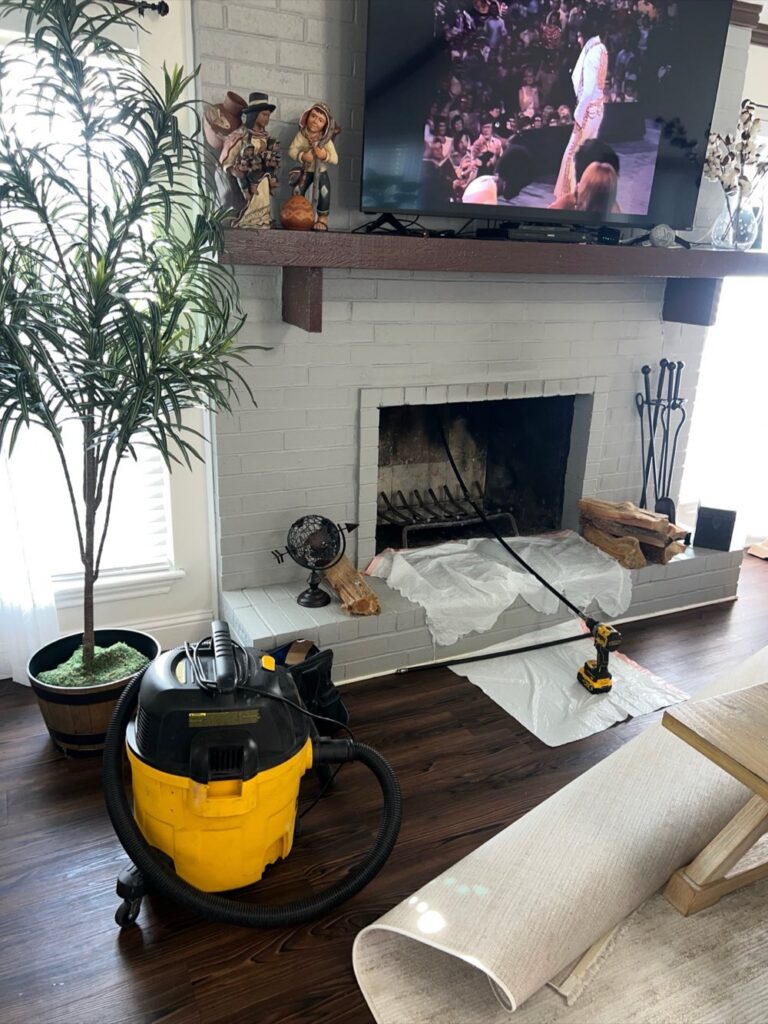
Tarps down and the vacuum ready before a tool comes out.
Camera, brushes, eyes on all of it
Firebox, damper, flue and the top of the chimney, photographed.
Photo report the same day
You see what we saw and decide what happens next.
COMMON QUESTIONS
That is cold air sitting in the flue. Prime it before you light the fire: roll a sheet of newspaper, light one end, and hold it up in the throat under the open damper for about thirty seconds. You will feel the draft flip and start pulling.
A puff when you first light it happens. Smoke that keeps rolling over the top edge of the opening while the fire burns is not normal, and it means the flue is not pulling the way it should. Worth finding rather than living with.
Probably not. It means the house cannot supply the air the fire wants. The open window is a fine short term answer. The real one is finding what is competing for that air, usually a range hood, bath fans, a dryer, or leaky return ducts.
Not while they are nesting. Chimney swifts nest in open flues through the warm months and are protected under the federal Migratory Bird Treaty Act, so an active nest stays where it is. Once they have gone, the flue gets swept and capped so it does not happen again next spring.
Yes. Creosote builds in layers on the flue walls and every layer makes the opening smaller, so the smoke starts choosing the easier way out. It is also the part of a smoky fireplace with a fire risk attached, which is why buildup gets cleared instead of watched.
No. Old dampers warp from heat and rust at the hinge. Leaning on a stuck one can drop a heavy plate on your arm or break the frame it sits in, which turns a small repair into a bigger one.
Different situation. If you smell gas, light nothing, get everyone out, and call your gas utility from outside. Gas appliance work is a separate trade and not something we take on. We work on chimneys, flues and wood burning fireplaces.
REQUEST A CALL BACK
A person calls you back about your chimney, not a dispatcher.
Smoke Coming Into the Room Instead of Up?
We measure the draft and photograph the throat before naming a cause, so the fix matches the reason and not a guess.