
Chimney Damper Repair in Dallas-Fort Worth
Stuck open, stuck closed, rusted, or spinning with nothing behind it. How a damper fails, how to test yours, and what the fix involves.
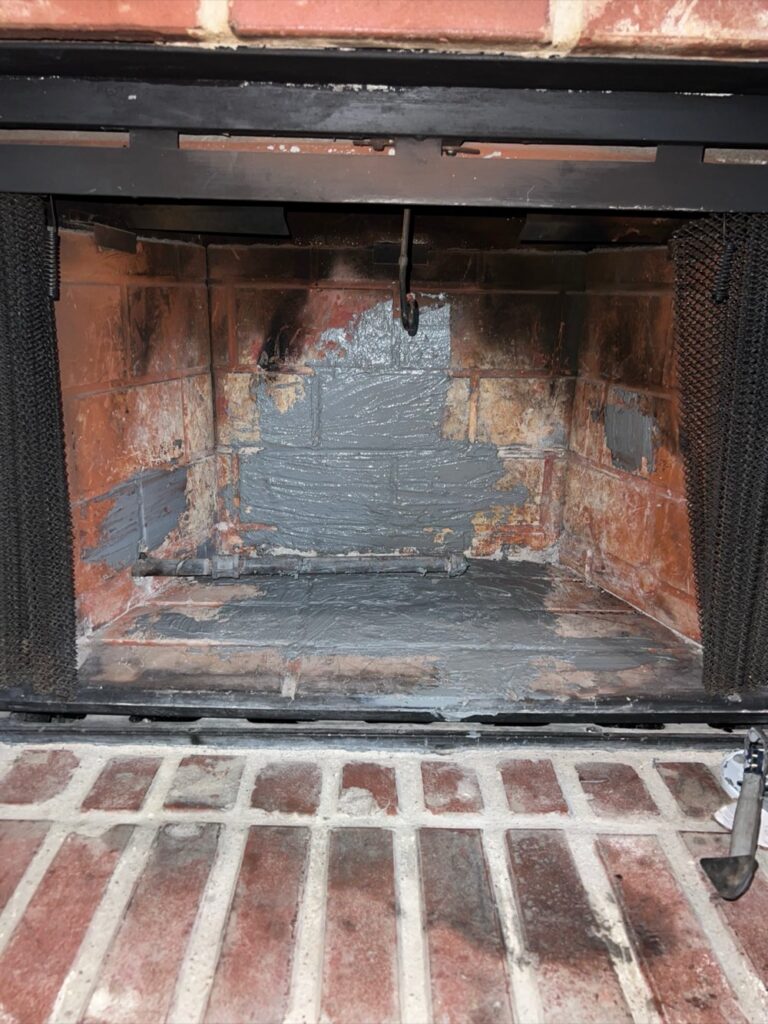
CAMERA INSPECTION
We look before we quote, every time
PHOTOS OF EVERY FINDING
No photo, no claim
MASONRY AND VENTING ONLY
Gas lines go to a gas fitter and we say so
SAME-DAY REPORT
In your inbox before we finish the day
A chimney damper has one job. It opens when you light a fire and seals shut when you do not. Stuck open, it lets the air you paid to cool pour straight up the chimney all summer. Stuck closed, it sends smoke into your living room the moment you strike a match.
Almost nobody looks at a damper until it quits, because looking means lying on your back in a sooty box with a flashlight. So it warps, rusts, and slides off its pins quietly over years, and the first thing you notice is a comfort problem.
Local Chimney Experts repairs and replaces dampers across Dallas-Fort Worth. The technician photographs what he finds and shows you the rusted plate or the seized hinge on your own screen before any work starts.
YOU SEE WHAT WE SEE
You cannot see your own chimney. That is the whole problem with this trade, and it is why people feel talked into things.
Every visit ends with photographs of what we found, walked through with you before anything is quoted. If the pictures show nothing wrong, that is the report you get.
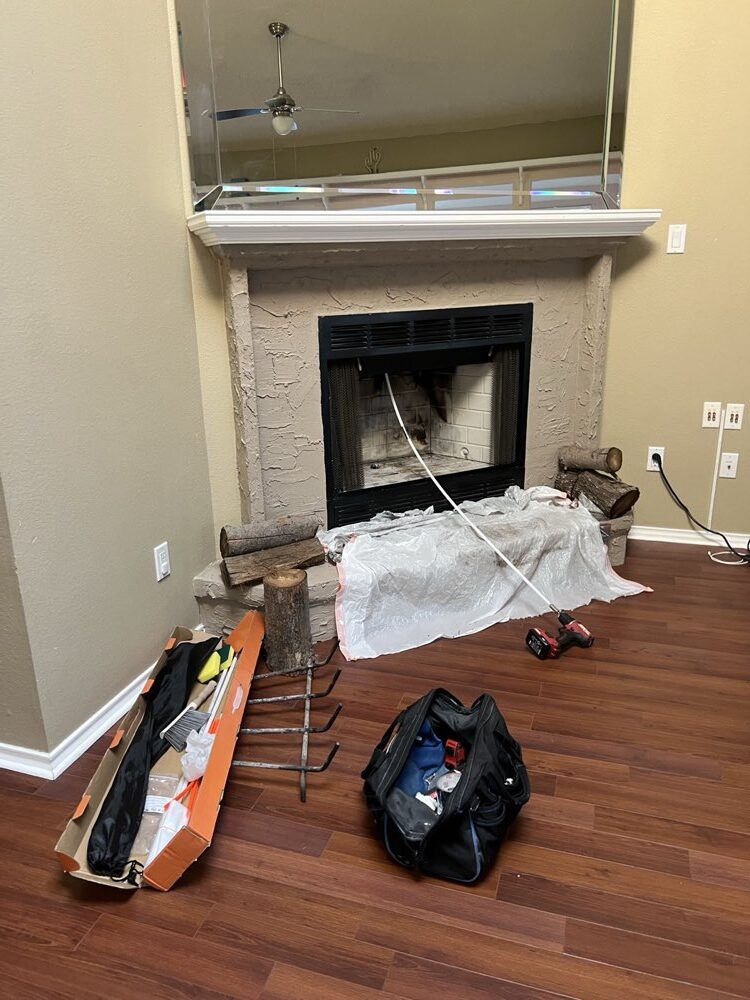
- Camera up the flue, not a guess from the hearth
- Every finding photographed before it is quoted
- The same spots photographed again after the work
- Written report in your inbox the same day
What a Failing Damper Looks Like From the Couch
Most people meet a bad damper through comfort, not inspection. Each sign points at a different part.
- Cold air spills out in winter with the glass doors shut. The plate is not seating.
- The fireplace room never quite cools in summer. Same fault, opposite season.
- The handle turns and nothing moves. The linkage has left the plate.
- The plate grinds or stops halfway. Rust in the frame, or a worn pin.
How a Damper Seizes, Step by Step
A throat damper is one moving part in the worst spot in the house. It takes the heat of every fire and sits at outdoor temperature by morning. Cast iron treated that way does not stay flat. The failure runs slowly, in this order.
- The plate loses its shape. The middle grows faster than the edges every burn, so it stops meeting its seat evenly. It rocks, and it passes air with the handle closed.
- Deposits build on the seat. Every fire films the ledge the plate rests on, that film holds moisture all summer, and damp soot is hard on bare iron.
- The pivots wear oval. Most plates swing on two short pins riding in slots. Grit works in, the pins round off, and one corner catches.
- The linkage quits before the plate does. A rotary type turns on a threaded rod, and a stripped thread leaves the handle spinning free. A poker type climbs a notched bar, and worn notches hold no position.
- Rust locks it. Water from an open flue top or a failing crown turns a stiff damper into a solid one. Iron swells as it corrodes, so a swollen plate in a rusted frame is held by chemistry, not heat.
Damper Stuck Open Or Shut?
Either way it costs you, in heat or in draft.
Stuck Open: The Season Nobody Blames
A flue is a straight, open channel between your living room and the sky. Jam the damper open and warm air rising inside the chimney draws room air out of the top around the clock.
North Texas makes the summer half the bigger loss. National Weather Service normals for DFW across 1991 to 2020 record 2,824 cooling degree days a year against 2,220 heating degree days, and 20.2 days reaching 100 degrees or hotter. More of our calendar goes into making cold air than warm air, so a stuck damper leaks through the expensive season, for the eight or nine months nobody is thinking about the fireplace.
The Department of Energy lists checking that a fireplace damper closes properly among its home weatherization steps, alongside caulk and weatherstripping. Left open, a fireplace is a hole in the building envelope, and hardly anyone pictures it that way.
Stuck Closed: Smoke Where You Live
A damper stuck closed turns a first winter fire into a smoke event inside a minute. Smoke that cannot rise banks under the lintel, rolls out over the opening, and spreads across the ceiling into paint and fabric. Put the fire out, open windows on two sides of the room, and leave it alone.
Do not attack a stuck plate with a poker or a pry bar. Cast iron cracks, worn pins let go, and a plate that drops out of its frame lands on whatever is beneath it.
Test Your Own Damper in Five Minutes
You can learn most of what a technician learns in the first two minutes, with a flashlight and a cold fireplace. Note what each check rules in or out.
- Daylight check. Damper set open, look straight up. A grey circle of sky means open and clear. Solid dark with the handle open means the plate never moved.
- Full travel check. Open and shut it three times while watching the plate. Landing flat both ways is healthy. Needing a shove to close means a worn pin on one side. No resistance at all means the linkage is attached to nothing.
- Landing sound. A sound plate lands with one dull knock. A ring or a bounce says the edge is warped and only part of it is touching.
- Paper check. Damper shut, house closed up, nothing burning. Hold a strip of tissue inside the top of the opening. If it lifts and holds, air is streaming past a plate that is not sealing.
- Clean floor check. Sweep the firebox, work the damper, see what falls. Orange flakes are rust off the frame. Black chips are creosote. Sandy grey powder is mortar or tile.
- What none of this tells you. All of it happens below the plate, and the smoke shelf behind it stays invisible from the floor. That is where a camera earns its keep.
Throat Damper or Top-Sealing Damper, in Plain Words
A throat damper is the metal plate a few inches above your fireplace opening, and it is what most masonry fireplaces were built with. Residential code language calls for a ferrous metal damper set at least eight inches above the top of the fireplace opening, in the fireplace or in the chimney serving it, provided you can operate it from the room. That clause is why both designs are legitimate, and why a roof-mounted damper still has a handle at the hearth.
A throat plate closes metal against metal. That was never airtight even when new, and it lives in the hottest, sootiest, dampest part of the system.
A top-sealing damper moves the seal to the top of the flue. Manufacturer instructions describe the same build: a cast frame set onto the top flue tile with the supplied adhesive, a lid closing onto a high temperature silicone gasket, and a stainless cable dropping to a bracket in the firebox around twenty inches off the floor. The adhesive cures a full day before the first fire.
Sealing on a gasket rather than bare iron is the point. Closed, it stops the draft, the rain, and the sour summer smell, and it covers the flue against birds the way a cap does. It needs a sound top flue tile, so a cracked one turns a damper job into a crown job.
What the Repair Involves, and What Makes One Job Bigger
One fact decides most damper jobs. On a masonry fireplace the frame was mortared into the brickwork while the fireplace was built. The plate is a part. The frame is part of the house.
So freeing a plate, replacing pivot pins, refitting a handle, or fitting a new plate into a sound frame is one job. A frame rusted through is another entirely, with mortar and brick coming out and going back. That is why a top-sealing damper is so often the answer on an old fireplace.
- Look and photograph first, before anyone touches the plate, pins, or frame.
- Clean the seat. A plate cannot land flat on a ridge of hardened soot.
- Free, refit, adjust. Pins, clips, springs, and handles get replaced individually when that is what failed.
- Cycle it repeatedly. Fully open, fully closed, holding position, seating flat.
- Replace only when a repair will not hold, with the photo that shows why.
- Bigger: the frame is corroded, not just the plate, so the seal moves to the top.
- Bigger: a factory-built metal fireplace, where only the maker's own damper part fits.
- Bigger: a tall or steep chimney, poor roof access, or a top flue tile breaking up, so there is nothing sound to seal against yet.
When the Damper Is Not Your Problem
Vented gas logs change the rules. Log set instructions ship a clamp fitted permanently to the plate so the damper can never fully close, with published tables giving a minimum permanent opening in square inches based on chimney height. If yours will not shut and a small clamp is bolted to it, nothing is broken. It is there so the fire always has a path out. At least one top-sealing damper maker also states that its product is not recommended for flues venting gas burning appliances. Our side of this is brickwork and venting. Gas lines, valves, and burners belong to a different trade.
A draft at the hearth is not always the damper either. A tight house pulls air down the largest opening it has, often the chimney. If the cold air stops when you crack a window across the house, you have a pressure problem rather than a plate problem.
And sometimes waiting is fine. A throat damper that closes flat, holds position, and still passes a little air is behaving as it always did. Metal on metal was never a gasket.
Photos, Not Promises
Nobody can see their own damper without getting into the firebox, and that gap is where bad chimney companies make a living. Every claim we make arrives with a picture.
WHAT HAPPENS WHEN YOU CALL
You call or send the form
We ask what you are seeing or hearing. A person, not a queue.
We arrive and cover everything
Tarps down and the vacuum ready before a tool comes out.
Camera, brushes, eyes on all of it
Firebox, damper, flue and the top of the chimney, photographed.
Photo report the same day
You see what we saw and decide what happens next.
COMMON QUESTIONS
The damper is stuck open or no longer sealing. A throat plate closes iron against iron, and once it warps or the seat corrodes, air moves through the gap around the clock. Refitting the plate fixes some cases. Moving the seal to the top fixes the rest.
An open flue is a permanent opening between conditioned indoor air and the outdoors, and warm air rising in the chimney keeps drawing room air out of the top. Through a Texas summer the system replaces what leaves, which shows up as longer run times.
Probably not. Vented gas log sets come with a clamp permanently fitted so the damper can never fully close, and the maker publishes a minimum permanent opening in square inches based on chimney height. That is a safety feature, not a fault.
It depends on what failed. A plate seized by rust or creosote can usually be cleaned, freed, and adjusted, and pins, springs, and handles are individual parts. A plate that is cracked, badly warped, or rusted through needs replacing, and a rusted-through frame means moving the seal to the top.
A damper mounted at the top of the flue rather than above the firebox. The lid closes onto a silicone gasket, so it seals far better than bare metal, and a stainless cable runs down to a handle bracket in your firebox. It also keeps rain and animals out.
No. Smoke and combustion gases need the full flue opening to leave the house, and a half open plate pushes some of it back into the room. Keep the fireplace unlit until the damper swings all the way.
A fitted plug or an inflatable chimney balloon stops the draft and works as a stopgap, provided a bright tag hangs into the firebox so nobody lights a fire on it. It does nothing at the top of the chimney.
REQUEST A CALL BACK
A person calls you back about your chimney, not a dispatcher.
Get Your Damper Moving Again
Tell us what yours is doing, stuck, spinning, grinding, or leaking cold air, and you get a straight answer back. The technician serves Dallas-Fort Worth.