
Storm Damage Chimney Repair in Dallas-Fort Worth
Hail dents the cap, wind topples brick, lightning cracks the flue tiles from the inside. We photograph what actually happened up there before anything gets fixed.
CAMERA INSPECTION
We look before we quote, every time
PHOTOS OF EVERY FINDING
No photo, no claim
MASONRY AND VENTING ONLY
Gas lines go to a gas fitter and we say so
SAME-DAY REPORT
In your inbox before we finish the day
North Texas sits inside a hail-prone corridor that runs through Texas, Oklahoma, and Colorado. Hail season here runs roughly March through June, with April and May producing the most damaging storms. Add in the straight-line thunderstorm winds that knock trees down across DFW every spring, and the lightning that comes with them, and the chimney on top of your house takes the first hit almost every time.
That is the part most homeowners never see. A chimney sits at the highest, most exposed point of the roof, so it catches hail before the shingles do and stands directly in the path of straight-line wind. Damage up there is often invisible from the ground. A cracked crown or a dented chase cover does not announce itself. It shows up weeks later as a stain on the ceiling or water in the firebox, long after the storm that caused it has left the area.
Local Chimney Experts is new in Dallas-Fort Worth. After a storm, the technician climbs up, photographs exactly what changed on your chimney, and shows you the crack, the dent, or the missing piece on your own screen before recommending any repair. Photos Not Promises. If a storm did nothing to your chimney, that is what the photos show too.
YOU SEE WHAT WE SEE
You cannot see your own chimney. That is the whole problem with this trade, and it is why people feel talked into things.
Every visit ends with photographs of what we found, walked through with you before anything is quoted. If the pictures show nothing wrong, that is the report you get.
- Camera up the flue, not a guess from the hearth
- Every finding photographed before it is quoted
- The same spots photographed again after the work
- Written report in your inbox the same day
What Hail Does to a Chimney
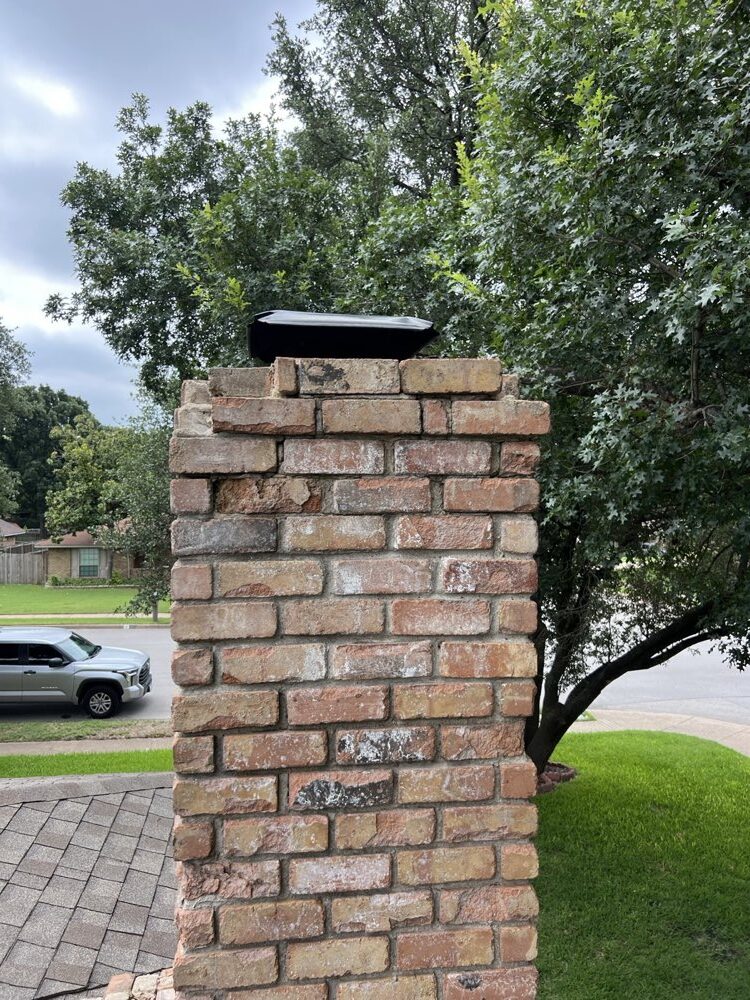
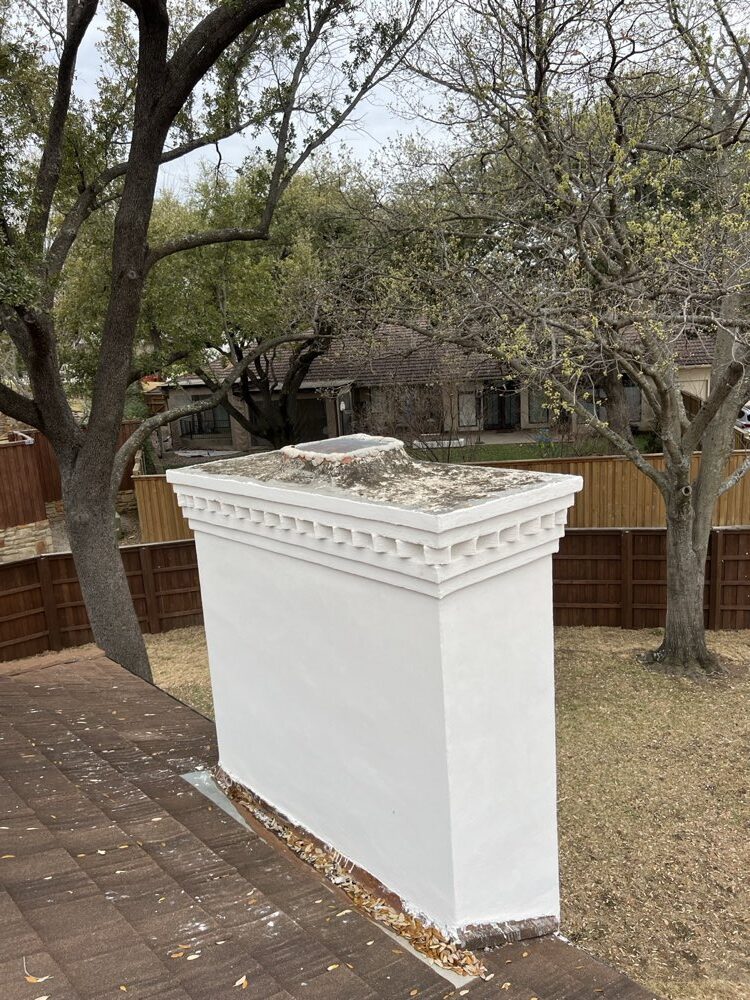
Hail hits the exposed top surfaces of a chimney hardest: the concrete crown on a masonry chimney, and the metal cap or chase cover on a factory-built one. A stone does not need to be huge to matter. A hit on a crown that was already thin, or on metal that has started to thin from age, can crack concrete or dent steel in a single impact.
On a masonry chimney, a hail impact can put a fresh crack straight into the crown, the concrete slab whose only job is shedding water off the brick below it. That crack looks small from the ground and still lets water straight into the masonry. On a factory-built chimney, hail dents the chase cover or the small cap on the flue pipe, and a dent holds water in the low spot instead of letting it run off. Either way, the dent or crack you can see is rarely the whole story. The leak it causes usually shows up somewhere else, weeks later.
- Fresh cracks or chips in the concrete crown
- Dents or dings in a metal cap or chase cover
- Chipped or cracked brick faces on the side that took the hit
- Granules, chips, or debris in the gutter below the chimney right after the storm
What Straight-Line Wind Does
DFW thunderstorms do not need a tornado to do damage. Straight-line gusts here get strong enough to topple trees and knock out power across whole neighborhoods in a single pass. A chimney is a tall, narrow structure standing directly in that wind, and it gets the worst of the leverage near the top.
Wind gets under a cap or chase cover that was already loose and peels it off outright. Sometimes it lands in the yard. Sometimes it stays wedged sideways against the roof. The same gust lifts flashing that was already working loose from ordinary thermal movement, opening a gap that lets rain in on the next storm even if that one brings no wind at all. Brick that was already loosened by old mortar failure can shift, or come down, in a hard enough gust, especially near the top of the stack where the chimney moves the most.
- Cap or chase cover missing entirely, or sitting wedged at an angle
- Flashing lifted or peeled back at the roofline
- Loose brick or a visibly shifted section near the top of the chimney
- Debris, shingle grit, or chimney parts in the yard after a windy storm
Storm Just Came Through?
One pass from the roof documents what the wind and hail actually did.
What a Lightning Strike Does
A chimney is often the tallest point on a house, which makes it a natural target. A strike can travel straight down the flue and do its damage on the inside, where nobody can see it from the yard, the roof, or even the firebox.
Heat and force from a strike can crack clay flue tiles, blow a mortar joint outward, or shift bricks a fraction of an inch, enough to open a gap for heat and combustion gases where there was not one before. Some struck chimneys show a visible crack line, a shifted brick, or a scorch mark on the outside. Many show nothing at all. The only reliable way to know what a strike did inside the flue is to run a camera down it end to end.
- Do not light a fire until a suspected lightning strike has been checked
- Cracked flue tiles let heat and gases reach the framing around the chimney
- Visible outside signs, when they show up, include a fresh crack, a shifted brick, or a scorch mark
- A flue camera inspection is the only way to check what happened on the inside
Fresh Storm Damage vs Old Wear
Not every crack or chip on a chimney happened during last week’s storm, and telling the two apart matters, both for the repair and for any claim built on it.
Fresh damage has sharp edges, clean fracture faces, and bright, unweathered concrete or brick showing where a piece broke free. It usually lines up with a specific storm date and sits on whichever side of the chimney faced the wind or the hail. Old wear looks different: rounded edges, staining, dark buildup inside the crack, and damage spread evenly around the chimney instead of concentrated on one face. We photograph both kinds and say plainly which is which. A claim built on old wear will not hold up, and calling it storm damage anyway wastes your time and ours.
- Fresh: sharp edges, bright unweathered material, concentrated on the storm-facing side
- Old: rounded edges, staining, dark buildup, damage spread evenly around the chimney
What to Do in the First Few Days After a Storm
Order matters right after hail, wind, or a lightning strike hits your house.
- Stay off the roof. Storm-damaged brick, crowns, and flashing are not stable footing.
- Do not light a fire if you suspect lightning, a fallen cap, or any impact near the flue opening, until it has been checked.
- Photograph what you can see safely from the ground: the chimney top, the yard, and any debris that came down.
- Cover an obviously open or missing cap or cover with a tarp if you can do it safely, to keep rain from pouring straight down the flue.
- Get the chimney inspected soon. Every rain after the storm adds new water damage on top of the original break, which makes it harder to sort out later what the storm actually did.
Document Before You Repair, Especially for a Claim
If there is any chance you will file an insurance claim, get the damage photographed before anyone touches it. Once a cracked crown is patched or a bent cap comes off, the evidence that would have convinced an adjuster is gone.
Our chimney inspection for insurance service is built for exactly this: labeled photos of every damaged spot, wide shots that show where it sits on the roof, and a plain-language description of what we found and what it is consistent with. Once you have decided whether to file, and how, we can do the repair too, with before and after photos of that work as well.
How a Storm Damage Visit Works
the technician handles every storm call the same way, whether wind, hail, or lightning brought it on.
- Look at the whole chimney, not just the spot you called about. One storm often damages more than one part.
- Photograph everything, tied to the storm that likely caused it.
- Run a flue camera when lightning or a possible chimney fire is involved, even if the outside looks fine.
- Explain what is fresh, what is old, and what actually needs fixing, with the photos in front of you.
- Repair only what is broken. That might mean the crown, the cap, the chase cover, the flashing, or the brick, and the work comes with before and after photos of its own.
Storm Just Came Through? Get Your Chimney Checked
Call, or request a call back. We photograph exactly what hail, wind, or lightning did before any repair starts, so you see it before you pay for it.
WHAT HAPPENS WHEN YOU CALL
You call or send the form
We ask what you are seeing or hearing. A person, not a queue.
We arrive and cover everything
Tarps down and the vacuum ready before a tool comes out.
Camera, brushes, eyes on all of it
Firebox, damper, flue and the top of the chimney, photographed.
Photo report the same day
You see what we saw and decide what happens next.
COMMON QUESTIONS
Look for fresh cracks or chips in the crown, a dented or missing cap or chase cover, brick chips in the gutter, or chimney parts on the ground that used to be on the roof. Some damage, especially from lightning, shows nothing outside at all. If you know a bad storm rolled through your area, it is worth having someone look regardless of what you can see from the yard.
Yes. A crown that was already thin or had a hairline crack is the most likely to fail on impact, but a hard enough hit can crack a sound crown too. The crack often looks small from the ground and still lets water straight into the brick underneath it.
Urgent enough not to wait. An open flue with no cap or cover funnels every rain straight down into the firebox or the chase, and it gives animals the same opening. Cover it with a tarp if you can do that safely and get it replaced soon.
Yes. A strike does most of its damage inside the flue, where cracked tiles and shifted mortar joints do not show from the yard or even from the firebox. Do not use the fireplace until a camera has been run down the flue.
If you plan to file an insurance claim, documented first. Once a crack is patched or a cap is replaced, the evidence an adjuster needs is gone. If you are not filing a claim, there is no reason to wait: get it fixed.
We cannot tell you that, and you should be careful with anyone who claims they can. Coverage depends on your policy and the specific cause of the damage. What we can do is document exactly what we find so the decision gets made on real information.
If lightning struck nearby, or hail or wind hit hard enough to be a concern, hold off until the flue has been checked. Cracked flue tiles are a safety issue you cannot see by looking at the firebox.
Soon. A cracked crown or a missing cap does not sit and wait. Every rain after the storm adds new damage on top of the original break, and that makes the eventual repair bigger and muddies what the storm actually did versus what happened after.
REQUEST A CALL BACK
A person calls you back about your chimney, not a dispatcher.
Storm Came Through. What Did It Do Up There?
We photograph the crown, the cap and the flue before anyone quotes a repair, so the claim and the fix rest on the same pictures.