
Chimney Smells: What Each One Means and How to End It
A campfire smell in July, a musty smell after rain, a sharp ammonia edge. Each names a different problem, and one cheap test says whether the fireplace is even the source.
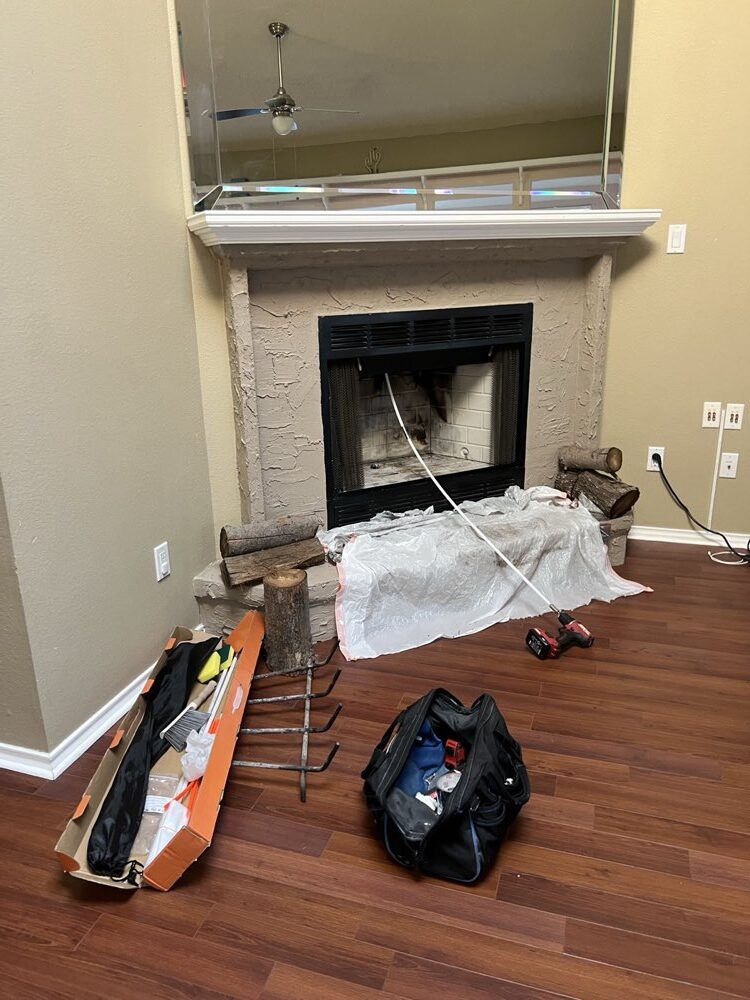
CAMERA INSPECTION
We look before we quote, every time
PHOTOS OF EVERY FINDING
No photo, no claim
MASONRY AND VENTING ONLY
Gas lines go to a gas fitter and we say so
SAME-DAY REPORT
In your inbox before we finish the day
You have not lit a fire since February, and the living room still smells like a wet campfire by four in the afternoon. It is the most common fireplace complaint across Dallas-Fort Worth in high summer.
An odor at a fireplace is two facts stacked together. Something up there smells, and air is moving out of the flue into your room instead of the other way. Solve one and the smell returns on the next humid week.
YOU SEE WHAT WE SEE
You cannot see your own chimney. That is the whole problem with this trade, and it is why people feel talked into things.
Every visit ends with photographs of what we found, walked through with you before anything is quoted. If the pictures show nothing wrong, that is the report you get.
- Camera up the flue, not a guess from the hearth
- Every finding photographed before it is quoted
- The same spots photographed again after the work
- Written report in your inbox the same day
Name It, Then Prove It Is the Chimney
Four odor families come out of a fireplace and they rarely blend. Smoky and tarry: residue from wood fires. Damp and earthy, like a shut basement: water sitting in masonry. An ammonia bite, or sweet and rotting: droppings, or an animal that did not get back out. Sulfur, solvent, or sewage: not chimney odors at all, and a section below names who they belong to.
Keep a short log for a few days: timing separates a source problem from an airflow problem.
Then prove the fireplace is the source before anyone sells you a cleaning. Tape rigid cardboard over the fireplace opening, sealed around the whole edge rather than leaning, and leave it two days. If the room clears, the chimney is your source. If day two smells the same, the odor is in a wall cavity, an attic, a crawl space or the ducts.
Then take the seal off, close the house up, run the dryer and both bath fans, and wait two minutes at the hearth. An odor that strengthens is being pulled in by house pressure, so sealing the flue belongs alongside cleaning it.
- The hour it was worst, and whether it rained in the last day or two.
- What was running: air conditioning, dryer, bath fans, kitchen hood.
- Any sound. Scratching above the firebox changes everything.
The Campfire Smell: Why It Shows Up With No Fire
Wood smoke leaves a tarry film on the flue wall. Dry and cold it is close to odorless; the smell arrives when it turns damp and warm. The chemistry is a smokehouse: wood tar carries phenol, cresols and guaiacols, the compounds that make smoked brisket smell smoked. They are volatile, so they leave a surface as a gas on their own, and warmth and moisture both speed that up.
A flue wall on the shaded side of a house stays cooler than the outdoor air, so heavy summer air touching it gives up moisture the way a cold glass sweats. That wets the deposit and the odor lifts off.
Then it needs a way into the room, and that is pressure rather than the damper. In winter, warm indoor air leaks out high while the house pulls replacement air in low; the level between them where inside and outside pressure match is the neutral pressure plane, and anything below it is an inlet. Summer reverses that. Cool heavy air now settles and leaks out low, a closed-up house on air conditioning is already short of air, every exhaust fan takes more, and the house takes it back where resistance is lowest. Usually an open flue.
Kitchen exhaust moves the most air. Code requires make-up air only above 400 cubic feet per minute, and plenty of DFW hoods sit under it.
- Arrives a minute or two after a fan or the dryer starts
- A tissue strip at the top of the opening drifts toward the room, not up
Smell Getting Stronger?
The source is findable, and sealing it wrong makes it worse.
The Musty Smell: Water Is Getting In
A damp, earthy odor is not tar residue. It is water sitting where it cannot dry out. Rain dropping down an open flue lands on the smoke shelf, the ledge behind the damper, and mixes with old soot into a sludge that stays wet for weeks.
Water has four ways in. Each observation below rules one in and the others out.
- No lid on top, or one crushed flat: rain falls straight down, the firebox floor goes damp, and the odor peaks during the storm.
- Cracks in the crown, the slab capping the brickwork: water soaks into masonry rather than the flue, so the smell builds a day or two after rain, not during it.
- Failed flashing at the roof line: ceiling staining beside the chimney, dry firebox below.
- White chalky bloom on the outside brick: salts carried out of masonry that is wet often.
- Rust freckles on the damper plate: something is getting wet repeatedly, not once.
The Ammonia or Rotting Smell: Something Moved In
An ammonia bite means droppings. A heavy, sweet, worsening smell usually means an animal did not get back out. Both sit on the smoke shelf directly above the damper, which is why this odor is sharpest at the fireplace opening.
One safety point outranks the smell. Dried bird droppings turn to airborne dust the moment they are disturbed, and public health guidance names people cleaning fireplaces beneath chimneys where birds have roosted as an exposure group for histoplasmosis, a lung infection from a fungus growing in that material. Wet it down first and use a fitted respirator, not a paper dust mask.
Which animal it is decides what can legally happen and when, and that rides on the sound and the month more than the odor.
- Twigs, straw, shell fragments, or droppings on the firebox floor
- Flies near the hearth with no other source in the house
The Calendar This Follows in North Texas
The odor here runs on the humidity schedule rather than the burning one.
Dew point is the number that governs it: the temperature at which air has to give up its water. Around Dallas-Fort Worth it climbs through June and stays up into September. Above roughly 65 degrees the air feels heavy, above 70 it is properly muggy, and DFW sits there for much of the summer. That is also where a shaded flue wall is cool enough to collect condensation.
There is a daily rhythm inside the seasonal one. Published averages for Dallas put morning relative humidity near 81 percent, dropping to about 42 percent by mid afternoon. The air is wettest early, while the house is most closed and most negative later, after hours of air conditioning. Two peaks, two mechanisms, which is why neighbours name opposite worst times and both are right.
Spring is when the cause gets installed: storm season takes lids off chimneys and animals go looking for a den. The odor turns up eight weeks later and gets blamed on the heat.
When the Smell Is Not the Chimney
Not every odor at a fireplace belongs to a chimney company, and pretending otherwise is how people pay twice.
Rotten eggs or sulfur is the odorant added to natural gas so leaks can be smelled. Light nothing, touch no switches, get everyone outside and call your gas utility from the yard. Gas appliances and their piping are a separate trade, and we stay on our side of it.
A sour drain smell near the hearth is usually plumbing: a trap in a bathroom nobody uses evaporates dry within weeks and lets vent gas in, so run water into unused drains first. Hot dust in the first cold week is a furnace burning summer dust off its heat exchanger. Musty everywhere rather than at the hearth points at ducts, an attic leak, or a crawl space.
Then the honest one about waiting. A faint campfire whiff with a dry firebox, no staining and no sound is not an emergency. What should not wait is water, because it keeps working while you think about it, and anything with a sound.
What Helps Today, and Why Sprays Do Not
Short term relief is real, and it is not a fix. Deodorizing logs and pour-in treatments share one flaw: even those that neutralise rather than mask only act on what they reach, and twenty feet of coated flue is not reachable from a firebox.
- Close the damper and check that it seals. Throat dampers leak even shut, but a smaller opening is less odor.
- Crack a window near the fireplace when the air conditioning and exhaust fans are going, so the house has an easier place to get air.
- Set a shallow pan of activated charcoal or baking soda in the firebox. Both work by adsorption: odor molecules stick to the surface and stay there.
- Vacuum with a HEPA filtered vacuum. A shop vacuum pushes the finest soot back into the room through its exhaust.
- Skip fragrance sprays and candles. They stack a second smell on the first and cost you the information the odor carries.
What Actually Ends It, in Order
The work runs in a fixed sequence, because each step depends on what the one before it found.
First, look. A camera goes up the flue and enough of the smoke shelf gets cleared to see properly, because sludge, a nest and hardened glaze look identical from the hearth and each is a different job.
Second, remove the source. For the campfire odor that is a full cleaning of flue walls, smoke chamber and smoke shelf, leaving far less surface to release anything. For the animal odor it is removing the material and cleaning what it sat on. For the musty odor it is clearing wet debris so the masonry can dry.
Third, close the way in. A lid sized to your flue stops rain and animals in one move, and crown cracks get sealed so the brick stops drinking. If the throat damper is warped past sealing, a damper that closes at the top of the flue on a gasket cuts the rain and the air path both.
Hardened glaze does not brush off and needs more than one visit. A flue open to rain for years may need the water stopped before cleaning is worth doing, and a cracked tile turns odor into a safety question. Hence the camera first.
WHAT HAPPENS WHEN YOU CALL
You call or send the form
We ask what you are seeing or hearing. A person, not a queue.
We arrive and cover everything
Tarps down and the vacuum ready before a tool comes out.
Camera, brushes, eyes on all of it
Firebox, damper, flue and the top of the chimney, photographed.
Photo report the same day
You see what we saw and decide what happens next.
COMMON QUESTIONS
Humidity and house pressure arrive together. Damp air condenses on the cooler flue wall and wets the tar residue from old fires, releasing the odor compounds. A closed-up house on air conditioning then pulls that air down the chimney. In winter the flue is drier and the air runs the other way.
Seal the fireplace opening with cardboard, taped all the way around, and leave it two days. If the room clears, the chimney is your source. If day two smells the same, the odor is in a wall, an attic or the ducts, and chimney work will not touch it.
If the odor is smoky, usually yes: the residue releasing it is what gets removed. Hardened glaze takes more than one visit. A musty odor also needs the water stopped, and one dragged in by house pressure needs the flue sealed too.
Water is getting in, and the timing narrows where. During the storm points at an unprotected top opening. A day or two afterward points at the crown or brickwork releasing it slowly. A stained ceiling over a dry firebox points at the flashing.
It probably did, and almost certainly on the smoke shelf just above the damper. Removal, cleaning of what it was lying on, then closing the opening it came through, or the next one moves in next spring. Do not vacuum droppings yourself: dried, they become airborne dust.
They buy an afternoon. Fragrance adds a smell rather than taking one away. Charcoal and baking soda at least hold odor molecules on their surface, but a small pan cannot out-work twenty feet of coated flue.
Mostly unpleasant, and also information. Dried animal droppings in a flue are a real dust hazard when disturbed. And carbon monoxide has no smell at all, so an odor is not your warning system.
REQUEST A CALL BACK
A person calls you back about your chimney, not a dispatcher.
End the Campfire Smell Instead of Covering It
Tell the technician what you smell, what hour it is worst, and what was running. That is usually enough for a straight answer on the phone, and you get photos of your flue before and after.