
What Is Creosote, and When Should You Worry?
Creosote is the flammable residue wood smoke leaves inside your flue. It builds in three stages, from soft soot to hard glaze, and stage three is the one that feeds chimney fires.
Last checked: August 2026
CAMERA INSPECTION
We look before we quote, every time
PHOTOS OF EVERY FINDING
No photo, no claim
MASONRY AND VENTING ONLY
Gas lines go to a gas fitter and we say so
SAME-DAY REPORT
In your inbox before we finish the day
Every wood fire leaves something behind. Smoke carries unburned gases and tar vapors up the chimney. When that smoke touches a cooler surface, part of it sticks. That sticky residue is creosote.
Creosote is not dirt. It is fuel. It is the material that burns in almost every chimney fire. Knowing how it forms, and what makes it form faster, is the most useful thing a fireplace owner in Dallas-Fort Worth can learn.
This page explains what creosote actually is, the three stages it moves through, the habits that speed it up, and the warning signs that mean your chimney needs attention before the next fire.
YOU SEE WHAT WE SEE
You cannot see your own chimney. That is the whole problem with this trade, and it is why people feel talked into things.
Every visit ends with photographs of what we found, walked through with you before anything is quoted. If the pictures show nothing wrong, that is the report you get.
- Camera up the flue, not a guess from the hearth
- Every finding photographed before it is quoted
- The same spots photographed again after the work
- Written report in your inbox the same day
What creosote actually is
Wood never burns completely. As it burns, it releases gases, water vapor, and tiny droplets of tar. All of that rides the hot air up your flue, the pipe or clay channel inside the chimney.
If the flue is hot, most of it exits the top. If the flue is cool, the vapors condense on the walls the same way steam fogs a bathroom mirror. The condensed material dries, hardens, and stays. Layer by layer, fire by fire, it thickens. That is creosote.
The key point: creosote is concentrated wood tar. It ignites, and once lit it burns hot and fast. Your chimney was built to carry smoke, not to contain a fire of its own.
The three stages of creosote
Creosote is graded in three stages, and the stage decides how it gets removed.
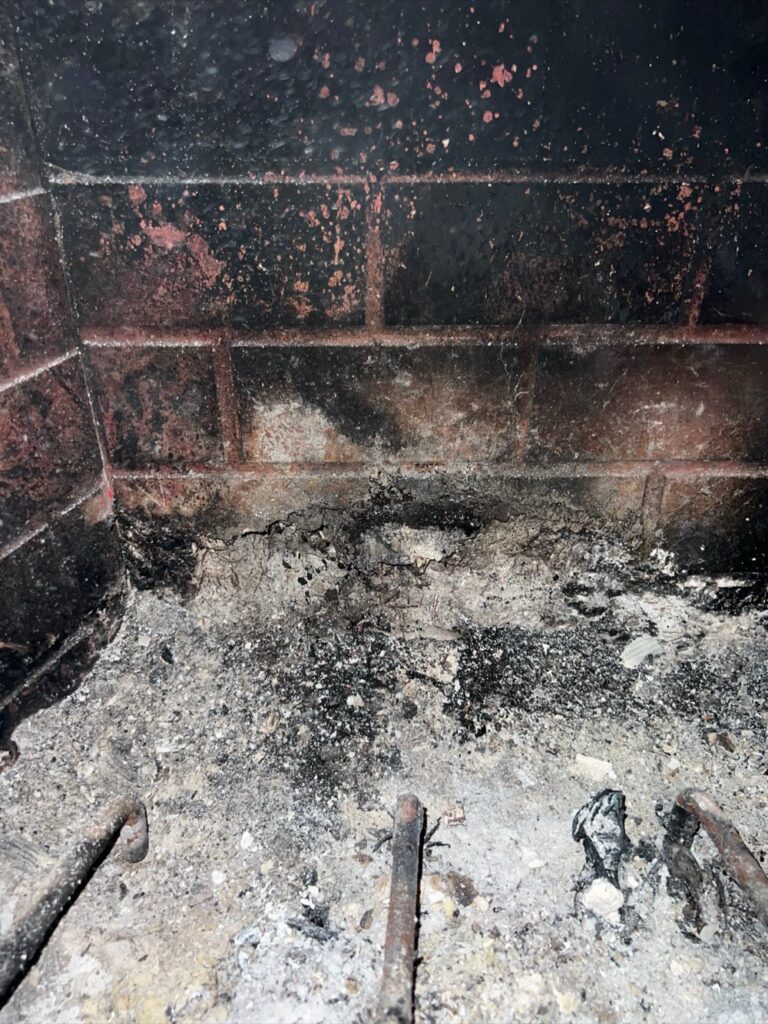
Stage 1 is light and flaky, like dark velvet dust mixed with soot. A brush knocks it loose easily. This is what a routine chimney sweep removes.
Stage 2 is harder. Think shiny black flakes and crunchy tar granules, like burnt cornflakes stuck to the flue. It needs stiffer brushes and more passes, but it still comes off.
Stage 3 is glaze. Tar has dripped, baked, and re-hardened into a thick, shiny coating, layer over layer. A brush slides right over it. Glaze is also the most concentrated fuel of the three. Removing it takes special treatment across more than one visit, and sometimes the honest answer involves the liner itself.
- Stage 1: soft, dusty flakes. Brushes out in a routine sweep.
- Stage 2: hard, shiny flakes and tar crunch. Removable with more aggressive brushing.
- Stage 3: baked-on glaze. Cannot be brushed out. Needs specialized removal.
Not Sure Which Stage Yours Is At?
A camera look tells you in one visit.
What makes creosote build up faster
Two identical fireplaces can build creosote at very different speeds. The difference is almost always one of these three habits.
Wet wood. Fresh-cut wood is heavy with water. The fire spends its energy boiling that water instead of burning hot, so it smokes more and heats the flue less. Cool, smoky fires are the perfect recipe for condensation. Wood needs to dry, split and covered, for months before it burns clean.
Smoldering fires. Choking the air supply down, or letting a fire die slowly overnight, keeps the smoke cool and slow. Slow smoke has more time to stick. A small hot fire deposits far less than a big smoldering one.
A cold or oversized flue. A chimney on an outside wall starts cold and stays cooler. A flue that is too big for the fireplace or stove slows the smoke down. Both give vapors more time and more cold surface to condense on. North Texas adds a twist: most homes here burn only a handful of nights each winter, so almost every fire starts in a stone-cold flue. Fewer fires does not automatically mean less creosote per fire.
- Burn wood that has dried for months, not fresh-cut logs
- Build smaller, hotter fires instead of big smoldering ones
- Let the fire burn down with air, not choked overnight
- Expect faster buildup on exterior-wall chimneys and oversized flues
Warning signs creosote is building up
You cannot see most of your flue from the firebox, but creosote still announces itself. If you notice any of these, stop burning until the chimney is checked.
- Black flakes or shiny chips falling into the firebox
- A tar or asphalt smell from the fireplace, strongest on humid summer days
- Smoke rolling into the room when it used to draft fine
- A thick, shiny black coating visible just above the damper
- Puffy, honeycomb-shaped deposits, which often mean a chimney fire already happened without you knowing
Why creosote is the fuel for chimney fires
A chimney fire is not a mystery event. It is creosote igniting. A stray spark, a floating ember, or simply a hotter-than-usual fire lights the deposit, and the flue itself starts burning.
Some chimney fires roar and shoot flames from the top. Many more burn quietly, and the homeowner never notices. Quiet does not mean harmless. The heat can crack clay flue tiles and warp metal liners. Each crack is a gap, and the next fire can push heat or flame through that gap toward the wood framing around your chimney.
That is why the sequence matters: creosote causes the first fire, and the damage from the first fire opens the door for the second one. Removing the fuel breaks the chain.
How we handle creosote, with photos
We work on a simple rule: photos, not promises. The technician runs a camera up the flue and photographs what is there before anything is touched. You see the stage of creosote yourself, not a scary description of it.
If it brushes out, that is a standard sweep and you get after photos of clean flue walls. If it is glaze, we say so, show it, and explain exactly what removal involves before you commit to anything. If the tiles are cracked from a past fire, you see that too. No photo, no claim.
One Camera Pass Tells You The Stage
the technician will run a camera up the flue and show you photos of exactly what is there. Then you decide.
WHAT HAPPENS WHEN YOU CALL
You call or send the form
We ask what you are seeing or hearing. A person, not a queue.
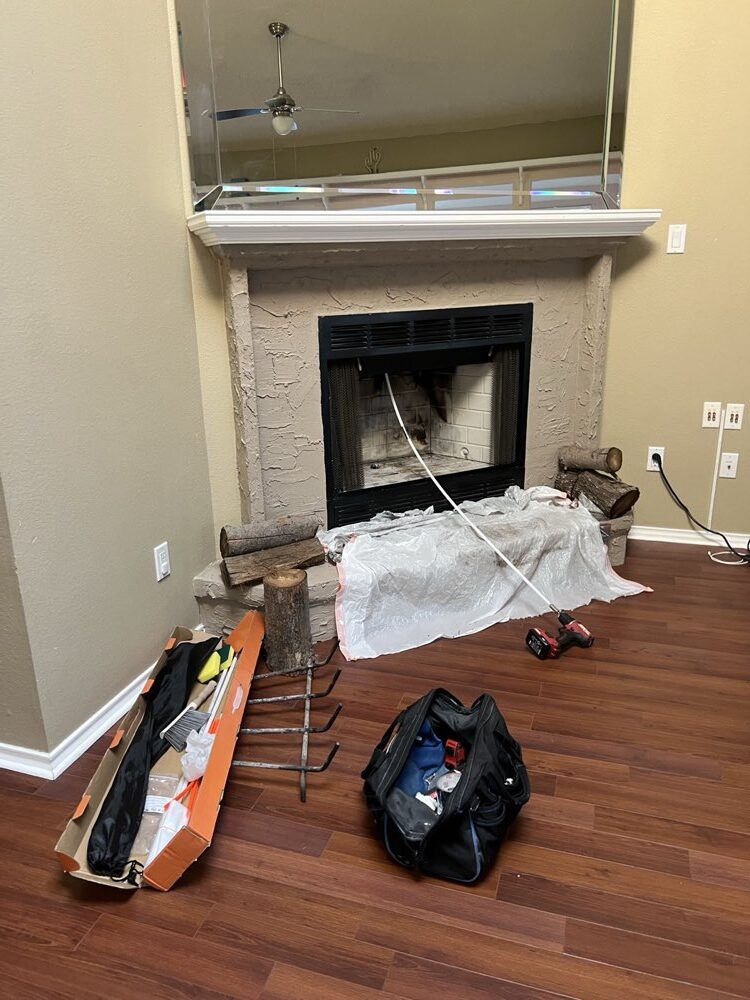
We arrive and cover everything
Tarps down and the vacuum ready before a tool comes out.
Camera, brushes, eyes on all of it
Firebox, damper, flue and the top of the chimney, photographed.
Photo report the same day
You see what we saw and decide what happens next.
COMMON QUESTIONS
Partly. The additives can dry out some stage 2 creosote so a brush removes it more easily. But the log removes nothing by itself. The loosened material still sits in your flue, and some falls where you cannot see it. No log touches stage 3 glaze. Treat them as a helper before a sweep, never a replacement for one.
Have it checked once a year, even with light use. Whether it needs an actual sweep depends on what the check finds, and that depends on how you burn more than how often you burn. Cool, smoky fires with damp wood build creosote much faster than hot fires with dry, seasoned wood.
Almost none. Creosote comes from wood smoke. Gas logs burn much cleaner, so buildup is not the main concern. Gas fireplaces have their own checklist, like venting and moisture, which is what a chimney inspection covers.
Tar, asphalt, or a heavy campfire smell coming from the fireplace. In North Texas it is usually strongest in summer, because humidity and air conditioning pull air down the chimney and into the house. A strong smell usually means a real accumulation.
You can brush stage 1 from the areas you can reach, but that is the catch. Most of the flue is out of sight, and the stage of what is up there decides everything. Brushing blind also rains debris onto the smoke shelf where it collects. A camera look first tells you whether DIY is even relevant.
Brushing will not remove it, so we do not pretend it will. Glaze removal uses chemical treatments applied over more than one visit, or mechanical tools, depending on the liner. You see photos of the glaze before deciding, and photos of the result after. If the liner itself is damaged, replacing it may be the safer path, and we show you why.
RELATED
REQUEST A CALL BACK
A person calls you back about your chimney, not a dispatcher.
Seeing Shiny Black Glaze? That Is Stage Three
Stage one brushes out, stage three does not. We photograph what is actually on your flue walls and tell you which it is.