
How Often Should a Chimney Be Swept?
Once a year is where the answer starts, not where it ends. Here is the math, the wood, and the appliance that set your real schedule.
CAMERA INSPECTION
We look before we quote, every time
PHOTOS OF EVERY FINDING
No photo, no claim
MASONRY AND VENTING ONLY
Gas lines go to a gas fitter and we say so
SAME-DAY REPORT
In your inbox before we finish the day
Two houses on the same street can need completely different schedules. One lights six fires between Christmas and Valentine’s Day. The other runs an insert as real heat every cold night from November on. No single interval covers both, which is where most advice online quits being useful.
The standard answer is once a year, and it traces to NFPA 211, the national standard for chimneys, fireplaces and vents. Its wording is more precise than the internet summary of it: inspect at least once a year for soundness, freedom from deposits and correct clearances, then clean and repair if needed. Three findings, and only the middle one is dirt.
So the yearly item is the look. The sweep is what the look triggers. What follows is what actually moves your number, plus the checks you can make from the hearth first.
YOU SEE WHAT WE SEE
You cannot see your own chimney. That is the whole problem with this trade, and it is why people feel talked into things.
Every visit ends with photographs of what we found, walked through with you before anything is quoted. If the pictures show nothing wrong, that is the report you get.
- Camera up the flue, not a guess from the hearth
- Every finding photographed before it is quoted
- The same spots photographed again after the work
- Written report in your inbox the same day
Inspect Yearly, Sweep When the Flue Says So
Sweeping is triggered by a measurement, not by a date. Roughly an eighth of an inch on the flue wall is the working threshold in the trade, thinner than most people picture.
The part almost nobody mentions is that buildup is never even. It follows temperature, so the reading depends entirely on where you look.
- The threshold applies to the worst section, not to an average of the whole flue.
- Coolest usually means the top third, any run of flue on an exterior wall, and the shelf behind the damper where smoke slows and turns.
- Just above the firebox is hottest and often cleanest, so a fingernail check there is a best case reading, not a verdict.
Burn Math: Count Cords, Not Winters
Nobody remembers how many fires they lit. Everybody can look at a woodpile. Measuring the fuel that went through the firebox beats counting weekends, and it takes no ladder.
Stack the season’s wood in one place in November and see what is gone in March. That volume, not the calendar, is what a sweep reacts to. Below is the map we triage calls with. The flue still gets the last word.
- A cord is a stack four feet high, four deep and eight long: 128 cubic feet under the US standard measure, gaps between splits included.
- A rick or face cord is one row off the front of that stack. With sixteen inch splits that is near a third of a cord.
- Under half a cord a season, burned dry: the look usually finds a flue that can wait.
- One to two cords: plan on a sweep most years.
- Over two cords, or a season on wet wood and banked overnight fires: assume yes, and look partway through rather than after.
Not Sure When Yours Was Last Done?
A look tells you whether it is due or fine for another season.
Wet Wood Is the Multiplier Nobody Counts
Freshly cut hardwood is mostly water by weight. The fire spends its first energy boiling that off as steam instead of making heat, so exhaust leaves the firebox cooler and wetter, and cool wet exhaust condenses on the flue wall. That is the entire mechanism.
Missouri Extension puts numbers on the loss: green hardwood near 75 percent moisture yields around 4,900 BTU per pound, the same wood air dried to 20 percent around 7,100. EPA guidance is to burn under 20 percent, season at least six months, and stack it off the ground with only the top covered, since covering the sides holds moisture in.
- Split a piece and test the fresh inside face. The outside dries first and reads deceptively low.
- With no meter: dry splits feel lighter than they look, crack at the end grain, and knock hollow. Hissing at the cut end of a burning split means water is still leaving the wood.
- Wood sold as seasoned in December was often standing timber in October. Buy in spring for the winter after.
How You Run It, and What Sits Under the Flue
EPA guidance on habits is blunt: build hot fires, because for most appliances a smoldering fire is neither safe nor efficient. Choking the air down to stretch a fire overnight is the worst pattern there is for a flue, since slow cool smoke gets both the time and the cold surface it needs to stick. You can read that from the ground: a grey plume over the chimney means unburned fuel is leaving.
The appliance matters as much as the habit, and it cuts the way people do not expect. An open masonry fireplace is a poor heater, near ten percent efficient by Missouri Extension’s figures, because most of the heat leaves with a large volume of room air. That waste is exactly what keeps the flue hot and the buildup slow. A stove or insert running well above fifty percent holds heat in the room instead: cooler exhaust, faster deposits. The better heater is the harder flue.
Gas logs make no creosote, but the vent path still needs the yearly look. Valves, burners and pilot assemblies are not our trade and we do not touch them. One more reset: a wood insert dropped into an old fireplace usually vents through a flue sized for the fireplace, and an oversized flue cools exhaust fast. Any appliance change is its own reason to look, and the fix is often a chimney liner matched to what it now serves.
What a Look Inside Finds That a Calendar Cannot
Back to the three words in the standard: soundness, freedom from deposits, correct clearances. Only one is about burning. Everything below runs on its own schedule and does not care whether you lit two fires or two hundred.
- Cracked or spalled flue tile, or mortar joints between tiles that have opened.
- A liner that has shifted, or an offset collecting debris on the low side.
- A damper that will not seal, quietly pulling conditioned air out all summer.
- Nest material, leaves and acorn caps on the smoke shelf.
- Rust flakes, water staining, or white chalky salt on the brick.
- Puffy honeycomb deposits, meaning a fire already happened in there and nobody noticed.
- Clearance to the wood framing, invisible from the room and the reason an old fire still matters.
Checks You Can Make From the Hearth
Cold fireplace, flashlight, small mirror, one glove, ten minutes. None of this replaces a camera in the flue, but each one rules something in or out before you book anything.
- Open the damper fully and look for daylight. A coin of light means the path is open end to end. No light points to a blockage, a solid topped cap or an offset.
- Hold the mirror under the damper and shine the light into the smoke chamber. Dull black is soot. Shiny black is glaze, and glaze is not a brushing job.
- Scrape that wall with a gloved fingernail. Powder that wipes away is early stage creosote. A crunchy layer that resists has been building for seasons.
- Hold a strip of tissue at the top of the fireplace opening, damper open. It should pull inward. Limp or blowing outward is the draft fault behind smoke rolls back into the room.
- From the driveway, look at the top. A missing chimney cap, a dark stain down one face, or a course of brick out of line is worth a call whatever your habits are.
- Stand at the firebox on a humid afternoon with the air conditioning on. A campfire smell from the fireplace that strong means real accumulation.
Where a North Texas Winter Fits In
Our heating demand is genuinely small. DFW airport normals put the year near 2,220 heating degree days, with about 29 nights at or below freezing and a January averaging 46 degrees. Fires here are event fires, lit for an evening, not heat anybody depends on. That is why plenty of chimneys around here can honestly skip a year.
The catch is what a short season does per fire. Where people burn most nights, the masonry holds warmth and the next fire starts partway to temperature. Here, nearly every fire begins with the flue at outdoor temperature, so each one runs its full cold start before the exhaust is hot enough to stop condensing. Eight fires with eight cold starts do not leave a fifth of what forty fires with five cold starts leave.
Then the flue sits unused for eight or nine months. Nothing accumulates, but that is when water gets in and animals in the flue climb the list.
When Waiting Is Fine, and When It Belongs to Another Trade
Two ways this page saves you money: the answer is not yet, or the problem is not ours.
- You had a look last spring, burned a handful of dry fires, and the photos showed a light dusting. Waiting is reasonable and we will say so.
- Nothing has burned in there since you moved in and nothing else vents through that flue. Fire risk is low. Water and animals are not.
- A gas appliance only means no sweep in the wood sense. The vent path gets checked, the gas side never touched by us.
- Cracks that keep reopening after a sound repair usually mean ground movement. Clay under a DFW slab swells in spring and pulls back through a dry August, and masonry tied to a moving slab cracks again. Foundation conversation first.
- A leak tracing to a valley or a run of decking away from the chimney is a roofer's job.
Sweep or Inspection, and the Signs Not to Wait
If you already know the flue is dirty, or nobody has touched it in years, book a chimney sweep. If you are unsure, start with a chimney inspection. If it does not need cleaning we say so and hand you a dated baseline. Photos, not promises.
Anything on this list moves ahead of the calendar.
- Smoke drifts into the room while you burn.
- Black crunchy flakes in the firebox, or raining down after a fire.
- Scratching, chirping or fluttering from inside the chimney.
- Last season ran on green wood, scrap lumber, or long overnight smolders.
- You had a chimney fire, or a fire that roared and left the wall hot.
- You added or swapped an appliance since anyone last looked.
WHAT HAPPENS WHEN YOU CALL
You call or send the form
We ask what you are seeing or hearing. A person, not a queue.
We arrive and cover everything
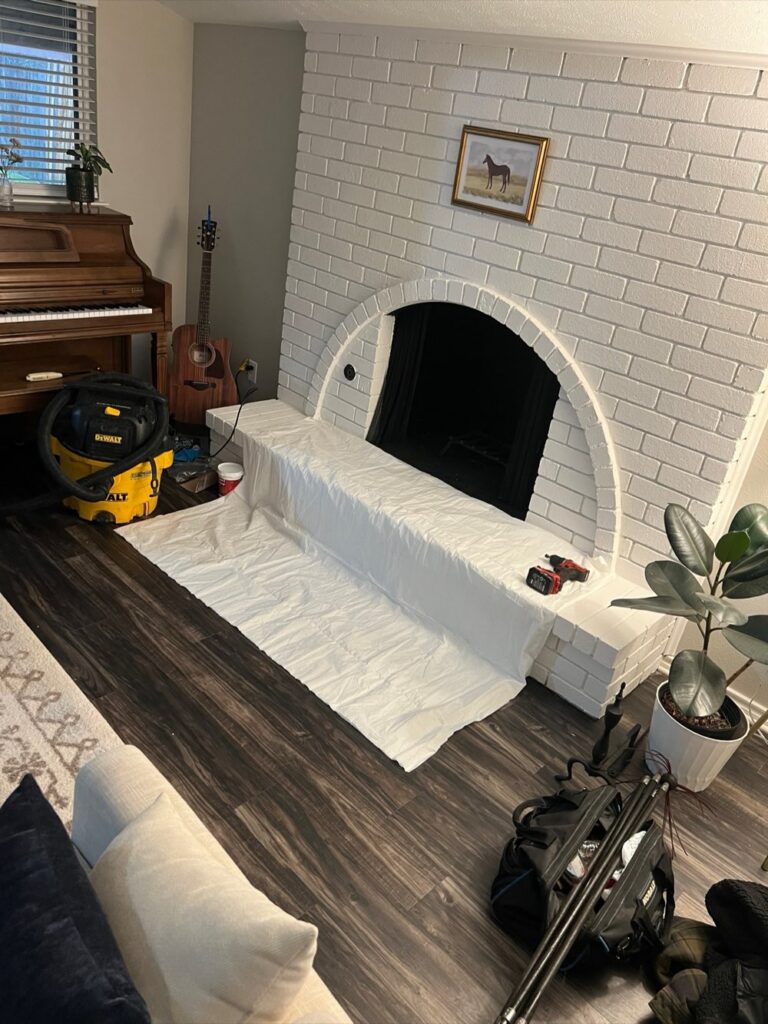
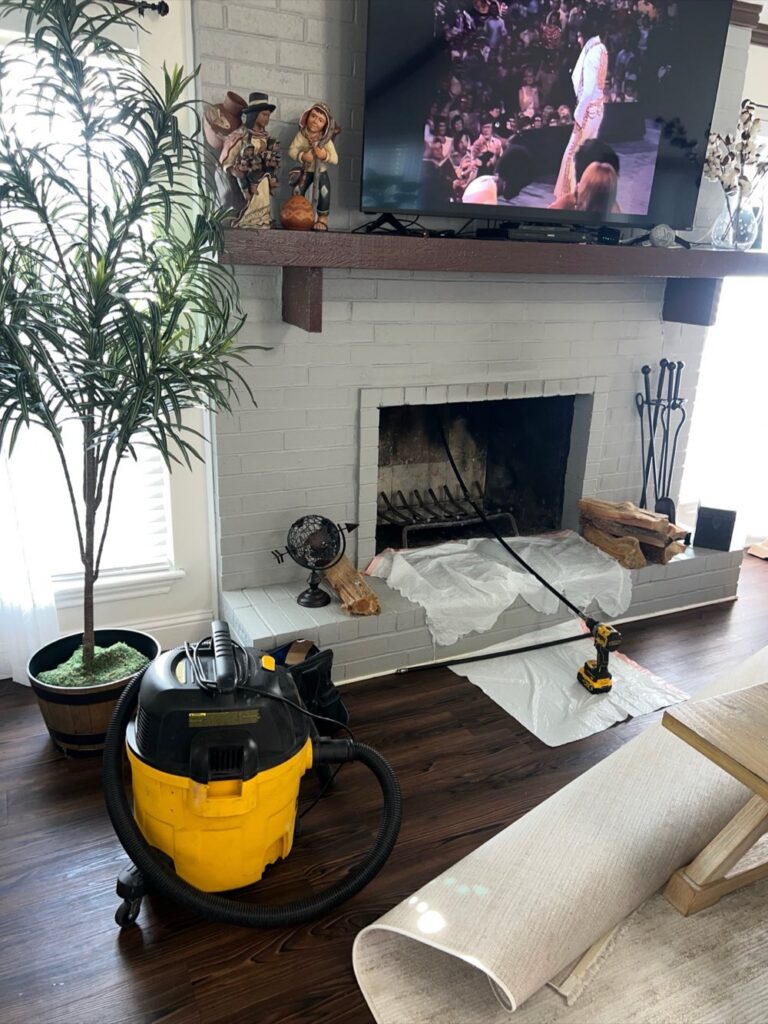
Tarps down and the vacuum ready before a tool comes out.
Camera, brushes, eyes on all of it
Firebox, damper, flue and the top of the chimney, photographed.
Photo report the same day
You see what we saw and decide what happens next.
COMMON QUESTIONS
Probably not a sweep, but the yearly look still applies. Blockages, nests, water damage and cracked tile have nothing to do with how often you burn.
Less than the water in it. Oven dry hardwood carries close to the same heat per pound whatever the species, so moisture and how the fire is run separate a clean burn from a dirty one. Dense woods like oak simply take longer to dry, often a year or more.
Not in the wood sense, since gas leaves no creosote. The flue above still needs a yearly check for nests, debris and damage that can block venting. We stay off the gas components themselves.
Yes, though not by moving a date. A fire event calls for the camera level of inspection before anything is lit again, because the question is cracked tile and heat that reached framing, not how dirty the flue is.
Spring through early fall. The flue is cold, the schedule is open, and any repair the look turns up gets done long before you want a fire. Clearing it in spring also removes the residue behind that sour summer smell.
You can knock soot out of a straight flue, and some homeowners do. What a kit cannot do is show you what stayed behind, move glaze, or find a cracked tile. Sweep it yourself and still get the flue looked at yearly.
Ask for pictures. We photograph the flue before and after and send them over, so nobody takes a stranger’s word about a pipe they cannot see.
REQUEST A CALL BACK
A person calls you back about your chimney, not a dispatcher.
Not Sure What Your Chimney Needs? Start With a Look.
Tell us roughly how much wood went through the firebox last winter and what the fireplace has been doing. We look first, photograph everything, and say straight out whether a sweep is due this year.