
Prefab and Factory-Built Fireplace Repair in Dallas-Fort Worth
One manufactured system, several parts that fail on their own schedule. We find the tag, photograph every piece, and tell you what can still be repaired.
CAMERA INSPECTION
We look before we quote, every time
PHOTOS OF EVERY FINDING
No photo, no claim
MASONRY AND VENTING ONLY
Gas lines go to a gas fitter and we say so
SAME-DAY REPORT
In your inbox before we finish the day
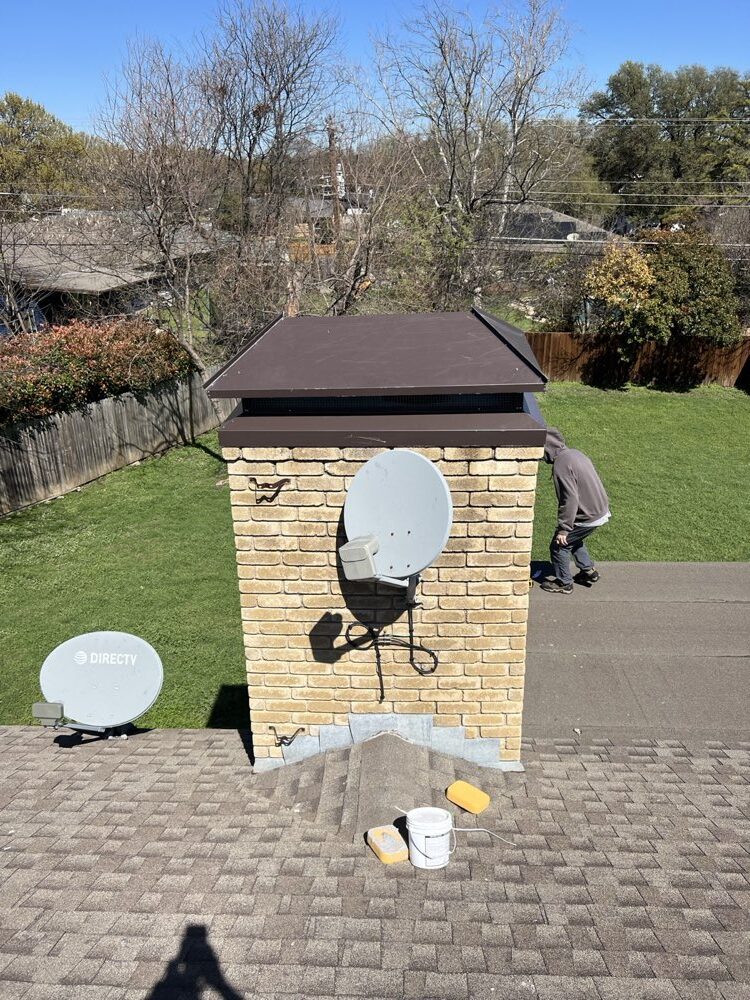
Look at your chimney from the driveway. If it is a box wrapped in the same siding or brick as the house, with a plain metal pipe sticking out the top instead of a stack of masonry, you have a factory-built fireplace. The whole thing, firebox, connector pipe, and cap, left a factory as one manufactured system. Nobody laid it brick by brick.
Dallas-Fort Worth grew in waves. Plano and Richardson filled in through the 1970s, 80s, and 90s. Frisco, McKinney, and Allen kept building through the 2000s and after. Production builders favor factory-built fireplaces in that kind of construction because a prefab unit installs in a single piece, needs no masonry foundation, and costs less than building a firebox up from the slab. If your house went up anywhere in that boom, there is a good chance the fireplace inside came off a factory line, not a mason’s truck.
A factory-built system fails differently than a brick chimney, and it gets repaired differently too. Some parts are plain sheet metal that any fabricator can match. Others are tied to one specific model, and if that model is old enough, the manufacturer may not make the part anymore. Local Chimney Experts is new in Dallas-Fort Worth. The technician finds the manufacturer’s tag first, photographs every part of the system, and tells you which kind of problem you actually have before anything gets quoted.
YOU SEE WHAT WE SEE
You cannot see your own chimney. That is the whole problem with this trade, and it is why people feel talked into things.
Every visit ends with photographs of what we found, walked through with you before anything is quoted. If the pictures show nothing wrong, that is the report you get.
- Camera up the flue, not a guess from the hearth
- Every finding photographed before it is quoted
- The same spots photographed again after the work
- Written report in your inbox the same day
One System, Not a Pile of Parts
A masonry fireplace is built in place, one material at a time: firebrick inside, mortar joints, a concrete crown on top. A factory-built fireplace is the opposite. The firebox, the refractory panels lining it, the connector pipe, and the cap were designed, tested, and sold together as a single unit by one manufacturer. The listing that lets a factory-built fireplace sit against wood framing with no masonry clearance covers the whole assembly, not each piece on its own.
That matters the day something breaks. On a masonry chimney, a mason can rebuild a crown or repoint brick with materials off any truck. On a prefab system, the panels, the doors, and sometimes the pipe were made to fit one design. Swap in a part that was not made for your unit, and the fit, the seal, or the safety margin can be off, even if it looks close enough on the shelf.
Where the System Actually Fails
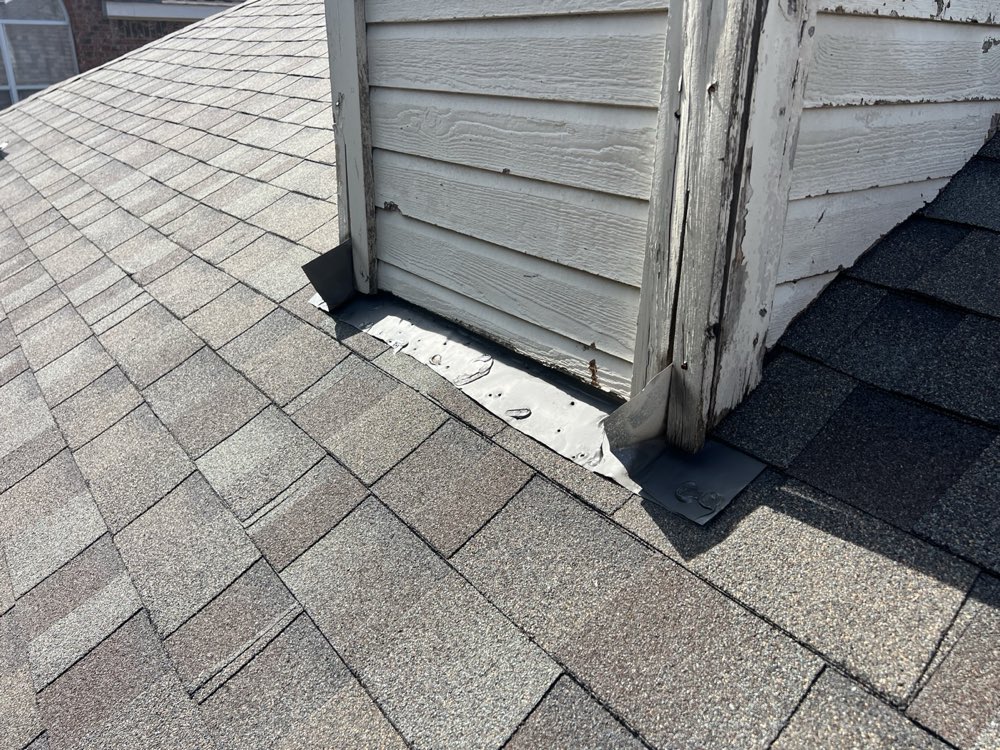
A prefab fireplace is really four or five parts that age at different rates. Knowing which one is failing changes the whole conversation, and two of them, the chase cover and the firebox panels, are common enough to have their own repair pages on this site.
- Chase cover: the flat metal lid on top of the chase box, usually the first thing to rust through and leak
- Chimney cap: the small hood over the flue pipe itself, bent, rusted, or missing after a storm
- Refractory panels: the brick-pattern liner inside the firebox, cracking or wearing thin from heat cycling
- Metal firebox shell: rust or warping in the housing behind the panels, harder to spot and more serious
- Connector pipe and joints: the sections running from firebox to cap, which can separate or corrode at the seams
Prefab Parts Discontinued?
We identify the unit before promising it can be fixed.
The Tag That Tells You What You Have
Somewhere on a factory-built firebox, usually stamped on a metal plate near the opening or inside the smoke chamber, is a model number and a manufacturer name. That tag is the single most useful piece of information on the whole job, because it tells us exactly which parts fit.
Without the tag, matching stops being a lookup and starts being a measurement. A refractory panel can be cut to fit almost any firebox shape. A cap or a chase cover can be fabricated to the exact dimensions of your chase, tag or no tag. A door, a damper assembly, or a full firebox replacement generally needs the original manufacturer, or nothing at all.
When the Manufacturer Has Moved On
Factory-built fireplaces do not come with an expiration date, but the companies that made them sometimes do. Models get discontinued. Manufacturers merge, drop product lines, or close. A firebox installed during one of Dallas-Fort Worth’s building booms can easily outlast the company that built it.
When that happens, the panels usually still have an answer. Cut-to-fit universal panels exist for fireboxes whose original liner is out of production, and a good fit does not need a tag to work from. A rusted chase cover or a damaged cap never depended on the brand in the first place, since both are custom-fabricated sheet metal either way.
The hard stop is the firebox shell itself. If the metal housing behind the panels is rusted through, warped, or cracked, and the model is too old or too obscure to source a matching replacement for, repairing around it is not a safe workaround. That is the one case where the honest answer is a full system changeout, not a patch.
How We Check a Prefab System
the technician handles every prefab visit start to finish, and documents each part along the way.
- Find the tag. Model number and manufacturer, photographed, before anything else
- Photograph every part. Cap, connector pipe, firebox interior, and panel surfaces, each one on its own
- Test the parts that move. Damper, doors, and latch hardware get opened, closed, and checked for play
- Separate cosmetic wear from real failure. A hairline panel crack is not the same job as a shell rusted through
- Explain the parts situation. If a piece is discontinued, you hear that before a repair is quoted, not after
- Leave you the photos. Every part you cannot see yourself, saved to your job record
Photos Not Promises
A prefab fireplace hides most of its condition behind a metal shell and a screen. You cannot see a cracked panel or a rusted chase cover from the couch, and most homeowners have no way to check the manufacturer’s tag without climbing onto a roof or reaching into a firebox. That gap is exactly where a repair estimate can go from honest to invented. Our answer is the same on every job: if we say a part is discontinued, you see the tag and what we found. If we say a panel needs replacing, you see the crack. Dallas-Fort Worth barely knows Local Chimney Experts yet. The plan is to earn the rest of it one documented job at a time.
Find Out What System You Have
Text a photo of your chimney top, or book a visit anywhere in Dallas-Fort Worth. The technician finds the manufacturer’s tag, photographs every part, and tells you what can be repaired before anything is quoted.
WHAT HAPPENS WHEN YOU CALL
You call or send the form
We ask what you are seeing or hearing. A person, not a queue.
We arrive and cover everything
Tarps down and the vacuum ready before a tool comes out.
Camera, brushes, eyes on all of it
Firebox, damper, flue and the top of the chimney, photographed.
Photo report the same day
You see what we saw and decide what happens next.
COMMON QUESTIONS
Look at the outside. A box wrapped in siding or brick veneer with a plain metal pipe on top is factory-built. Solid brick or stone from the ground up, with clay tile visible at the top, is masonry. Inside, a repeating brick-pattern panel in one molded piece means factory-built. Individual bricks with mortar joints between them mean masonry.
The firebox itself, the refractory panels lining it, the connector pipe running up through the chase, the cap on top of that pipe, and the chase cover sealing the whole box. All of it left the factory designed to work together as one unit.
Often, yes, and it depends which part. Cut-to-fit universal panels cover most discontinued refractory liners. Caps and chase covers are custom-fabricated regardless of brand. Doors, dampers, and full firebox shells are harder to match, and sometimes the manufacturer is simply gone. We tell you which situation you are in before quoting anything.
Not by design. Both are built to recognized standards when installed correctly. The difference is how each fails. A masonry chimney degrades in brick and mortar you can often see from the ground. A prefab system hides its wear behind a metal shell and a screen, so it needs a closer look to catch a problem early.
No. Both are exterior sheet metal, fabricated to fit the dimensions of your chase and pipe, not tied to who made the firebox inside. What does need to match the brand is anything inside the firebox itself, like panels, doors, and damper hardware.
It happens, especially on older units where the plate has corroded away or was painted over. Without a tag, we measure the firebox and match parts by dimension instead of model number. It takes longer, but it usually still works for panels, caps, and chase covers.
When the metal firebox shell itself has rusted through, warped, or cracked, and the model is too old or too obscure to source a matching replacement for. Panels, caps, and chase covers almost always have a repair path. A failed shell on a fireplace nobody makes parts for anymore usually does not.
REQUEST A CALL BACK
A person calls you back about your chimney, not a dispatcher.
Is Yours a Factory-Built Unit or Masonry?
The two fail in different places and take different parts. We identify which you have and photograph what it needs.