Chimney Inspection in Dallas and Fort Worth
We look at your chimney, photograph what we find, and hand you a written report you keep.
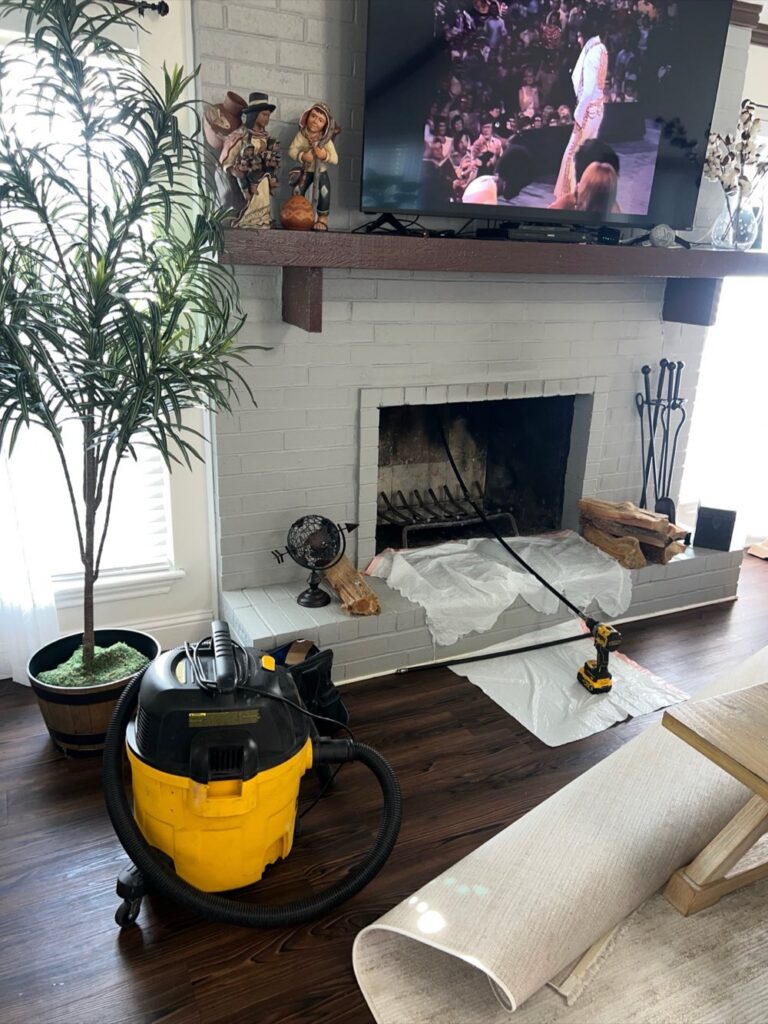
CAMERA INSPECTION
We look before we quote, every time
PHOTOS OF EVERY FINDING
No photo, no claim
MASONRY AND VENTING ONLY
Gas lines go to a gas fitter and we say so
SAME-DAY REPORT
In your inbox before we finish the day
Almost nobody wants a chimney inspection for its own sake. Something else happened first. You are buying a house and the inspector’s report stopped at the damper. A storm came through and now there is a brown ring on the ceiling beside the chimney. Or you lit the first fire of the season and the room filled with smoke.
An inspection is how you find out what is going on up there before you spend money guessing.
We are a new company in DFW, so we have no list of names to drop at you. We do it the other way around. You see photos of your own chimney, and you keep the report.
A chimney inspection is a documented look at the whole chimney, from the firebox and flue to the crown, cap and flashing on top. Local Chimney Experts inspects chimneys across Dallas and Fort Worth to the three levels of NFPA 211, sending a camera up the flue when the level calls for it. Every finding is photographed, and a written report arrives the same day.
YOU SEE WHAT WE SEE
You cannot see your own chimney. That is the whole problem with this trade, and it is why people feel talked into things.
Every visit ends with photographs of what we found, walked through with you before anything is quoted. If the pictures show nothing wrong, that is the report you get.
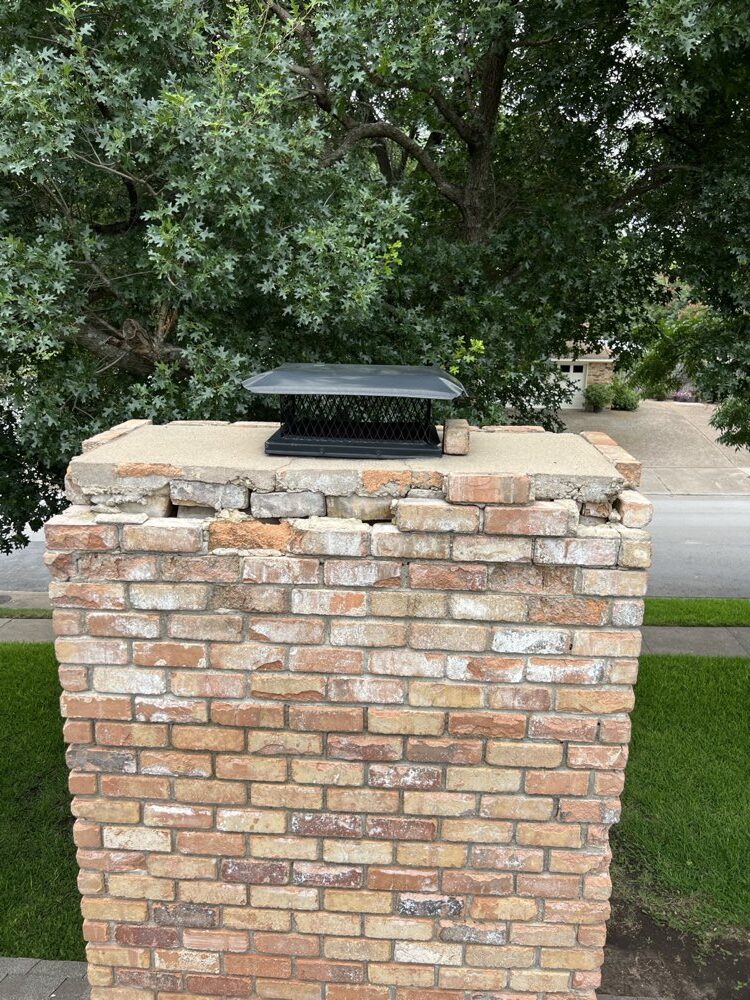
- Camera up the flue, not a guess from the hearth
- Every finding photographed before it is quoted
- The same spots photographed again after the work
- Written report in your inbox the same day
The three levels, in plain English
The levels are not something we made up for the website. They come from NFPA 211, the national standard for chimneys and fireplaces. The difference is simple: how much of the chimney gets looked at, and how far we go to see it.
- Level 1 is the routine one. Everything we can reach without taking anything apart: firebox, damper, smoke shelf, the flue as far as it can be seen, then the top, meaning crown, cap, flashing and brick. This goes with a regular sweep when nothing strange is happening.
- Level 2 is the one with the camera. All of that, plus a camera up the inside of the flue so the parts you cannot see from the floor get looked at, plus the attic. It is the level written for a house changing hands, for after a chimney fire or a storm, and for any time you change what the chimney is venting.
- Level 3 opens things up. If a Level 2 finds something serious and the only way to confirm it is to pull brick or open part of the chase, that is a Level 3. Rare, destructive by definition, and nobody starts here.
Which level do you actually need
| What happened | Which level fits | Why |
|---|---|---|
| Buying or selling | Level 2 | That is the level built for a change of ownership. |
| You had a chimney fire, or a fire that roared and got the wall hot | Level 2 | Before anything is lit in there again. |
| You are adding a wood insert, a gas insert or a stove | Level 2 | The flue has to suit the new appliance and an old one rarely does without work. |
| Water is getting in | Level 1 and a hard look at the top | The source is nearly always the cap, the crown, the flashing or the brick. |
| Smoke rolls back into the room | Level 1 first | That cause is usually something a camera is not needed to find. |
Tell us what happened and we will tell you which fits. Here is how it usually lands.
Has Anyone Actually Looked?
A camera up the flue answers in one visit what guessing never will.
What you get: photos, not promises
Your report is your chimney, photographed that day. We do not keep a folder of somebody else’s cracked flue tile to show people. If we find nothing wrong we write that down, with pictures to back it up. A clean report is a real result.
- Dated photos, close enough that you can see the thing we are talking about.
- Plain notes under each one: what it is, and whether it is a today problem or a someday problem.
- Anything we could not see, written down as not seen instead of glossed over.
- No repair quote buried in the findings. What you do next is a separate conversation, and it does not have to be with us.
Buying or selling a house in Texas
This is the reason with a clock on it. In Texas the option period is the short window after the contract is signed when you get things looked at, and it is negotiated, so it is never generous. Tell us that deadline when you call.
A general home inspection does cover the fireplace, as one item out of several hundred, checked visually from inside the room. Anything above the damper is a separate look with different equipment. That is simply where their scope ends.
- Buying: you learn before closing whether you are getting a working fireplace or a decoration, and what it would take to make it usable.
- Selling: you learn it before the buyer's inspector does. That is the difference between handling it on your schedule and renegotiating on theirs.
Get It Looked At.
Tell us what you are seeing and we will tell you which of the three inspection levels fits. Whichever it is, you get the photos.
After a storm, when there is an insurance claim
North Texas gets hail and straight line wind. The chimney takes a hit up there and is the last thing anyone checks. Caps get dented or blown off. Chase covers get punched and then hold water. Crowns crack. Flashing lifts at a corner and the leak shows up on the ceiling months later, long after anyone connects it to the storm.
An adjuster works from documentation: dated photographs, a written description of what failed, and a clear line between what is damaged and what is simply old. That is the file we hand you. We do not decide claims and we do not deal with your insurance company for you. Where storm damage can honestly be told apart from age we say which is which, and where it cannot, we say that too.
What we keep finding on DFW chimneys
Chimneys fail differently here, and a report written off a national template misses most of it.
- The ground moves. North Texas clay swells when it rains and shrinks through a dry August, and the chimney rides along with the house. Stair step cracking in the mortar, gaps where the chimney meets the wall.
- We do freeze, just not for long. Brick that soaked up water in a wet week and then froze hard pops its face off, and after that it drinks more water.
- Not every chimney here is brick. Many DFW houses have a metal firebox and a metal flue inside a framed chase. From the street it looks like a chimney. Everything about inspecting and repairing it is different.
- Birds. Chimney swifts nest in open flues here and are federally protected while nesting, so an active nest does not come out, by us or anyone. We tell you what you have and when the timing works to close the flue off.
What we do not do
Worth saying plainly, because a wasted visit helps neither of us. We work on the chimney, the flue and the fireplace opening. We do not do gas work: no gas lines, no valves, no pilot assemblies. If your fireplace runs on gas, say so when you call. If we see something on the gas side we photograph it and tell you what it needs rather than touching it.
Find out what your chimney is actually doing
Tell us what happened and whether you have a deadline, like an option period or a claim. You get the photos and the written report either way, whether we find a problem or not. Dallas, Fort Worth and the suburbs in between.
WHAT HAPPENS WHEN YOU CALL
You call or send the form
We ask what you are seeing or hearing. A person, not a queue.
We arrive and cover everything
Tarps down and the vacuum ready before a tool comes out.
Camera, brushes, eyes on all of it
Firebox, damper, flue and the top of the chimney, photographed.
Photo report the same day
You see what we saw and decide what happens next.
COMMON QUESTIONS
No, though they often happen on the same visit. A sweep removes the buildup. An inspection is the looking and the reporting. A chimney with heavy buildup has to be swept before anyone can properly see the flue, so on a dirty chimney the sweep comes first.
The two checks stop in different places. A home inspection is a visual look from inside the room, one line item among hundreds. Above the damper is a different job with a camera and a trip to the roof. If your report says the flue could not be fully evaluated, that line is why people end up here.
A Level 1 is quick. A Level 2 takes considerably longer, because the flue gets scanned end to end and the attic gets checked. We give you the time window when we book it, and if we are running behind you get a call rather than a shrug.
If nothing has burned in there for years and nothing else vents into that flue, your fire risk is low. Water and animals do not care whether you use it. An open or badly capped flue lets rain and birds in, and that damage runs on its own schedule. One Level 1 tells you whether you can keep ignoring it.
No. The report is yours. Take it to whoever you want, sit on it, or use it to negotiate the price of a house. We would rather you trust what is in the report than feel it was written to sell you the next job.
Some roofs are too steep or too wet to walk safely, and we would rather say so than take a chance. Then we get the top from a ladder at the edge, or with a pole camera, or we come back on a dry day. Anything not checked is written into the report as not checked.
Now is better than October. Around here the phone starts ringing the week the weather turns and everyone lights the first fire at once, which means longer waits and less room to get repairs done before you want the fireplace. Nothing about this works better in the cold.
RELATED
Special inspection types: we also do a chimney inspection when buying a house and a chimney inspection for an insurance claim.
REQUEST A CALL BACK
A person calls you back about your chimney, not a dispatcher.
What Would an Inspection Actually Tell You?
A photo of every finding with a plain note under it, emailed the same day, including the parts that turned out to be fine.