
Smoke Chamber Repair in Dallas-Fort Worth
The rough brick funnel between your firebox and your flue. Almost nobody looks at it. We do, with a camera, and show you what we find.
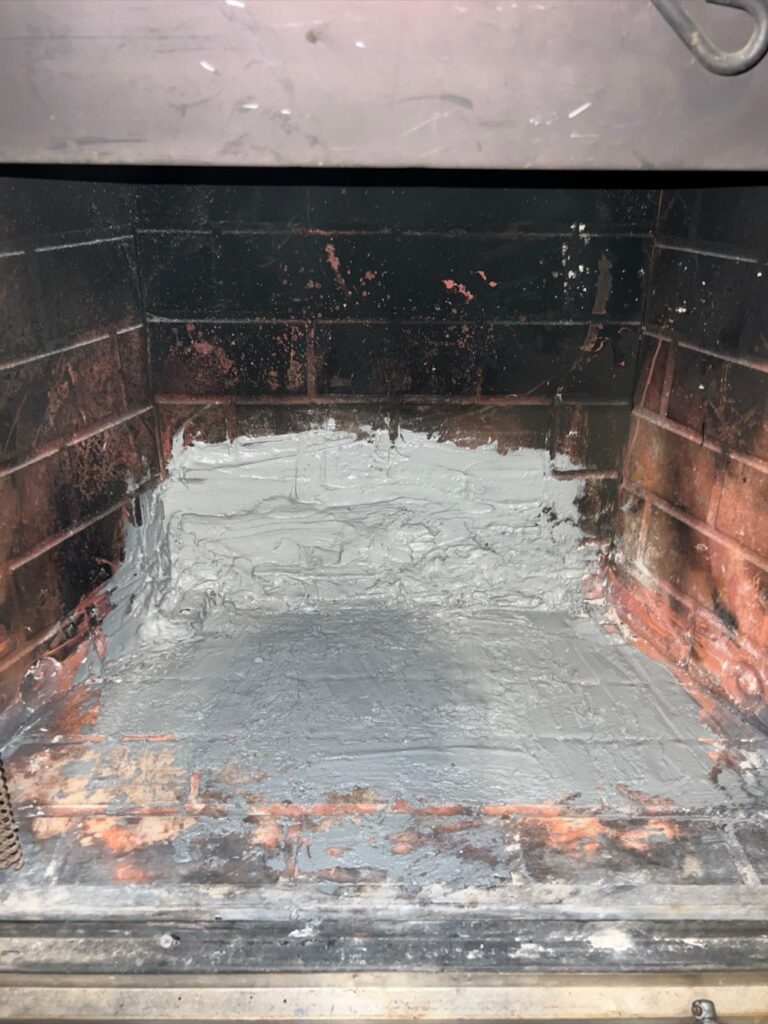
CAMERA INSPECTION
We look before we quote, every time
PHOTOS OF EVERY FINDING
No photo, no claim
MASONRY AND VENTING ONLY
Gas lines go to a gas fitter and we say so
SAME-DAY REPORT
In your inbox before we finish the day
Above every masonry firebox, before the flue narrows down to its final shape, there is a section most homeowners never hear named: the smoke chamber. It is the sloped, funnel-shaped space that gathers smoke from the wide firebox opening and squeezes it into the narrow flue above. You cannot see it by standing in the room. Even the technician cannot see all of it without a camera and a light on a pole.
Most smoke chambers are built the same rough way. Bricklayers stack each course a little further inward than the one below it, a technique called corbeling, and the result is a stack of small brick ledges instead of a smooth cone. Left bare, those ledges catch creosote and slow the smoke down exactly where it needs to speed up. The fix has a name too: parging, a coat of refractory mortar troweled over the steps until the inside is smooth.
Local Chimney Experts repairs and reparges smoke chambers across Dallas-Fort Worth. We are new here, so we lead with the camera, not a sales pitch. You see the steps, the missing mortar, and the creosote buildup on your own screen before any repair is quoted, and you see the smooth, sealed chamber again once the work is done.
YOU SEE WHAT WE SEE
You cannot see your own chimney. That is the whole problem with this trade, and it is why people feel talked into things.
Every visit ends with photographs of what we found, walked through with you before anything is quoted. If the pictures show nothing wrong, that is the report you get.
- Camera up the flue, not a guess from the hearth
- Every finding photographed before it is quoted
- The same spots photographed again after the work
- Written report in your inbox the same day
Where the Smoke Chamber Sits
Look up your fireplace opening and the first thing you hit is the damper, the metal plate that opens and closes the throat. The smoke chamber starts right above that plate and runs up until the walls narrow enough to meet the flue proper. On most masonry fireplaces that gap runs a foot or more before the flue itself begins.
It is a structural transition, not decoration. The firebox opening can be three or four feet wide. The flue above it is usually far narrower. Something has to carry the smoke from one width to the other without slowing it down or letting it spill back into the room, and that something is the smoke chamber.
Corbeled Brick: Why the Inside Is Built in Steps
Corbeling is an old masonry technique, older than modern chimneys. Each course of brick oversets the one under it by a small amount, and course after course, that offset walks the wall inward until it meets the flue. It is a fast, strong way to close in a wide opening with ordinary brick, and it is still how most smoke chambers get built today.
The tradeoff is texture. Every course leaves a small ledge on the inside face, like a staircase turned on its side. Smoke does not care about ledges when it is moving fast and hot. It cares a great deal when it slows down, and every ledge is a place for creosote to land and stay.
Smoke Chamber Never Checked?
The camera reaches what a flashlight cannot.
Parging: What Closes the Gap
Parging is the coat that turns those brick steps into one continuous surface. Refractory mortar, the same heat rated material used to reset firebrick, gets packed and troweled over the corbeled brick by hand until the ledges disappear and the walls run smooth from the damper up to the flue.
A properly parged chamber sheds smoke and creosote instead of collecting them. A chamber with thin, cracked, or missing parging still has all its ledges exposed, and every one is a shelf for buildup. We find bare corbeled brick more often in older houses and in additions where the chimney was built quickly, but a parge coat can also fail on its own over the years as the mortar dries out and flakes.
Signs Your Smoke Chamber Needs a Look
A failing smoke chamber rarely announces itself directly. It shows up as symptoms somewhere else first.
- Smoke that lingers or backs up even with the damper fully open
- A heavy sooty smell that hangs on after the fire is out
- Black staining on the damper or just above it
- Hard, glassy creosote flaking down onto the smoke shelf
- A chimney fire in the house's history, reported or not
- A home inspection report noting the flue could not be fully evaluated
Why You Cannot Check This Yourself
Stand at the firebox and look up. The damper plate sits at an angle, and the smoke chamber walls slope inward right above it, so a flashlight from the floor lights up the first few inches and nothing past it. Seeing the real shape, the ledges, the parging, and any cracks means getting a camera up past the damper and looking back down and around, which is exactly what a Level 2 chimney inspection is built to do.
A Level 1 inspection, the kind that goes with a routine sweep, looks at what is reachable without special equipment. The smoke chamber is reachable by camera, not by eye, so it is a Level 2 job. If you are buying a house, had a chimney fire, or are adding a new insert or stove, you are already in Level 2 territory, and the smoke chamber is one of the first things the camera checks.
How a Smoke Chamber Repair Visit Works
the technician runs every step of this himself and photographs each one.
- Camera scan first. You see the current shape of your smoke chamber, ledge by ledge, before anything is touched.
- Surface prep. Loose mortar, soot, and old flaking parge get cleared off so the new coat bonds.
- Hand-pack the refractory mortar. Each ledge gets packed and troweled until the stepped brick is one smooth surface.
- Cure time. The mortar needs to set before a fire is lit in that fireplace again, and we tell you exactly how long.
- Second camera pass. The new surface gets checked for gaps or thin spots before we call it finished.
- After photos. You get the same view the technician had, showing a smooth chamber where the steps used to be.
Photos Not Promises
A smoke chamber sits in a spot nobody can check without equipment, which makes it an easy place for a dishonest quote to invent damage. Our answer is the same one we use everywhere else in this company: if we say the parging is cracked, you see the crack. If we say the chamber is smooth and sealed, you see that too, on camera, not on our word. Dallas-Fort Worth does not know our name yet. Documented work is how that changes.
Get Your Smoke Chamber Sealed Right
Call or book online. The technician scans it with a camera, parges what needs it with refractory mortar, and leaves you with the photos either way. Serving Dallas-Fort Worth.
WHAT HAPPENS WHEN YOU CALL
You call or send the form
We ask what you are seeing or hearing. A person, not a queue.
We arrive and cover everything
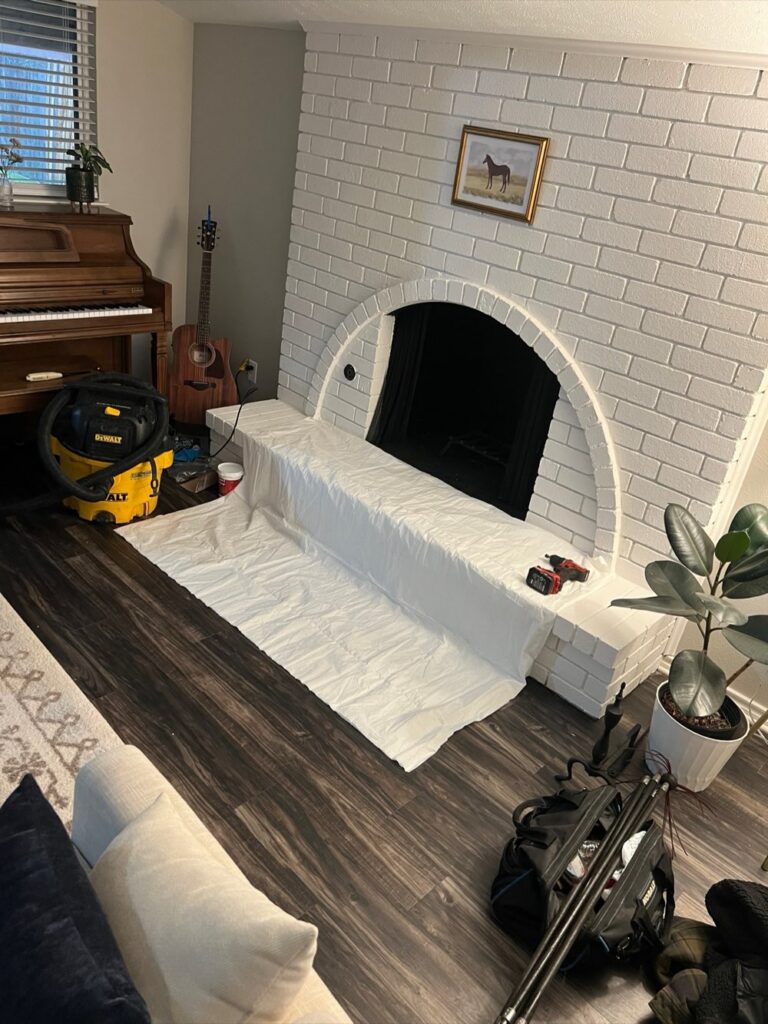
Tarps down and the vacuum ready before a tool comes out.
Camera, brushes, eyes on all of it
Firebox, damper, flue and the top of the chimney, photographed.
Photo report the same day
You see what we saw and decide what happens next.
COMMON QUESTIONS
It is the sloped section of a masonry chimney between the firebox and the flue. It gathers smoke from the wide firebox opening and funnels it into the narrower flue above. It sits just above the damper and is usually not visible without a camera.
Most smoke chambers are corbeled, meaning each course of brick is set slightly inward from the course below it. That is a normal, sound way to build the chamber. Left bare, those steps catch creosote, which is why a smoke chamber is meant to be parged smooth.
Parging is a coat of refractory mortar, the same heat rated material used around firebrick, troweled over the corbeled brick until the inside of the chamber runs smooth. A properly parged chamber sheds creosote instead of collecting it on the ledges.
Common signs are smoke that lingers with the damper open, a sooty smell that will not clear, black staining above the damper, or hard creosote flaking down onto the smoke shelf. A camera scan during a Level 2 inspection confirms what is actually happening up there.
Not fully. The damper sits at an angle and the walls slope inward right above it, so a flashlight from the firebox floor only reaches the first few inches. Seeing the real shape and condition takes a camera worked up past the damper, which is a Level 2 inspection, not a Level 1.
Bare or cracked parging gives creosote more surface to build up on, and thick creosote is what feeds a chimney fire. A smoke chamber in bad shape does not cause a fire by itself, but it makes one more likely and harder to catch early.
A sweep clears out loose soot and creosote, and that visit often gives the first hint something is wrong: hard buildup that will not brush away, or a smell that lingers. Confirming the actual condition of the parging still takes a camera, which is why a suspected smoke chamber issue gets a Level 2 look, not just a sweep.
A camera scan and assessment is a single visit. Reparging is typically one visit as well, though the mortar needs time to cure before the fireplace can be used again. We give you the exact wait time for the product we use before we leave.
REQUEST A CALL BACK
A person calls you back about your chimney, not a dispatcher.
Is the Smoke Chamber the Reason It Backs Up?
We photograph the chamber walls and the smoke shelf before we quote a parge, so you see the rough brick that is stalling the draft.