
Chimney Checklist Before Winter: What You Can Check From the Ground
A fall walkthrough for DFW homeowners: ten minutes in the yard and at the hearth, no ladder, and what each finding actually means.
CAMERA INSPECTION
We look before we quote, every time
PHOTOS OF EVERY FINDING
No photo, no claim
MASONRY AND VENTING ONLY
Gas lines go to a gas fitter and we say so
SAME-DAY REPORT
In your inbox before we finish the day
The first cold night in Dallas-Fort Worth catches people off guard. The thermostat drops, somebody wants a fire, and the fireplace has not been touched since February.
A chimney that sat through a Texas summer hides things you cannot see from the couch. Rain, wind, and animals had months to work on it, and ten minutes of looking tells you a lot before you strike a match.
Here is the walkthrough in order: what to look at, what each finding rules in or out, where the do-it-yourself line sits, and how the calendar behaves once the weather turns.
YOU SEE WHAT WE SEE
You cannot see your own chimney. That is the whole problem with this trade, and it is why people feel talked into things.
Every visit ends with photographs of what we found, walked through with you before anything is quoted. If the pictures show nothing wrong, that is the report you get.
- Camera up the flue, not a guess from the hearth
- Every finding photographed before it is quoted
- The same spots photographed again after the work
- Written report in your inbox the same day
Why Fall Is the Time to Look
A North Texas chimney works a strange schedule. It sits idle through months of heat and storms, then gets asked to handle fire on the first cold night. Rain finds small cracks in the crown, birds and squirrels move into uncapped flues, and mortar that was loose in spring is looser now.
The National Weather Service office in Fort Worth puts the average first freeze at DFW Airport on November 22. Anything needing a dry roof, an ordered part, or a second visit wants weeks of runway in front of that date, and September and October are when the runway exists.
What the Idle Months Did Up There
Almost everything on this list happened between March and October, and hardly any of it involves fire.
Water works from the top down. The crown is the sloped concrete slab capping the brick, and a hairline split in it does not drip into your living room. It feeds water into the cavity between the clay flue tile and the brick shell, into material never meant to stay wet. Indoors it surfaces months later and somewhere else: a stain beside the chimney, a musty smell, paint lifting next to the firebox.
The cap is the lid with mesh sides over the flue opening. Our storm months run through spring, and one dented lid or torn panel turns the flue into an open pipe. Rain then lands on the smoke shelf, mixes with old soot, and seizes the damper with rust. That sour smell people notice in August usually starts there.
A factory-built fireplace has a flat metal chase cover instead. Water stands in the low spot, rust starts in that puddle, and the drip runs down inside the framed chase, often surfacing as a stain on an upstairs ceiling.
Want Someone To Run The Checklist For You?
One visit covers every item on this list and you keep the photos.
What You Can Check From the Yard
No ladder for any of this. Stand back far enough to see the whole chimney, zoom in with a phone camera or binoculars, and look for these signs.
One habit turns a glance into a record: photograph from the same few spots every fall and keep the dated images. A crack you half remember is a question. The same crack beside last October’s photo is an answer.
- A chimney cap that is missing, rusted through, or sitting crooked
- Cracks or missing chunks in the crown, the concrete top of the chimney
- White staining on the brick, which means water is moving through it
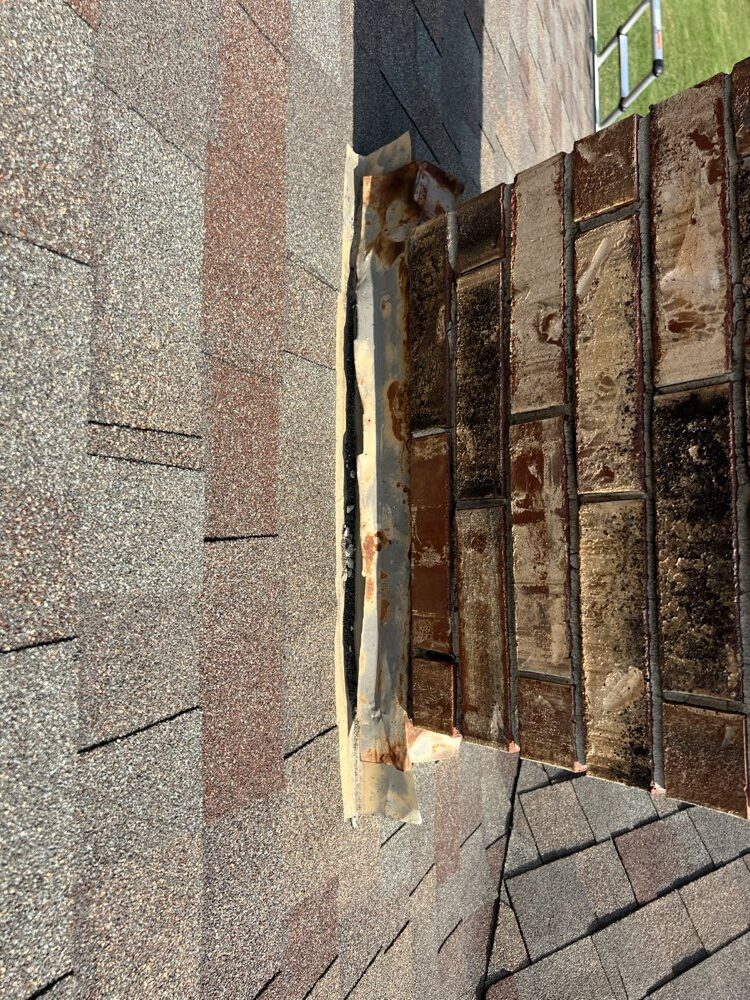
- Rust streaks running down from the cap or the flashing line
- Brick faces popping off in flakes or chips
- Mortar joints with gaps you could fit a coin into
- A lean, or a gap where the chimney meets the house, worth a photo with a coin beside it for scale
- Water stains on ceilings or walls near the fireplace inside
What Each Sign Rules In, and What It Rules Out
A list that only tells you to look is half a checklist. The useful half is what a finding points at, and what it takes off the table before you call anyone.
- Rust from the very top: the cap, the chase cover, or the damper plate. It says nothing about the brick further down.
- Rust or staining that starts at the roof line: the flashing where chimney meets shingles. Water travelling around the chimney, not through it.
- A ceiling stain hugging the chimney wall implicates the chimney. One a few feet away, or following a rafter line, usually means the roof, and a roofer is the cheaper call.
- Damp only after long, wind-driven rain with nothing visibly broken: often the brick face soaking through on the weather side. A surface question, not a rebuild.
- Mortar gaps in one straight vertical run: something moved. Gaps scattered at random: ordinary weathering, and slower.
- Brick faces flaking off in chips: water got in and came back out. It confirms water and never says where it enters.
- Nothing visible rules out very little. The crown surface, the top of the cap, and the inside of the flue are invisible from the yard by design.
What to Check at the Fireplace
Open the screen or doors and bring a flashlight, on a day when the fireplace is cold. Do this before the season’s first fire, not after.
- Work the damper. It should open and close without forcing it.
- Look up past the damper. Nests, leaves, or debris mean the flue is blocked.
- Check the firebox brick for cracks and crumbling mortar joints.
- Smell it. A strong smoky or musty odor with no fire burning points to moisture or buildup.
- Look for black flakes or a shiny black coating on the walls. That is creosote, the deposit that fuels chimney fires.
- Come back the morning after heavy rain. Wet in the center of the firebox floor means water came down the flue. Damp at the outer edge or the wall beside the opening points to flashing or brick.
- Shut the damper on a hot afternoon and hold the back of your hand in the opening. Warm air pouring past means it is not sealing, which is conditioned air leaving all summer.
- Clear the mantel before decorations go up. Garland and paper crowding a working opening is a hazard unrelated to the chimney itself.
- Put the alarms on the list. Consumer Product Safety Commission guidance is a carbon monoxide alarm on every level and outside sleeping areas, tested monthly, replaced by the date its maker prints on it.
The Other Flue Most DFW Houses Have
Many homes here have a second flue in the same chimney with nothing to do with the fireplace. It carries exhaust from the gas water heater, often the furnace too, and it works every cold week whether or not anyone lights a fire. Almost nobody puts it on a fall list.
The easy part is visible from the utility closet floor without touching anything. Follow the metal connector pipe from the top of the water heater to the wall. It should rise along its run rather than sag, with joints tight and in line. Rust flakes on top of the heater, a scorch mark, or a section that has slipped earn a call before the heating season.
Burners, valves, and the appliances belong to your gas technician and we leave them alone. The masonry and the venting are ours, so a blocked or deteriorated utility flue is a call we take.
Safe DIY and Where the Line Sits
Everything above is looking, smelling, and gently working the damper, all of it safe. So are the small jobs: shovel out cold ash, trim branches back from the chimney from the ground, and put fresh batteries in the alarms. Ash gets one caution, because coals buried in a pile hold heat for days after a fire looks dead. Fire service guidance is a metal container with a tight lid, kept outside away from the house, not a paper sack in the garage.
Now the other side. Stay off the roof, since falls hurt worse than any chimney problem. Skip the hardware store brush kit, which can scratch the liner or knock debris loose without clearing anything, and cannot tell you the flue is open when you stop. A sweeping log loosens some deposits and removes none of them.
Two more cost people real money. Do not stop a leak with caulk, roof cement, or a store sealer: a coating on the face does not close the route the water is using, and the wrong product locks moisture inside the masonry, so chimney waterproofing follows repairs rather than replacing them. And never light a test fire to find out whether the chimney draws. If the flue is blocked, you learn it with a room full of smoke.
If the First Fire Misbehaves
Smoke at the start of the season is not proof of a dirty flue. Draft comes from warm air in the chimney being lighter than the air outside, so a cold flue on an outside wall can begin the evening pulling the wrong way, and a running range hood has the house competing for the same air. Smoke that clears as the flue warms, or stops when the fans go off, is draft behavior. Smoke still rolling in once the fire is established is not, and that is the moment to put it out and have a smoky fireplace looked at.
When to Book, and What the First Cold Snap Changes
Work backwards from that November 22 average. If the walkthrough turned up anything, or nobody has looked inside the flue in over a year, September and October have room in them.
What changes after the first cold night is not only call volume. Work above the roof line waits on a dry day, and a wet December hands out fewer of those. Parts that are not stock sizes, a chase cover or a cap built to your dimensions, get fabricated from on-site measurements, so one October visit turns into a measure, a wait, and a return trip.
Some findings genuinely can wait, and you should hear that said out loud. Cosmetic staining, a shallow open mortar joint, damp that shows only in driving rain: those hold until spring. A blocked flue, a damper that will not open, or water actively running in goes to the front regardless of the month.
Sweep and inspection are the two words people mix up. A chimney sweep removes creosote and blockage. A chimney inspection reports the condition of flue, crown, cap, and firebox, with photos. Booking only one, start with the inspection.
WHAT HAPPENS WHEN YOU CALL
You call or send the form
We ask what you are seeing or hearing. A person, not a queue.
We arrive and cover everything
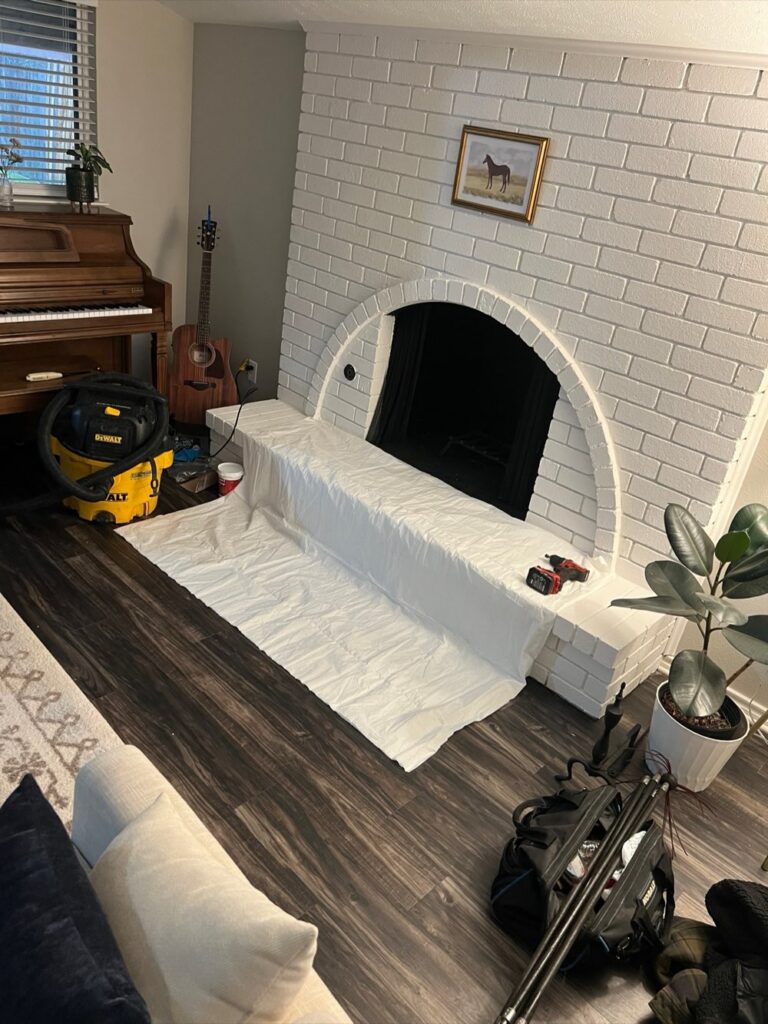
Tarps down and the vacuum ready before a tool comes out.
Camera, brushes, eyes on all of it
Firebox, damper, flue and the top of the chimney, photographed.
Photo report the same day
You see what we saw and decide what happens next.
COMMON QUESTIONS
You can buy the kit, but you cannot see what you are doing. The wrong brush size misses deposits or scratches the flue liner, and nothing tells you the flue is clear when you finish.
Most of it, with the emphasis moved. The top of a factory-built system is a metal chase cover, so rust streaks down the chase are the headline item rather than mortar joints. Inside, check the panels lining the firebox for cracks or shifting.
Minerals left behind when water moves through the brick and evaporates. The stain wipes away; the message does not. Water is getting into the masonry, and that is worth checking before freezing nights arrive.
The ground-level walkthrough, then a look inside the flue before any first fire. You have no history to work from: what the last owner burned, or when anyone last opened it up.
Find out where the water came in before you decide. Damp in the middle of the firebox suggests an open path down the flue, and that one does not wait. A stain on the ceiling away from the chimney is more often the roof, which changes who you call first.
Ground-level checks only cover what you can see. The inside of the flue, the smoke chamber, and the top of the crown stay hidden. If more than a year has passed since anyone looked inside, get an inspection before the first burn.
REQUEST A CALL BACK
A person calls you back about your chimney, not a dispatcher.
Book the Look While the Calendar Is Open
Tell us what your walkthrough turned up, or send one photo of the chimney top and one of the firebox. You get a straight read on what it needs, if anything, and photos either way.